
Water leak detection begins with a test that costs nothing. Close every tap and appliance, note the meter reading, wait, then read it again. A moving dial means a leak. From there a plumber can locate it using listening gear, pressure tests or a thermal camera. We file this page under our guide to leaks and burst pipes, and it also covers the burst pipe questions that tend to arrive alongside a leak.
How do I know if I have a water leak?
Start at the water meter. Keep all water off for two hours, compare the readings, and a changed number likely means a leak, per EPA WaterSense. Other clues include a jump in your bill, a musty odor, warm patches on the floor, stained ceilings, a hiss in the walls or weak pressure.
Valley homeowners can look for these:
- A bill that climbed though your habits did not. Our guide to a high water bill with no visible leak picks this up.
- A meter dial that spins with everything shut. The steps are on our page about leak detection with a water meter.
- A damp or warm spot underfoot, which may mean a hot line running under the slab.
- A soggy, green or sunken area in the yard, a sign of a line outdoors.
- Noise. A hiss at night, or a knocking pipe.
- Peeling paint, bubbling drywall or a ceiling stain.
EPA WaterSense puts the typical household loss at roughly 9,400 gallons a year, and many of those leaks are small, like a worn toilet flapper. EPA's toilet dye test works like this: drop some dye into the tank, hold off flushing for 10 minutes, then look in the bowl. A tint there means the flapper is leaking.
How do plumbers find a hidden water leak?
No one tool catches every leak, so plumbers layer methods. A meter or pressure test proves a leak exists. Listening gear hears noise on pressurized pipes. A thermal camera shows warm or damp areas, a moisture meter confirms wetness, and a drain camera inspects sewer lines. A small opening then verifies the spot before repair begins.
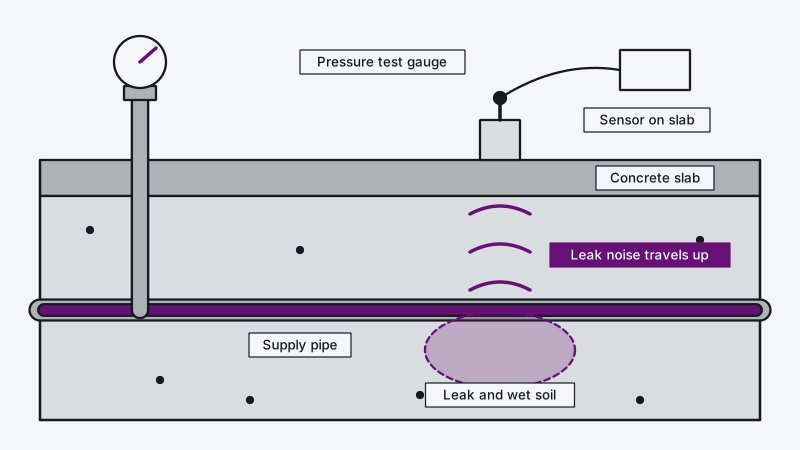
The main tools:
- Meter and pressure tests. The plumber isolates the system and watches for a pressure drop. These show whether a leak exists and which section holds it.
- Acoustic and ultrasonic listening. Sensors on pipes and floors pick up escaping water. See acoustic leak detection.
- Infrared thermal imaging. Wikipedia's thermography article mentions finding moisture in walls and roofs. See infrared leak detection equipment.
- Moisture meters, used to verify wetness at a suspect location.
- Tracer gas, where a harmless gas fills the line and sensors find where it escapes. It is a fallback when other tools come up empty. Ask whether the plumber offers it.
- Camera inspection of drains and sewer lines.
When you compare leak detection companies, equipment and machines, ask which methods they use, what you receive afterward and how they charge. The operator matters more than the gear. A pinpointed leak means a small hole to open, so ask for a marked spot and a written note.
Location-specific pages: slab leak detection, underground water leak detection and sprinkler system leak detection.
My pipe burst and the house flooded. What do I do?
Close the main valve, open a low tap to empty the lines, stay away from electrical equipment, switch off the water heater and take pictures of the mess before you tidy anything. Then phone a plumber and your insurer. A burst indoors is an emergency, because most of the damage happens in the first hours.
The full checklist sits on our page about what to do with a burst water pipe. After that:
- Drying. Move quickly. Soaked drywall and flooring have to dry, and mold can begin within days. Our page on damage after a pipe bursts has the details.
- Insurance. Open the claim with your insurer. The usual rules are laid out in burst pipe insurance coverage.
- The cause. A good plumber tells you what failed so it does not repeat. See why pipes burst.
How long does it take to fix a burst pipe?
An easy-to-reach burst is frequently fixed within a few hours of the plumber arriving. When the break is in a wall, under the house or along a long stretch of old pipe, the job runs longer, and drying plus building repairs add days or more. The plumber can give a timeline once the break is in view.
What drives the schedule:
- Access. Exposed pipe in a garage goes fast. Pipe behind tile or over a ceiling does not.
- Pipe type and age. Corroded galvanized or brittle old copper can call for a larger replacement instead of a patch.
- Parts on the truck. Common sizes move quickly. Odd fittings can mean a second trip.
- Testing. A pressure test belongs before the walls are closed.
- Permits. A big repair or a repipe might need one.
- The building repairs, such as drywall, paint and flooring, which other trades handle.
What if a pipe bursts in the ceiling, under the house or in the bathroom?
The risks vary by location. Water above a ceiling can drop the whole panel, so never stand under a bulge. Under a house it collects in the crawlspace and the source is tough to spot. In a bathroom it tracks behind tile and into the subfloor. Whichever it is, close the main first, then call a plumber.
Here is how they differ:
- Pipe burst in the ceiling. Stay out from underneath. Provided you can reach it without risk, a small hole poked from the side where the bulge hangs lowest lets the water drain into a bucket. If water reaches a ceiling light, leave it alone, and switch off power at the panel only if you can stand on dry ground.
- Pipe burst under the house. Use a flashlight in the crawlspace only after the power to that area and the water are both off. Signs of pooled water include a damp smell, warped floors or a running meter. Many Valley homes from the 1940s to 1960s sit on raised foundations, so crawlspace leaks come up often.
- Water pipe burst in the bathroom. Usually a supply line, valve or shower arm. Try the fixture shutoffs first. A fixture valve that closes lets the rest of the house keep water.
- Pipe burst outside or underground. Expect a soggy yard or a pressure drop. See underground water leak detection.
Signs from sounds to wet spots are in our guide to spotting a burst pipe.
Does PEX pipe burst, and what about the Colgate Powerhouse pipe burst?
PEX does burst, but it handles freezing better than copper or rigid plastic. Failures tend to happen at fittings, with age, under high pressure or in a hard freeze. Our page on whether PEX freezes and bursts goes deeper. As for a specific building's burst in the news, we have no report to draw on, so we say nothing about it.
At home, a PEX burst looks like any other, and your response does not change: close the main, document the damage, call a plumber. Wikipedia says PEX is generally considered more burst resistant than copper or PVC, though claims about freezing lean on news and advice sources instead of controlled tests.
What about a leaking gas pipe?
Gas is not water, and a gas leak is no do it yourself job. Gas odor or a hissing sound means walking out of the building. From a safe spot, phone SoCalGas (1-800-427-2200), and phone 911 should someone be in danger. Skip switches, lighters and phones indoors. Gas piping gets repaired only by a contractor who holds the right California license, under a permit.
Our gas line work page explains how gas repairs get arranged, and gas line pipe pricing covers what moves the cost.
Who pays for a water leak, and what about sealants?
It depends on where the leak sits and who owns that stretch. Leaks downstream of the meter, including the line from meter to house, generally belong to the property owner. Renters should tell the landlord in writing. We cannot give legal advice. If a leak inflated your bill, ask the utility which adjustments it offers.
Sealants and epoxy are at best a stopgap, and our page on water pipe leak sealant covers when they make sense. For joints and copper, see fixing a leaking pipe joint without replacing it and leaking copper water pipe repair.
What does leak detection cost, and how do I book it?
Price varies with the property, how tough the leak is to reach and which methods are used. We hold no sourced figure, so we print none. See how quotes are assembled in plumber leak repair cost, then head to our quote page. We arrange the local plumber, and the quote reaches you in writing ahead of any work.
Worth asking before you book:
- Does detection carry its own fee apart from the repair, and does it get credited if the same plumber fixes the leak?
- What will I have in hand afterward: a marked spot, photos, a report?
- What happens when no leak turns up?
- Who patches the hole left in the wall or slab?
A device can also watch for leaks on your behalf. See smart water leak detection.
For the other jobs we line up around the Valley, browse the home page.
Questions people ask
How much of my day does a detection visit take?
A meter check takes minutes. A plumber's detection visit commonly runs an hour or longer, based on the property and the methods in play. Leaks under a slab or along a long underground run may take more. Expect an estimate during the visit along with the suggested next step.
How do I screen a leak detection company before booking?
Ask how the fee is set, which methods get used, what you receive at the end, if it is credited against a repair, and what follows when nothing is found. Ask for the contractor's license number and check it against the state contractor board's records. Keep the quote on paper.
Should I be at the house during leak detection?
Yes, either you or someone you trust. The plumber must reach the meter, the main shutoff, the water heater and the rooms in question, and needs sign-off before opening any wall or floor. Water use also has to stay off while the tests run.
Can a leak push up my water bill with nothing visible?
Yes. Slow leaks underground or behind a wall may drip for weeks and leave no stain. The meter test and your billing history give the clearest signal. EPA WaterSense suggests comparing against a cold-month bill, and adds that a four-person household using above 12,000 gallons monthly could have serious leaks.
Does every leaking pipe count as an emergency?
A burst, or any leak near electrical equipment or soaking part of the structure, is one. Shut the main and phone someone. A slow drip tolerates a day or two, never weeks. Gas odor is a different case entirely and always urgent: get outside, then contact SoCalGas, 1-800-427-2200.
References
Updated