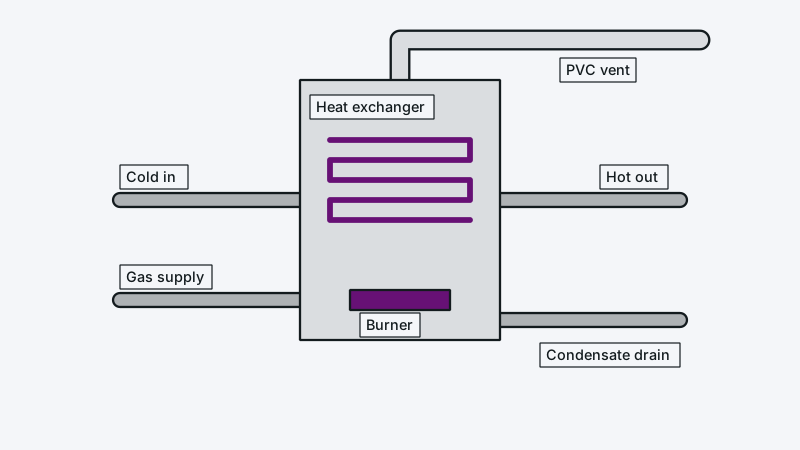
A condensing tankless water heater installation means fitting a wall mounted gas heater that pulls extra heat from its own exhaust, which calls for four things a tank heater often does not: a gas line sized for the unit, sealed plastic venting, a drain for acidic condensate, and a power outlet. The maker's installation manual is the rule for each model. It sits within our guide to repairing and replacing water heaters and lists what a plumber inspects ahead of a quote.
What makes a tankless water heater installation different from a tank?
A tankless heater has no storage, so it fires a large burner on demand and needs a bigger gas supply than a tank. ENERGY STAR tells buyers to have a professional confirm the unit's flow rating, check that the gas line is adequate, confirm electricity for models with forced ventilation, and decide how exhaust is vented.
It also notes that installation can take longer than a standard water heater. In practice that means:
- Gas: a tankless burner may need a larger gas pipe and a correctly sized shutoff from the meter.
- Power: the fan and electronics need a nearby outlet.
- Venting: the exhaust has its own pipe, not the old flue.
- Water: isolation valves go on so the unit can be descaled.
- Location: a wall that can carry the heater and a clear route to the outside.
A plumber goes down this list before anything is ordered, so a quote that follows a site visit beats a number given over the phone.
What does "condensing" mean, and do you need it?
A condensing unit uses a second heat exchanger to pull heat out of the exhaust gases, so the exhaust leaves cooler and the unit is more efficient than a non-condensing model. The cost is that it makes acidic condensate and uses plastic venting. Whether it is worth the extra price turns on your hot water usage.
The Wikipedia comparison of average efficiencies puts tankless gas at around 80 percent, against about 60 percent for tank heaters. Condensing models are marketed above that, but real savings depend on use and on the maker's ratings. ENERGY STAR labeled models meet minimum standards for efficiency, hot water delivery and warranty. Have the plumber show you the manufacturer's efficiency figures for each model quoted, and price condensing and non-condensing choices next to each other.
How is a condensing heater vented and drained?
A condensing heater normally vents through sealed plastic pipe, such as PVC, CPVC or polypropylene, as the maker specifies, out through a wall or the roof. The condensate, which is slightly acidic, needs to drain to a floor drain, a laundry standpipe or a pump, and many makers call for a neutralizer cartridge first.
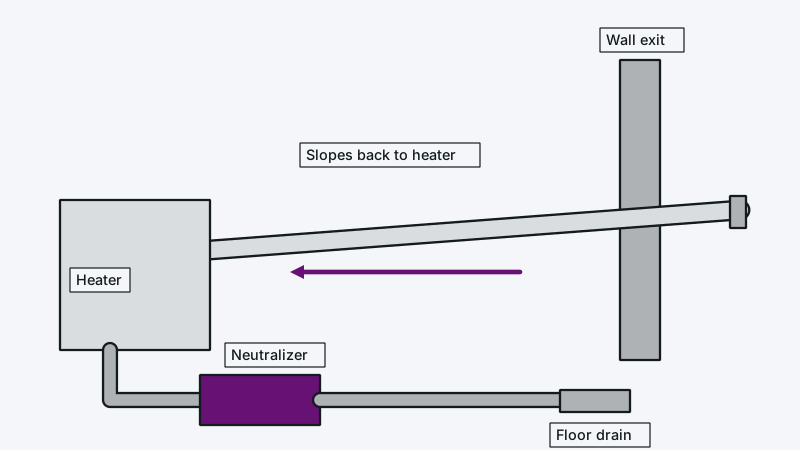
These are the checks a plumber makes on site:
- The route and length of the vent pipe, and the pipe material the maker allows.
- Clearances from windows, doors, gas meters and property lines, which come from the manual and local code.
- Where the condensate drains, and whether a neutralizer or a pump is needed.
- Whether the old flue has to be capped or removed.
- How the pipework slopes, so condensate does not pool in the vent.
Some older Burbank and Glendale homes have a water heater in a closet or garage with a metal flue straight up through the roof. Moving to a sidewall plastic vent can mean a new wall penetration and patching, so ask for it to be itemized.
What does the gas line need for natural gas tankless installation?
Gas supply must deliver enough volume at proper pressure for the unit's peak burn, a higher demand than a tank heater makes. The plumber measures the line from the meter, its length and the other appliances on it. A line that comes up short gets upsized, which one guide says can add as much as $1,000.
Gas piping falls under state regulation. A contractor who holds a California license should do it, and the city normally wants a permit. The rules are on our residential gas piping codes page, and gas line installation treats that work separately.
Smelling gas means no switches and no starting a car in the garage. Get out of the building, use a phone outside to reach SoCalGas (1-800-427-2200), and call emergency services on 911 where anyone is at risk.
What do the requirements look like for the rest of the house?
Look at the electrical supply, the water supply and how much hot water the house demands. Gas models want a power outlet for fan and controls, while electric models can call for heavy circuits, so mention it to the plumber if you are weighing both. A heater that falls short when several fixtures run together will let you down.
Sizing starts with the flow of the fixtures you run together. ENERGY STAR gives averages of 2.5 gallons per minute for a shower, 3.3 for a clothes washer, 2.2 for a sink and 1.3 for a dishwasher. One tankless cost guide puts typical household need at about 5.5 to 7.5 gallons a minute. Winter's colder incoming water cuts what any heater can deliver, so a plumber leaves some margin. See tankless water heater installation cost for the price side.
Do you need a permit in Burbank or Los Angeles?
Water heater jobs ordinarily require a permit in California cities, and changes to gas or venting definitely do. Burbank routes this through its Building Division. Los Angeles uses its building and safety department, with over the counter permits for simple work and online express permits for some projects.
Confirm the exact requirement with the city ahead of the work. The California Energy Commission says its 2025 Building Energy Efficiency Standards took effect on January 1, 2026, so ask which energy rules apply to your install. Air quality rules in Southern California also limit emissions from gas water heaters, which is why local stores stock low emission models. Make sure the model in your quote may be sold in the area. For the process, see our water heater permit in Burbank article.
Why do you have hot water but no central heating, or no hot water at all?
A tankless unit warms water as it flows to the taps and does not heat the house unless it is a combination model built for both. Hot water without heat usually means the heater works and the furnace or heating system is at fault. When no hot water comes out, suspect the heater, the gas supply or a fault code.
Run through the basics before calling. Is gas flowing at the meter and at the appliance? Does the heater have power? Could a vent be blocked or the condensate drain backed up? Many condensing units shut off when the drain clogs, and scale in hard water areas is another frequent culprit. Checks are listed on our page about why you have no hot water, with removing hard water scale covering the fix.
What about an electric tankless unit such as an EcoSmart?
Electric tankless units skip venting and gas, which simplifies installation, but they pull heavy power all at once and often need dedicated circuits plus a panel with spare capacity. Output is usually lower than a gas unit. A plumber and an electrician should look at the panel before any quote.
A cost guide lists electric tankless installs at $800 to $1,500 in materials and labor and says output is usually limited to about 7 to 8 gallons a minute, though it admits its figures conflict in places. Check any model's rating with the maker. Tankless versus tank water heaters compares the options.
How do we arrange a professional installation?
Describe your current heater and what you are after, and we line up a local plumber to visit. A written quote reaches you before any work begins. It should name the model, venting, condensate drain, gas line work, permit and the removal of the old heater.
We cover Burbank, Glendale and the Valley. Hot summers wear on tank heaters, and plenty of local homes still run units fitted decades ago. Request a quote and give us the fuel, the location and what you have now. The Lankershim Plumbing home page shows what else we handle.
Questions people ask
Does a condensing tankless unit pay off?
For heavy hot water users it can, since it reclaims heat from its own exhaust. The added cost pays for a higher efficiency rating and plastic venting. Savings shift with usage and local gas prices, so request the manufacturer's figures plus a non-condensing quote for comparison.
Can I put in a gas tankless unit on my own?
No. Gas piping, venting and the permit call for a contractor who holds a California license, and errors risk gas leaks or carbon monoxide. Your part is to clear the space, ready the electrical outlet and pick the model. Leave gas and vent work to a plumber.
Will a tankless heater run when the power is out?
Electricity runs the fan and electronics on most gas tankless units, so they stop during a blackout unless they have battery backup. ENERGY STAR notes that forced ventilation models depend on power. If outages worry you, ask the plumber about alternatives and read the manufacturer's specifications.
How long does a condensing tankless installation take?
A national guide figures roughly 3 labor hours for a typical job, and ENERGY STAR warns it can exceed a standard heater swap. New venting, a bigger gas line or relocating the unit can push it to a full day. The quote should include the plumber's time estimate.
What maintenance does a condensing tankless heater need?
Manufacturers generally recommend descaling the heat exchanger, inspecting the condensate drain and neutralizer, and cleaning the inlet screens. Hard Valley water makes scale a worry. Follow your model's manual, and have isolation valves fitted to allow flushing.
References
Updated