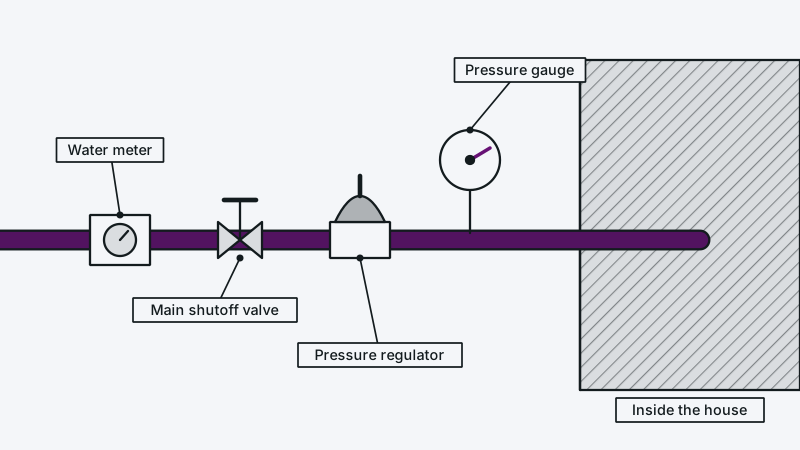
Prevent a burst by knowing where your main shutoff is, keeping water pressure in check, replacing aging pipe and hoses before they fail, and checking the meter for hidden leaks. You can do most of the checking yourself in an hour. A plumber handles pressure testing and old pipe. This page belongs to our leaks and burst pipes guide.
What is the first thing to do to prevent a burst pipe?
Locate the main shutoff valve, tag it and confirm it actually turns. A burst does most of its damage in the first few minutes, so closing the main fast is the biggest single thing you can do. A valve that is stuck, hidden or seized is a common reason a small leak becomes a flooded room.
Try the valve once a year. Turn it off and on gently. If it is stiff, leaks at the handle or will not close fully, a plumber can replace it. Also locate the shutoff under each sink, toilet and appliance, and make sure everyone in the house knows where the main is. If your home is in Burbank, your water meter is a second shutoff point, but the utility owns it, so reach for the house valve first.
How can you tell if your water pressure is too high?
Thread a pressure gauge onto an outdoor hose bib and read it. Excess pressure announces itself through knocking pipes, a dripping relief valve on the water heater, toilets that keep running and supply hoses that split. High pressure strains every joint at once, which is why pipes that seem fine can burst without warning.
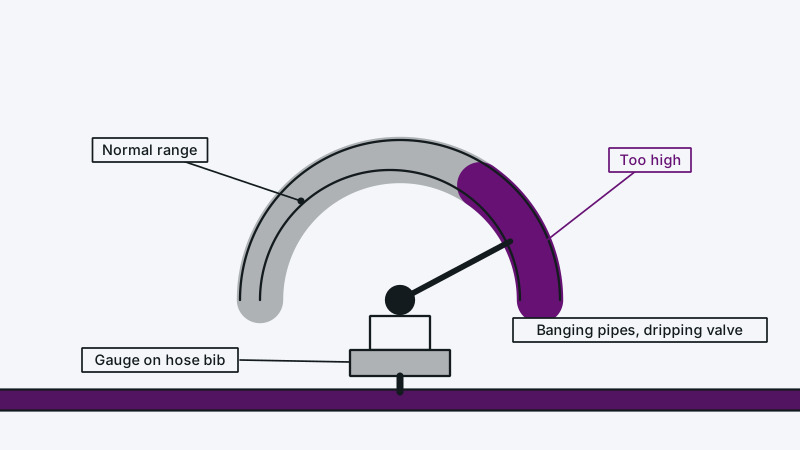
A gauge costs little at a hardware store, or a plumber can read it during a visit. If the number is high, the fix is a pressure-reducing valve at the house, which Wikipedia lists among the ways to limit surge damage, along with water hammer arrestors and expansion tanks. A pressure regulator wears out, so it is worth a test every few years. Facing the opposite symptom? Read why water pressure is low in Burbank.
Which old pipes are most likely to burst?
Galvanized steel, polybutylene plastic and thin-wall copper with pinholes are the usual suspects, along with any pipe that has already leaked once. Wikipedia gives galvanized pipe a typical life of about 40 to 50 years, and many Burbank homes are from the 1940s to 1960s, so original lines are common.
Signs your pipes are due for attention:
- Brown or cloudy water, especially first thing in the morning.
- Pressure that has faded over the years.
- Green crust or white mineral buildup at joints.
- Repeated leaks in different spots.
A plumber can inspect exposed lines and give you a view of what you have. If the answer is a repipe, look at the cost to repipe a house and the price of redoing the plumbing in an older house to plan the spend before there is an emergency.
How do you check for hidden leaks before they burst?
Read your meter. Turn every tap off, jot down the reading, stay off the water for two hours, then take a second reading. EPA WaterSense says that if the meter changes at all, you probably have a leak. The toilet test works the same way: drop food coloring into the tank, hold off flushing for ten minutes, and check if the dye reaches the bowl.
Burbank Water and Power's site mentions its Advanced Metering Infrastructure, which provides leak alerts and usage data, so check your online account for alerts. For leaks you cannot find, see water leak detection and leak detection with a water meter. A small leak is how many bursts begin, and EPA puts the typical household's yearly loss to leaks at over 9,300 gallons.
What else is worth replacing before it fails?
Replace rubber washing machine hoses and supply lines to toilets and sinks with braided stainless ones every few years, and look under every sink and behind appliances for moisture. These cheap parts split often. Also check the water heater: a corroded tank or a failing relief valve is a hidden source of flooding.
Add a smart leak sensor under sinks, behind the water heater and next to the washer. Some systems can shut the water off themselves; read our page on smart water leak detection for what they do and where a plumber has to install them. If you travel, shut off the main before you leave. And fix a banging pipe: a plumber can fit water hammer arrestors at the appliance.
Do I need to worry about frozen pipes in Burbank?
Not often. Hard freezes are uncommon on the Valley floor, so a plain insulated pipe inside the house is rarely at risk. Foothill homes, unheated garages, exposed hose bibs and pipes in outside walls are the exceptions on a rare cold night. Wrap exposed pipe, disconnect hoses and know where the main shutoff is.
A frozen pipe calls for closing the main and phoning a plumber ahead of any thawing, because the thaw may reveal a split. See whether PEX can freeze and burst if your home has been repiped.
When should you call a plumber to prevent a burst?
Phone a plumber when the gauge reads high, the main will not close, the pipe is galvanized or polybutylene, you have had more than one leak, or the regulator and expansion tank are old. These checks need tools and a permit for some replacements, and a failure costs far more than the visit.
Our whole-house repipe page shows what the biggest fix looks like. Near gas lines, any gas odor means leaving the building and ringing SoCalGas on 1-800-427-2200 once you are outside.
Questions people ask
How much time does burst pipe prevention need?
The homeowner checks in this page take about an hour: the main valve, the meter test, a look under sinks and at hoses. A plumber visit to test pressure, inspect exposed pipe and replace a regulator or hoses is usually a short job. Larger work such as a repipe takes days and is scoped in a written quote.
Which questions suit a plumber hired for prevention work?
Find out what gets tested, for example pressure and the shutoff valves, whether a written report of the findings comes with the visit, and the separate cost of each recommended fix. Look up the contractor's license with the state license board. Insist on a written quote ahead of any work, and ask which items are optional and which are urgent.
Must someone be home for a prevention visit?
For most of it, yes. Access is needed to the main valve, the water heater, the spaces under sinks and the hose bib for the gauge, and the results are worth hearing firsthand. A brief walk-through at the end is the moment to ask what comes first. When you cannot attend, send a trusted adult in your place.
Does my homeowners policy cover a burst pipe?
Coverage hinges on the wording of the policy and what caused the break. Sudden water damage is often included, while slow leaks and wear frequently are not. Go through the policy and put questions to the insurer ahead of any loss. Our page on whether a burst pipe is covered by insurance lists what to ask.
How often should I test my main shutoff valve?
Once a year is a good habit, and again after any plumbing work. Close it fully and open it again slowly, then check the handle for a drip. A valve that cannot be turned by hand is a problem worth fixing now. Put the check on the calendar with the smoke alarm batteries so it does not get missed.
To plan a prevention visit, send a quote request, or begin from the home page.
References
Updated