
When a pipe bursts, close the main valve, switch off power to wet rooms where that is safe, clear belongings from the flood path and begin drying inside 24 to 48 hours. Have a plumber stop and fix the source, photograph everything before cleanup, and phone your insurer early. This page deals with the aftermath of the break and sits beside our help on leaks and burst pipes.
What should you do in the first hour after a pipe bursts?
Stop the flow, then make the house safe. Shut the main, run the lowest faucet to empty the line, and stay away from water around outlets, cords or the electrical panel. If water is reaching electrical equipment and you cannot kill power without wading, get out and call for help.
A workable order:
- Close the main. If you cannot find it or it refuses to turn, ring your water utility's after-hours line. Burbank Water and Power lists (818) 238-3778 for after hours, weekends and holidays.
- Flip the breaker for the affected room, but only when the panel is reachable on dry ground.
- Shoot photos and video of all of it: the break, the water, ruined items, the meter.
- Raise valuables, rugs and electronics clear of the water. Leave heavy furniture alone on soaked flooring.
- Begin taking up standing water with towels, a mop or a vacuum rated for wet use.
- Book a plumber for the fix. Use our emergency plumber page for burst pipes while the leak is still running.
The checklist on what to do with a burst water pipe has the complete checklist.
How quickly does water damage turn into mold?
Fast. The EPA advises drying wet areas and items inside 24 to 48 hours to head off mold. Past that point, soaked drywall, carpet pad, insulation and baseboards hold moisture stubbornly, and mold can creep into the materials behind them.
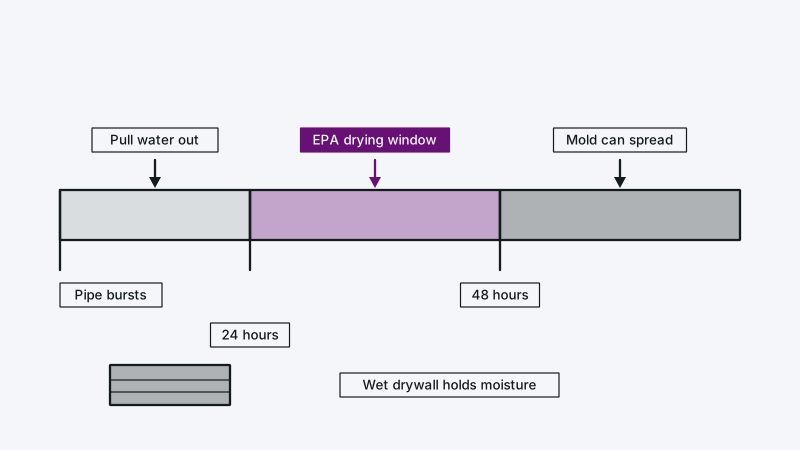
Southern California is dry, yet a wall cavity or shut cabinet will not dry on its own, and a warm house is no substitute for action. Fans, open doors and a dehumidifier handle the surface. A leak inside a wall means opening the wall, since drywall wicks water upward and the insulation holds it.
The EPA also cautions that mold cleaned up while the water source stays unfixed will probably return. Repair and drying therefore go hand in hand.
What gets damaged by a burst pipe, and what can be saved?
Soaked drywall, carpet and pad, insulation and particleboard cabinets are usually the first losses. Solid wood, tile and concrete often dry out fine. Electronics, books and upholstery call for a fast decision. What can be kept depends on how long the material sat wet and what the water carried.
Fixr's published guide sorts water into categories. Clean water, as from a broken supply line, carries no chemical or fecal contamination yet can still soften drywall and warp wood. Gray water from sinks, tubs and washers is riskier. Black water from sewage or toilets is contaminated, and the guide says every affected surface needs bacterial treatment. A burst supply line starts out clean but grows riskier the longer it sits and picks up dirt.
Rough guidance:
- Carpet pad is normally thrown out, though carpet can sometimes be saved if dried quickly.
- Drywall that stayed wet is often cut out a few inches above the wet line.
- Hardwood may cup. Let it dry before you decide.
- Insulation that is saturated usually has to come out.
- Anything porous and moldy may never come fully clean, per the EPA.
Keep the heating and air system off if you suspect contamination.
How much does water damage from a burst pipe cost to fix?
The pipe is often the cheap part and the damage is not. Fixr's guides put burst pipe repair at about $200 to $1,000, averaging near $500, and water damage repair at roughly $1,200 to $5,000. Big floods, sewage water and long-running leaks run higher. These are national figures, not quotes.
Restoration is often priced per square foot. Fixr lists drywall restoration at roughly $1.50 to $3 per square foot, carpeting at $4.75 to $10.50, and hardwood at $10 to $15. Extraction of clean water runs about $3.75 to $4.25 per square foot, and black water about $7 to $7.50. The same page says extraction and drying take at least three days, and full restoration can take weeks to months.
Request an itemized estimate that splits out water removal, drying equipment and days, demolition, disposal, rebuild, and any separate plumber charges. One lump sum hides what you are paying for. Our page on burst pipe repair costs handles the plumbing side.
Does insurance cover water damage from a burst pipe?
Frequently the policy pays for sudden damage to the house and contents, not the pipe repair, and slow leaks, wear or neglect may be excluded. Policies differ. Read the water damage section and contact your insurer without delay. What your own policy covers is beyond what we can tell you.
What strengthens a claim:
- Photos and video of all of it before anything is cleaned.
- A written note from the plumber on what failed and when you found it.
- Receipts for drying, hotel nights and emergency work.
- Reporting early. Policies set deadlines and expect reasonable steps to limit the loss, including stopping the water.
- Keeping damaged items where practical, until the adjuster has looked at them.
Our guide on whether a burst pipe is covered by insurance walks through the usual wording. Renters should notify the landlord at once and check their own renter's policy for belongings.
Who do you call, a plumber or a restoration company?
Start with a plumber to stop the water and mend the pipe, since drying is pointless while water still runs. Bring in a restoration company when more than a small area is wet, the water sat over a day, or ceiling and wall cavities are soaked. The EPA suggests professional help when mold covers more than about 10 square feet.
We send a nearby plumber to your door, with a price in writing ahead of the job. Describe the incident on the quote form and say whether water is still flowing. Have the plumber record on paper where the break was and which material failed, since your insurer may ask.
To work out why a pipe failed and stop a repeat, read why pipes burst and burst pipe prevention.
Questions people ask
How many days does it take to repair damage after a burst pipe?
A small leak caught early may need only a few days of drying and a drywall patch. Larger damage runs to weeks. Fixr's guide puts extraction and drying at three days minimum and full restoration at weeks or months. Mending the pipe is usually the quickest step.
Which questions belong in a hiring talk for burst pipe damage?
Get an itemized written estimate covering drying days and equipment, what gets demolished, who does the rebuild, and whether they deal with your insurer. For construction work, get a contractor license number and verify it on the state's license lookup. Never sign away claim rights without reading the paper.
Must someone be home during burst pipe repair and cleanup?
Be present at the plumber's first visit to point out the break, the main valve and the damage. After that you can arrange access for drying crews. Keep a written log of who came, what equipment sits in your house and when it leaves.
Is it safe to remain in the home following a burst pipe?
Often yes, once the water is off, electrical hazards are handled, and the wet area is dry or sealed off. Go elsewhere if you find sewage, a gas smell, a sagging ceiling, or water touching electrical equipment. With a gas smell, get out and phone SoCalGas at 1-800-427-2200 once outside, or dial 911 if anyone is at risk.
This guide is one of many on Lankershim Plumbing.
References
Updated