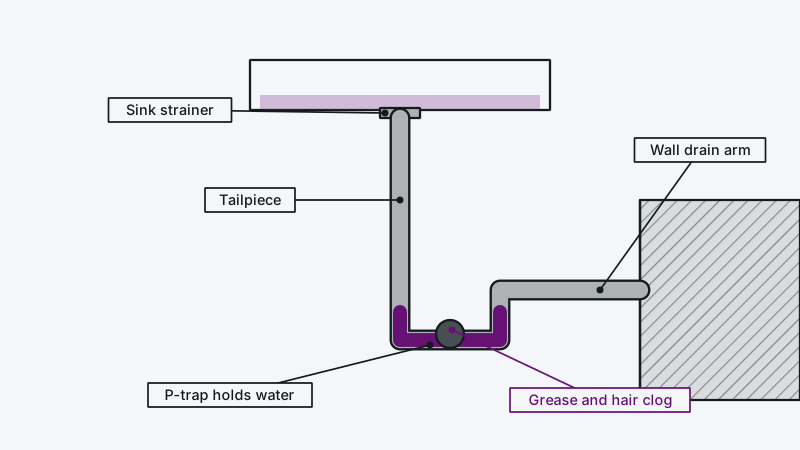
A natural remedy means a clog-clearing method that does not use a store-bought caustic cleaner: hot water, dish soap, baking soda and vinegar, enzymes, a plunger, or taking the trap apart. They work on light, recent build-up of grease or soap. They do not work well on a hair mat, a solid object or a blockage far down the line. For something stronger, a plumber's hydro jetting clears the whole pipe wall.
Which natural remedy for a clogged drain works best?
A plunger and a cleaned trap work best since they physically pull out the blockage rather than trying to dissolve it. Very hot tap water plus dish soap helps with grease in a kitchen drain. Baking soda and vinegar fizz briefly and loosen light film, but the effect is modest. Enzyme cleaners work slowly and suit maintenance more than a full blockage.
Rank them like this, from most to least likely to help:
- Plunger. Suction and pressure move a soft clog. Use a cup plunger on a sink or tub with a wet seal, and block the overflow opening with a damp cloth.
- Clean the P-trap. Set a bucket beneath the curved pipe, loosen the slip nuts with your hands and empty it out. Most sink clogs sit right there.
- Dish soap and hot water. For grease, add some dish soap and chase it with the hottest water the faucet gives.
- Baking soda and vinegar. Best for a slow drain with soap film, not for a stopped one.
- Enzyme or bacteria cleaners. They digest organic matter over hours or days, so they are for prevention.
Wikipedia's overview of drain cleaners groups methods into chemical, enzyme and mechanical, and the mechanical group, plungers and augers, is the one that physically removes a blockage.
Does baking soda and vinegar really unclog a drain?
It can clear a light film of soap or grease in a slow drain, but it rarely opens a fully blocked one. The fizzing is mild, and by the time the mixture arrives at the blockage it is mostly water. Use it as a weekly maintenance flush, not as a fix for standing water or a hair mat.
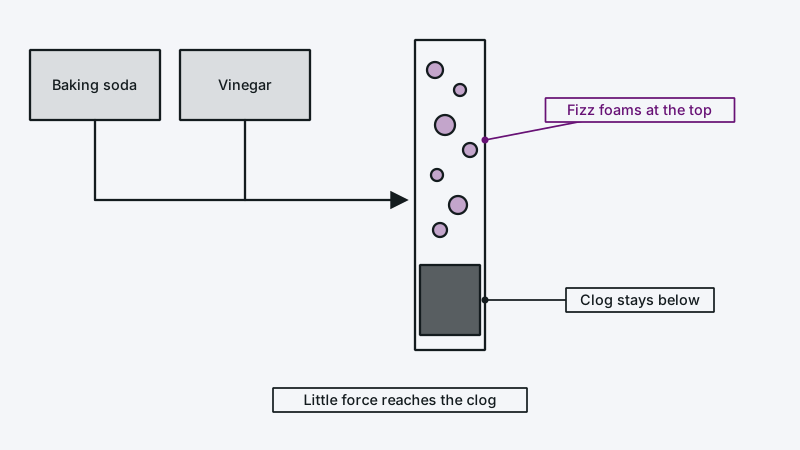
To try it, measure out around 120 ml of baking soda, send it down the drain, then pour on a cup of white vinegar, seal the opening for ten to fifteen minutes, and rinse through with hot water from the tap. Never pair it with a store-bought chemical cleaner in one drain, and do not use it after you have poured one. Mixing products can release fumes or splash caustic liquid back at you.
We have a separate walk-through of vinegar and baking soda on a clogged drain with the full steps and the cases where it fails.
Is boiling water safe for my pipes?
Very hot tap water is fine. Water at a full boil threatens PVC and ABS plastic drain pipe by softening joints, and porcelain sinks and toilet bowls can crack from it. Older Valley houses frequently have cast iron or galvanized drains, so boiling water matters less there, but most Burbank kitchens now have plastic sections under the sink.
A safer habit is to run the hot tap until it is as hot as it gets and let it flow for a minute after the dish soap. That melts a fresh grease film without the heat of a kettle.
Keep boiling water out of a toilet, because the sudden temperature change can split the porcelain.
What does not work, and what can hurt?
Skip fruit peels, bleach, salt and cola, because they do little against a real blockage. Never blend a chemical drain cleaner with vinegar or anything else. Skin and eyes can be burned by caustic products, and aging pipe may be damaged too. After any exposure, use the Poison Help line, 1-800-222-1222, and dial 911 if breathing becomes difficult.
Chemical cleaners are not a natural remedy, but people reach for them when the natural fixes fail. If one has already been poured and the drain is still blocked, do not plunge or snake it yourself without gloves and eye protection, because the standing liquid is still caustic. Name the product when you phone the plumber, so the right protective gear comes along.
A slow drain that returns within days is a sign the clog has not gone. The residue is further down the line, past the trap, and it needs a cable or a jetter.
When should I stop and call a plumber?
Stop when the clog comes back within days, when several fixtures drain slowly, when a running sink forces water up out of a tub or floor drain, or when sewage smells appear. Any of these means the blockage lies in the branch line or the main, which a plunger and a bottle cannot reach.
Burbank and Valley homes built in the 1940s to 1960s often have clay or cast iron lines with roots and scale in them. With a camera, a plumber can show the pipe's condition, and a hydro jetting visit clears the full pipe wall instead of poking a hole through it. The guide on why a sink drains slowly walks through the patterns that reveal the type of clog.
Submit the quote page form and a local plumber gets lined up to visit, and the price is put in writing before any work.
Questions people ask
How quickly do natural drain remedies work?
A plunger or a trap cleaning works in minutes. Dish soap and hot water need a few minutes. Baking soda and vinegar sit 10 to 15 minutes. Enzyme cleaners take hours to days. When a few tries change nothing, the blockage probably sits beyond a home remedy's reach, and more attempts waste time.
What do I ask a plumber about a clogged drain before agreeing?
Check if the price includes a cable, a camera look and a return trip should the clog recur, how the price gets set, and whether a permit or repair beyond the clog is likely. Get the answers on paper ahead of the job, and mention anything you have already poured down.
Is it necessary to be present for the plumber?
Yes, or send a trusted adult. Someone must open the sink cabinet, floor drain or cleanout and approve the price. A cleanout behind a locked side gate or garage door needs access sorted out in advance.
Can I use natural remedies on a toilet?
For a toilet, the natural fix is a plunger. Baking soda and vinegar do very little in a toilet, and boiling water can crack the bowl. If a plunger fails after a few tries, our page on repairing a blocked toilet covers the closet auger and the signs of a main line problem.
Can natural remedies and a chemical cleaner be combined?
No. Mixing products can release fumes or cause a reaction in the pipe. Choose one method at a time, rinse the drain with plenty of water between attempts, and tell a plumber what has gone down the drain before they open it.
For the wider picture, start with plumber burbank.
References
Updated