Swapping a home water pressure regulator in Burbank typically runs about $250 to $900 installed, as a guide. A shutoff valve replacement lands near $150 to $600, depending on the valve. Where the number falls depends on access, whether the water must be closed at the street, and whether other plumbing needs attention. If weak pressure is what bothers you, begin with low water pressure in your house, because the regulator is only one possible cause.
What does a water pressure regulator replacement cost?
Budget $250 to $900 for regulator plus installation as a guide, with most simple swaps near the middle. The part alone usually costs $60 to $250. Labor, shutoff and testing make up the remainder. Prices rise when the regulator is buried, seized by corrosion, or needs new unions and a bypass.
| Job | Rough installed range, as a guide |
|---|---|
| Replace a pressure reducing valve, easy access | $250 to $500 |
| Replace with new unions, gauge or a larger valve | $400 to $900 |
| Replace a fixture shutoff valve (toilet, sink) | $120 to $300 |
| Replace a main house shutoff valve | $250 to $700 |
| Add a pressure gauge for testing | $30 to $100 as an extra |
None of these are quotes. The real price comes from a plumber who has seen the valve and the pipes.
A word on the search term: a fuel pressure regulator is a car engine part, and plumbers do not touch it. This page covers the water pressure regulator where the supply enters a house, which is plumbing work.
Why does a plumber's price for a shutoff valve vary so much?
The valve itself costs little, so location drives the price. A toilet or sink stop beneath a cabinet is quick. A main shutoff on the street side of a house may need the city to close the water at the meter, or a longer repair if the pipe is aged. A main valve stuck open makes the swap harder.
Valve type shifts the cost. Old gate valves wear and seize, so plumbers often swap them for quarter-turn ball valves, which last longer. The ball style is slightly pricier as a part and saves time in the next emergency.
Pipe material counts as well. Copper can be soldered or joined with push fittings. Galvanized steel, common in older Valley homes, may crack when disturbed, and an hour of work becomes a pipe replacement. Tell us what you have, or send a photo. Our page on the replacing the plumbing in an old house, and the cost helps if your supply lines are original.
How long does a water pressure regulator last?
Most hold up for roughly 10 to 15 years, and hard water can cut that, though it is not a rule. Signs of failure include pressure that drifts up and down, hammering, a dripping relief valve on the water heater, or sudden high pressure that makes faucets spit. Many never get replaced until they fail, so inspect yours if the house is old.
Inside are a spring and diaphragm that wear out and a strainer that clogs with grit. Scale from hard water can jam the seat. A valve that fails open lets full street pressure into your pipes.
If its age is unknown, replace it whenever other work happens at the main. Pressure damage appears later in washers, faucets and water heaters, and a few hundred dollars beats a burst supply line.
Where is the pressure regulator in my house?
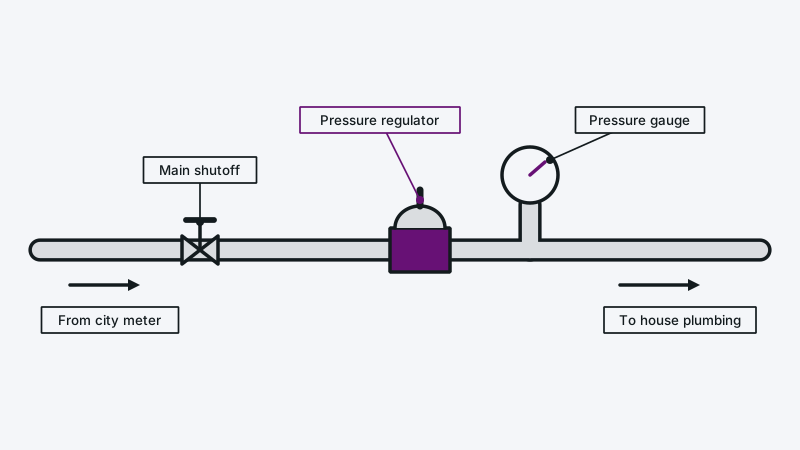
Normally it sits on the main water line right past the shutoff, at the point where the pipe comes into the house, often in the garage, on a front or side wall, in a utility closet or near the hose bib. Picture a bell-shaped brass body topped with a large adjustment screw and a locknut. Some homes have none.
Search the pipe between the meter and the first branch. A brass bell with a bolt on top is your regulator. Hillside homes, where street pressure runs high, often have one, while many flat-lot homes do not. Some older Valley houses still have the original, and some never had any.
Cannot spot it? A plumber can follow the main. Screwing a gauge onto a hose bib reveals the pressure, a quick and cheap test.
What is a water pressure valve, and what does one look like?
A pressure valve is a device that governs or caps the pressure in a pipe. The household version is a pressure reducing valve. Wikipedia describes a water pressure regulator as a valve that restricts inflow by varying its opening, closing as pressure climbs. Expect a brass bell about the size of a fist with an adjusting screw.
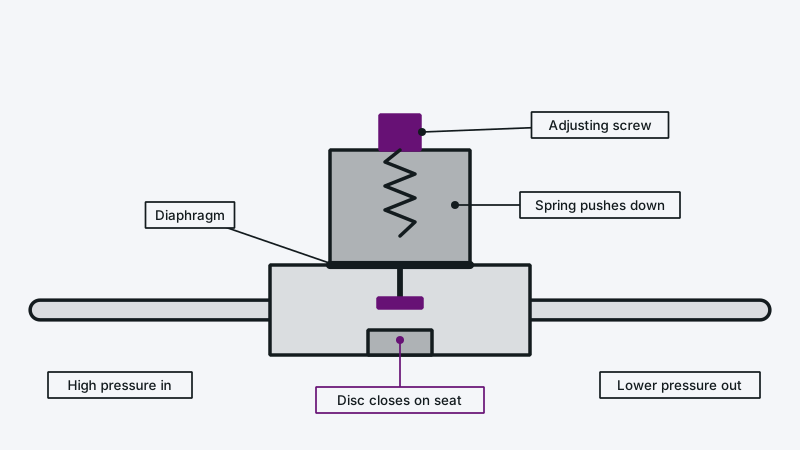
Pressure control valves fall mostly into three groups, and a house relies on two: the reducing valve at the main and the relief valve on the water heater.
A typical house operates near 40 to 60 psi. California plumbing code limits static pressure to 80 psi inside a building and requires a reducing valve above that, though you should confirm the current code with your city. Excess pressure shortens the life of everything the water touches.
When should I replace a regulator instead of adjusting it?
If it still works, adjust first. Loosen the locknut, turn the screw slightly while watching a gauge, then retighten. Replace it when pressure will not hold, the body leaks, adjusting changes nothing or the valve is past 15 years. A test takes minutes and spares you guesswork.
Each turn shifts the reading a little, so move in small steps and let the system settle. With low pressure, the regulator may simply be set too low, or the cause lies elsewhere, such as a half-closed valve, a clogged line or a leak. The other causes are on our page about weak water pressure.
When the answer is a pump and not a regulator, our guide on boosting water pressure in a house with a pump explains when that makes sense. Changes at the main, regulator or otherwise, may need a permit. Ask the Burbank building division or LADBS about your address.
What should I ask before I accept a quote?
Find out what the price covers. A good quote names the valve and its pressure range, labor, new unions or fittings, a pressure test and cleanup. Also ask if the city must close the water, if a permit is required and what happens should the pipe fail once opened.
The Contractors State License Board tells homeowners to verify a plumber's license ahead of the job. Home improvement contracts in California limit the deposit to $1,000 or a tenth of the contract, whichever is smaller. Request a quote and a local plumber we arrange will inspect first, with the price in writing before work starts. The Lankershim Plumbing home page shows everything else we set up.
Questions people ask
What lifespan should a regulator have?
Usually 10 to 15 years, less with hard water or high pressure. Failure shows up as creeping pressure, hammering in the pipes, spitting faucets or a dripping relief valve on the water heater. If yours is beyond 15 years and the pressure is erratic, replacement is cheap insurance.
Where do I find the regulator at home?
Normally on the main line, right after the shutoff where it enters the home. Check the garage, a front or side wall, or near the hose bib. It is a bell-shaped brass valve with a screw on top. Some homes lack one. A plumber with a pressure gauge can track it down in minutes.
What does a water pressure valve look like?
A reducing valve is a bell-shaped brass or bronze body, fist-sized, with an adjustment screw and locknut on top and pipe connections at each side. A few include a small gauge port. A relief valve, such as the one on your water heater, is smaller, with a lever and a discharge pipe.
What are the three main types of pressure control valves?
Three designs handle most jobs. A reducing valve lowers pressure for everything downstream. A relief valve opens only past a safe limit. A sustaining valve protects the supply side by holding pressure up. Around the house you will see the reducing valve on the main and the relief valve on the water heater.
Is a fuel pressure regulator the same thing?
No. A fuel pressure regulator is part of a vehicle's fuel system and a mechanic replaces it. A plumber replaces the water pressure regulator on a home's main line. If you were searching about a car, this page will not help, but for low or high water pressure at home, the figures above apply.
References
Updated