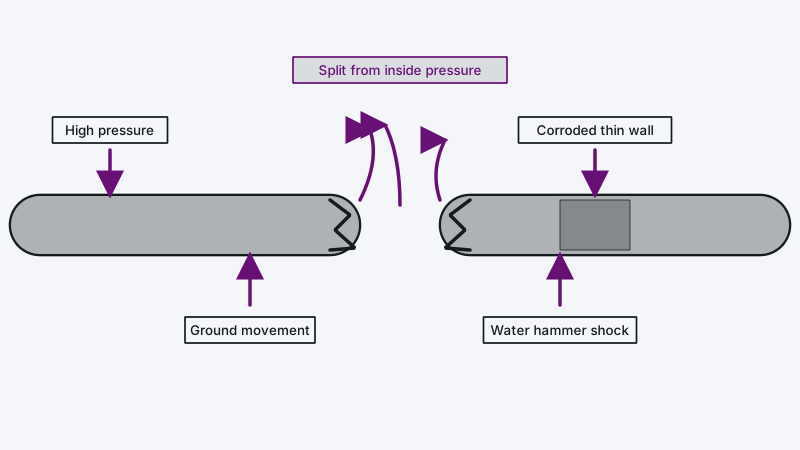
A pipe bursts when the force of the water inside is greater than the pipe can hold, and the water damage that follows can be large. Four things drive that: pressure that is too high, pipe that has aged or corroded, sudden pressure surges, and freezing or heat. In Burbank, age and pressure matter far more than cold. Our leaks and burst pipes guide covers the whole topic, and this page explains each cause.
Why does pipe age cause bursts in older Burbank homes?
Pipe wears out from the inside. Galvanized steel rusts internally, and Wikipedia gives a typical lifespan of about 40 to 50 years. Copper can develop pinholes. Cast iron drains crack or corrode. Weakened walls fail under normal pressure, so the burst looks sudden even though the damage built up for decades.
Wikipedia notes that more than 62 percent of Burbank's housing was built before 1970, with whole tracts going up in Magnolia Park between 1945 and 1950. That puts a lot of original plumbing at or past its expected life. Typical suspects by era:
- 1940s to 1960s: galvanized steel supply lines, copper, plus cast iron or clay drain lines.
- Late 1970s to 1990s: some homes were plumbed in polybutylene, a gray plastic that Wikipedia says degrades in chlorinated and chloramine-treated water and can leak or burst without visible warning.
- Newer repipes: copper or PEX, which hold up well when installed correctly.
If your house has old lines, a whole-house repipe may cost less than repeated repairs. A plumber can identify your material and show where it is weakest. For old drain lines, see cast iron pipe replacement.
Can high water pressure make a pipe burst?
Yes. Pipes and fittings are rated for a limit, and constant high pressure strains joints, hoses, fixtures and the water heater until the weakest one gives. A pressure regulator at the house controls it. If it fails, pressure creeps up and a hose bib, supply line or joint can burst, often at night when use is low and pressure rises.
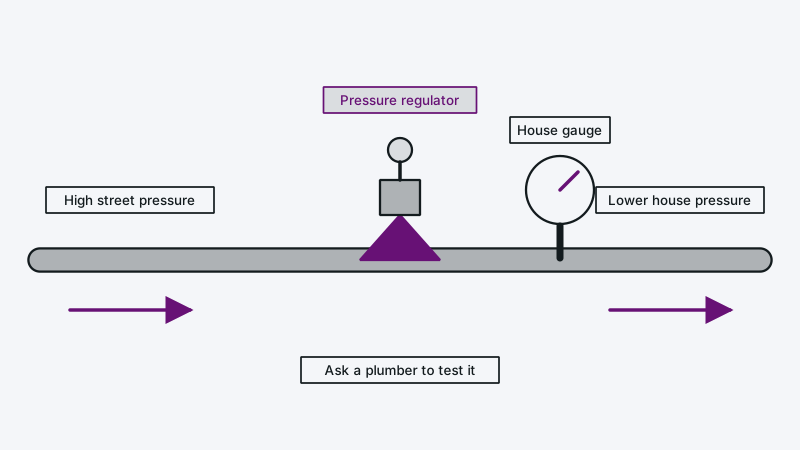
How to check: a plumber threads a gauge onto an outside spigot and reads the static pressure. Signs of too much include banging pipes, a dripping relief valve on the water heater and washing machine hoses that split. Wikipedia's article on water hammer lists pressure regulators among the ways to cut surge damage. If you have the opposite problem, read why water pressure is low in Burbank.
What is water hammer, and can it burst a pipe?
Water hammer is a shock wave in the pipes when moving water is abruptly halted, as when a washing machine valve or a toilet fill valve snaps shut. Over time it loosens fittings and fatigues pipe. In rare cases at high pressure it can rupture one. The banging you hear is the warning.
Wikipedia lists the fixes: water hammer arrestors near appliances, slow-closing valves and air chambers or expansion tanks. Cheap to add, easy to overlook. If you hear a thump when a valve closes, our page on the water hammer sound explains what to do. The sound is different from a burst, which is a steady rush of water that does not stop when you close a faucet.
Why does a pipe burst in winter, and does that happen in Burbank?
Water expands when it freezes, and the ice squeezes the pipe until it splits. The split often hides until the ice thaws. That needs a long stretch below freezing, which is uncommon on the Valley floor. Foothill homes and exposed lines in garages, outside walls or hose bibs are the realistic risk on a rare cold night.
If you do get a freeze, a plumber can check exposed lines and insulate them. A burst in a normal Burbank winter usually points back to age or pressure instead, so do not assume cold just because it is January. For prevention steps, see burst pipe prevention in Burbank. On newer PEX, see whether PEX will freeze and burst.
What causes a pipe to burst in summer?
Heat itself rarely bursts a pipe. In summer, bursts come from demand and from trapped water expanding as it warms. A closed plumbing system with no room for expansion, such as a house with a check valve or backflow device at the meter and no expansion tank, can see pressure spike every time the water heater cycles.
Summer also brings irrigation lines running harder, attic pipes baking in heat, and water heaters working near their limits. Many Valley homes were built before expansion tanks were common, so have a plumber look at yours. The part is explained on water heater expansion tank replacement.
Do ground movement and tree roots break pipes?
They can. Soil shifts after an earthquake, around a leaking line or when roots seek water, and the movement stresses pipe that cannot flex, especially cast iron, clay and rigid drains running under slabs and yards. The break may be at a joint or where a pipe enters the house, and it often shows only as a damp spot or a falling meter reading.
After a quake, check for water at the meter, wet spots and changes in pressure, and know how to shut off both water and gas. SoCalGas says to leave the building, call 1-800-427-2200 from a safe place and call 911 if danger exists should you smell gas. If you want help locating a hidden break, see water leak detection.
Questions people ask
What does a burst pipe sound like?
It sounds like steady rushing or hissing from inside a wall, ceiling or floor that continues when every fixture is off. Banging when a valve closes is water hammer, not a burst. Gurgling is usually a drain. If you hear a rush and the meter is moving with the house shut down, close the main valve and call a plumber.
How do I spot an early burst pipe?
Early signs include a damp or stained ceiling, a wet floor, pressure that suddenly drops, a meter still turning when everything is off, and a bill that jumps for no reason. EPA puts average household leakage above 9,300 gallons a year. Our checklist on whether a pipe has burst has the full checklist.
How long to learn why a pipe burst?
A plumber can often name the likely cause at the visit by looking at the break: a rust-through, a pinhole, a split from ice, or a failed fitting. Hidden causes such as high pressure need a gauge test, which takes minutes. When the pipe sits inside a wall or slab, finding it comes first. The quote ought to spell out what is covered.
What do I ask a plumber hired to find the cause?
Find out whether they will test water pressure, inspect the lines' material and age, and give the cause in writing instead of only patching the break. Verify the contractor's license with the CSLB, and ask what happens if another section fails. A repair without a cause leaves you open to a repeat.
Do I need to be present for the appointment?
Be there at the start to point out the shutoff valve and damaged area, and at the end to go over the findings. Renters should notify the landlord, since the cause may affect the whole building. Arrange access ahead of time if you cannot be present.
Booking starts with a quote request. The plumber home page shows what else we set up around Burbank and the Valley.
References
Updated