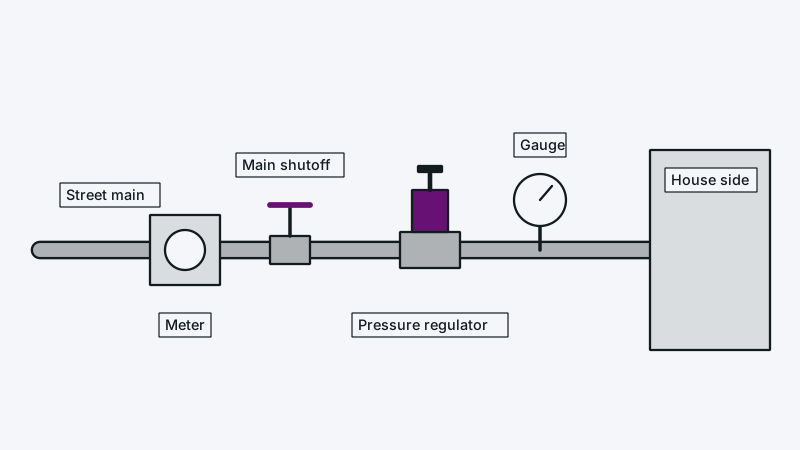
A plumber finds low water pressure by hooking a gauge to an outdoor hose bib and reading the psi, then working through the usual causes: a valve that is half shut, a regulator on its way out, a line that is partly blocked, a hidden leak or corroded pipe. Most homes should sit around 40 to 60 psi. Lankershim Plumbing sends a local plumber who tests before quoting. The steps are below.
What should I do if my house water pressure is low?
First work out whether the weakness is house-wide or local. Try several fixtures. Weak everywhere means looking at the main shutoff valve and the regulator. One weak fixture needs its aerator or showerhead cleaned. When only hot water is weak, start at the water heater. Put a gauge on the line instead of guessing.
Hardware stores sell a hose bib gauge for a few dollars. Shut every tap and take the reading. Anything below roughly 40 psi is low, 40 to 60 is normal for a house, and above 80 is too high and harms fixtures.
Check for a neighborhood cause too. Ask a neighbor if theirs is weak, and look at the notices from your water utility. Burbank Water and Power, Glendale Water and Power and LADWP each serve different parts of the area, and a main repair on your street can lower pressure for a day.
Our guide on causes of low water pressure digs further into the causes, while raising water pressure at home lists what a homeowner can try before calling anyone.
What does a plumber check when pressure is low?
The plumber reads the static pressure, then checks the main valve, the regulator, filters or strainers, the water heater and the pipe material. A drop in pressure when a tap opens points to restriction, such as scale or a partly closed valve. Low pressure with no flow usually points to the regulator or the street supply.
Steps usually run in this order:
- Take a hose bib reading while every tap is closed.
- Open the main shutoff and meter valve fully.
- Inspect the regulator and test its setting.
- Check the strainer, filter or softener bypass.
- Check for leaks, such as a meter that keeps turning when all water is off.
- Inspect old galvanized or corroded supply lines.
Galvanized steel supply pipe, used in some postwar Valley homes, rusts from the inside and narrows over decades, so pressure sags in the rooms farthest from the main. Copper can scale up in hard water too. If the pipes are the cause, a repipe is the real fix, and our page on whole house repipe explains it.
The plumber can also say whether only the hot side is affected, which usually means the water heater or its valves. See low pressure from the hot water.
How does a pressure regulator affect water pressure?
A regulator sets the pressure your house sees, so a worn or misadjusted one can leave the whole house weak or too strong. It is a bell-shaped brass valve on the main line that lowers street pressure to a safe level. Wikipedia describes a water pressure regulating valve as one that limits inflow by changing its opening.
Homes in hillside areas of Burbank and the Santa Monica Mountains foothills often have high street pressure, so many have a regulator, while flat-lot homes may not. A regulator that has failed shut or gone soft gives low, uneven pressure.
If it needs replacement, the cost is usually a few hundred dollars. See our pressure regulator replacement cost page for ranges. A plumber can also set it with a gauge in a few minutes.
A rule worth knowing: California plumbing code limits static pressure in buildings to a maximum of 80 psi and calls for a reducing valve above that. Check the current requirement with your building department.
Where is the pressure regulator, and what does it look like?
Look on the main line, typically just past the shutoff valve at the point the pipe comes into the house, often in the garage or beside the front hose bib. Look for a brass bell about the size of a fist with a screw and a locknut on top. Not every home has one.
If you cannot find one, do not worry. A plumber traces the main in minutes. A valve with a lever and a discharge pipe on the water heater is a relief valve, not a regulator.
Regulator lifespan varies with water quality and pressure. Roughly 10 to 15 years is common, and hard water shortens it. Signs of failure include pressure that swings, hammering, a dripping relief valve and faucets that spit.
What is a pressure valve, and what are the main types?
A pressure valve controls pressure in a pipe. The three main types are reducing valves that lower pressure downstream, relief valves that open to release extra pressure and sustaining valves that hold a minimum upstream. In a house you mostly meet the first two: the reducing valve on the main and the relief valve on the water heater.
Water hammer, a bang when a tap closes, is a related issue. It often follows high pressure or a worn regulator. Our page on water hammer sound explains it.
Can a leak cause low water pressure?
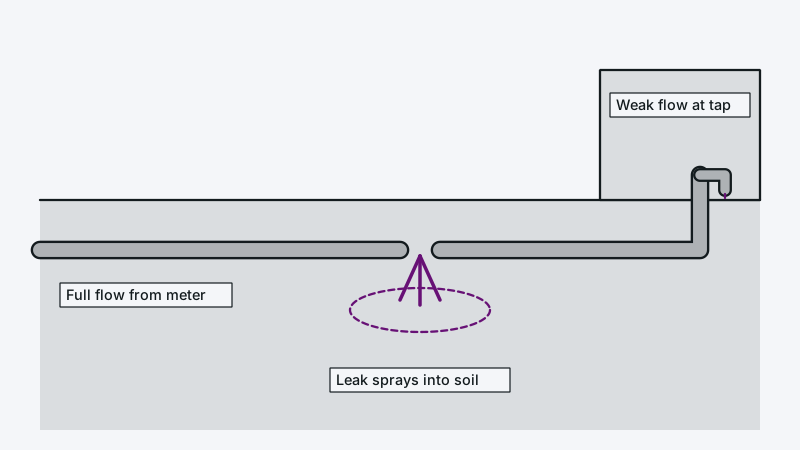
Yes. Water escaping from a buried line, a slab or a wall before it reaches the fixtures reduces what comes out of the taps. A high water bill with no visible leak is the other clue. Turn everything off and watch the meter, and if it moves, something is leaking.
Start with our guides on reading the water meter for leaks and high water bills with no visible leak. If you need to locate one, see water leak detection. For a visible burst or a wet spot in the yard, read about a plumber for a water leak.
Do plumbers deal with leaks? Yes, finding and repairing leaks is a core plumbing job. For pricing, see what leak repairs cost.
How much does it cost to fix low water pressure?
It depends on the cause. A blocked aerator or a half-open valve costs little. A regulator replacement commonly runs $250 to $900 as a guide. A leak repair or a section of replaced pipe costs more, and a full repipe is a major job. A plumber who finds the cause first can give a written price.
Hourly rates and call-out fees are covered in plumber hourly pricing and the service call fee. The Contractors State License Board advises homeowners to check a contractor's license, and limits a home improvement deposit to whichever is less, $1,000 or one tenth of the job price.
Request a quote and a nearby plumber will test your pressure and put the price on paper ahead of the work.
Questions people ask
Which three valve types control pressure?
Pressure reducing valves lower pressure downstream, pressure relief valves open to dump excess pressure and pressure sustaining valves hold a minimum pressure upstream. A house usually has a reducing valve on the main and a relief valve on the water heater. A plumber tells you which you have by sight.
Do plumbers deal with leaks?
Yes. Tracing and fixing leaks, whether a dripping fixture or a buried line, is everyday plumbing. Hidden ones may call for a meter test, pressure test or listening gear. Weak pressure and an unexplained high bill often start a leak search.
How much does it typically cost to fix a water leak?
A simple accessible repair can run a few hundred dollars as a guide, and a buried or under-slab leak costs more because of detection and digging. Price turns on pipe location, material and access. Once the plumber has found the leak, a written quote can come before any work.
What do you call someone who fixes water pipes?
A plumber. In California, plumbing above a small dollar limit belongs to a contractor who holds a California license, and you can verify one on the state license board's website. Permits are pulled by the contractor when a job needs one.
What is the price of fixing a leaking pipe?
For an easy, exposed pipe, expect a few hundred dollars as a guide, including the call-out. Pipes in walls or under slabs cost more, and a section of old pipe may need replacing rather than patching. Get the price on paper. Our page on plumber leak repair cost gives ranges.
In this section
- Costs
Water pressure regulator replacement in Burbank usually runs a few hundred dollars.
- Water pressure and valves
Fix low water pressure in a Burbank house: easy checks to do yourself, when to adjust a regulator, and when a booster pump or a plumber is…
- Water pressure and valves
Low water pressure in a Burbank home usually comes from a partly closed valve, a failing regulator, scale or old pipe.
References
Updated