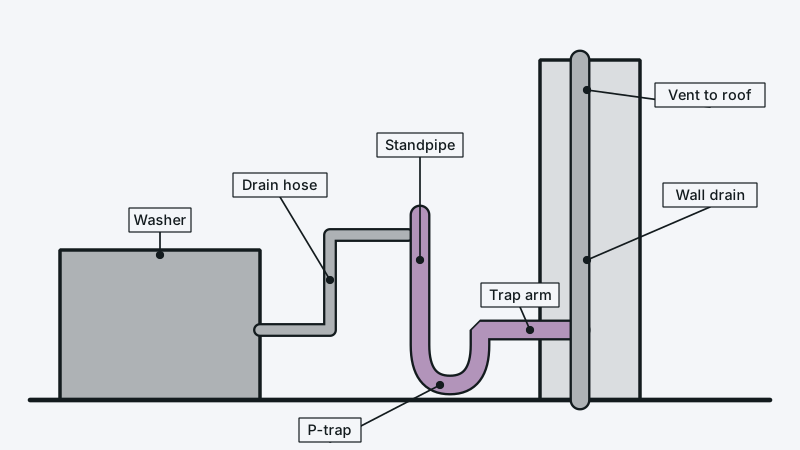
A washer dumps a big volume of water in one burst, which means its drain reveals trouble before any other fixture. Bubbling or spillover at the wall standpipe during the drain cycle signals a restriction. Typical culprits are lint and soap residue in the trap, a crushed hose, or a standpipe built to the wrong height. A clog that returns again and again calls for drain cleaning and hydro jetting, which a plumber handles with equipment you do not own.
Why is my washer drain overflowing or draining slowly?
The pump can push water faster than the pipe carries it away, so even slight narrowing shows quickly. Trouble spots include lint, hair and softener residue in the trap, a kinked or crushed hose behind the machine, and a standpipe that is too short or too narrow. Older homes may also have scale or roots in the wall drain.
Watch the drain cycle closely. Water climbing the standpipe and spilling only at the cycle's end means a partial blockage. Water that backs up and lingers afterward points to something worse. A gurgling laundry sink or nearby floor drain at the same moment puts the clog in a branch other fixtures share.
If small loads drain fine but large ones fail, the trap is probably half full of lint. If the drain has never performed well, suspect a standpipe or trap that was set up wrong.
How do I clear a clogged washing machine drain?
Switch off and unplug the washer, slide it out and inspect the drain hose for kinks and lint. Detach the hose from the standpipe, flush it with a garden hose and shine a flashlight down the standpipe. A plastic drain snare or short hand auger can draw lint out of the trap. Finish with a hot rinse cycle.
This order works in most homes:
- Unplug the washer and close the hot and cold supply valves.
- Put a bucket and towels on the floor. Remove the hose from the standpipe and let the water in the hose drain out.
- Check the hose for a kink and look through it toward the light for a plug of lint. Flush it with a garden hose.
- Probe the standpipe with a small plastic drain snare. Pull out the lint and hair, and rinse the pipe with hot water.
- Reconnect, run an empty rinse cycle and watch the standpipe.
Never force a long metal snake through a trap you cannot see, since a sharp bend can snag and scratch the pipe. Never put chemical drain cleaner into a standpipe: it pools in the trap and can splash when the washer empties. After any exposure, Poison Help answers at 1-800-222-1222.
How high should a washer standpipe be in California?
As summarized in city guidance on the state code, the standpipe top must sit at least 18 inches and no more than 30 inches above the trap weir, using pipe at least 2 inches wide for the washer. Too low and it can overflow, too high and it can siphon the drum. Your house is best confirmed with the Burbank building division.
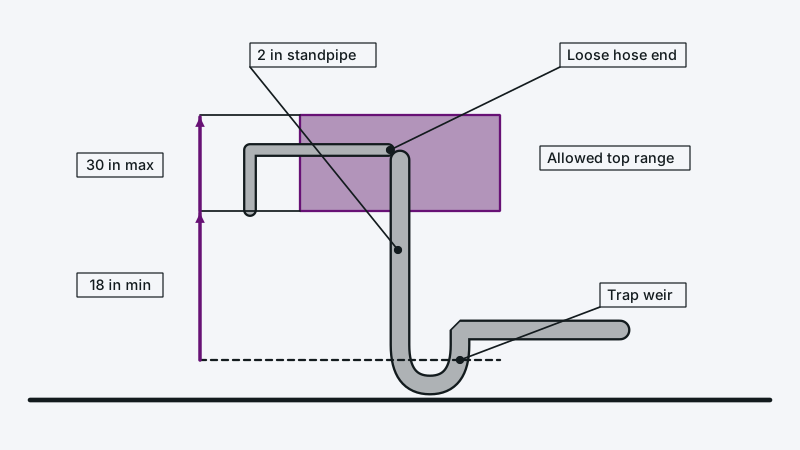
A 2022 remodel handout from San Bruno says washer standpipes must measure 2 inches across. The 18 to 30 inch height originates in the standpipe section of the California Plumbing Code and is tighter than model codes in some other states. A trap is usually roughed in 6 to 18 inches over the floor, never beneath it.
Treat those figures as a preview of what a plumber inspects. A house built under an older code may be fine, yet a laundry that overflows weekly suggests something is off.
What if the clog is in the wall or under the slab?
A clear standpipe and clean hose with water still rising puts the blockage in the branch inside the wall or below the floor. The plumber works a cable or jetter in through a cleanout or the standpipe and uses a camera to inspect the pipe. Wall or slab work often needs a quote beforehand, since the cost depends on how deep and how long the damaged section is.
In many Valley homes from the 1940s to 1960s, the laundry often drains into a cast iron or clay branch below the slab, where roots, scale and lint pile up together. A camera run lets a plumber show you the damaged spot. A cracked or collapsed pipe is repair work, not cleaning, and the repair can involve opening the slab, so get the price on paper before anyone starts.
See our hydro jetting page to learn how a jetter scours the whole pipe wall, and the cost of hydro jetting lists what drives the price.
How do I keep a washer drain from clogging again?
Fit a lint filter on the discharge hose, go easy on soap and softener (more does not clean better and it coats the trap), run an occasional hot cycle with the drum empty, and keep sharp bends out of the hose. Avoid washing heavy lint producers like new towels or pet bedding in every load.
The laundry drain serves other fixtures too. If a nearby sink or tub gurgles as the washer empties, the vent or the line shares the blame. For how fixtures share branches, see our guide to a clogged bathtub drain.
On a front-loader, clean the door gasket and pump filter regularly. A plugged pump filter inside the machine mimics a clogged house drain, so check it before calling anyone.
Questions people ask
How much time does clearing a washer drain take?
Cleaning the hose and standpipe yourself takes 30 to 60 minutes. When a plumber cables the trap or branch, the visit generally lasts under an hour, and a slab line or camera inspection stretches it. Either way, the machine has to be pulled out first, so allow time for that. A broken or collapsed line means repair rather than cleaning.
Which questions should I ask a plumber about a washer drain?
Find out if the price includes the cable and a camera look, if the standpipe or trap must change to meet code, if a permit is required, and the plan should the clog turn out to be under the slab. Get the price written down before the job begins, so nothing changes once the machine is moved.
Must I be home when the plumber comes?
Yes, or arrange for a responsible adult to be there for the whole visit. The plumber will move the washer, run a test load and explain the findings to you. Clear space around the machine, and mention any past leaks, flooding or recent laundry plumbing changes.
Is the washer or the drain the problem?
Start a hot rinse with the hose in a bucket. A bucket that fills at a normal rate means the machine pumps fine and the house drain is at fault. Slow pumping into the bucket points to the pump filter or hose. About five minutes separates the two causes.
Can a clogged washer drain flood my laundry room?
Yes. Washers discharge a large volume fast, and even a partial clog can overflow the standpipe. Floor water can also soak baseboards and cabinets. Stop the washer, switch it off and keep other fixtures idle until a plumber clears the line. Should water keep spreading, close the washer's supply valves.
For the wider picture, start with plumber in Burbank.
References
Updated