A leaking copper water pipe gets fixed by removing the bad section and splicing in fresh pipe with solder, a press fitting or a push-fit coupling, or by swapping the entire run when the pipe is worn throughout. Start by closing the closest valve. Whether it can be a quick repair or needs more depends on the leak type, which this page walks through. It is part of our set on leaks and burst pipes.
What kind of copper pipe leak do you have?
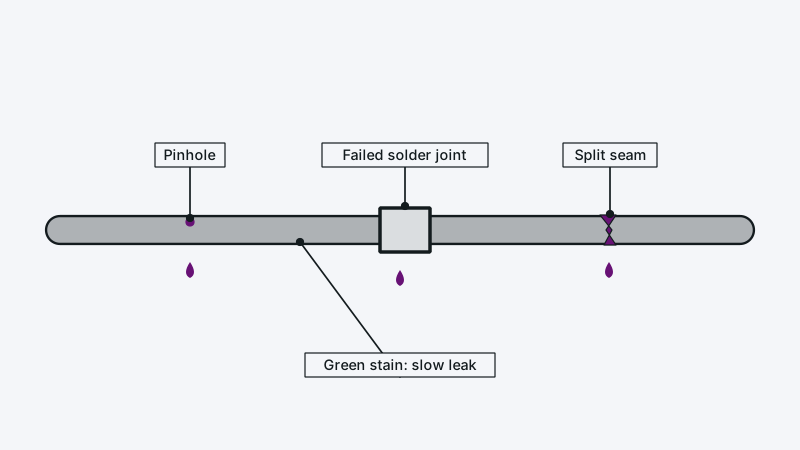
Look at where the water comes from. A fine spray or a wet spot on the pipe wall is a pinhole. Water weeping at a fitting is a failed joint. A long split along the pipe, often with a bulge, is a pipe that froze or took a pressure surge. Each has a different cause and a different fix.
Pinholes are the leak most common in older Valley houses. They can start on the inside from water chemistry or on the outside from the surroundings. Wikipedia's copper tubing article notes that a faulty electrical ground or bond can cause stray current corrosion, and that it often appears after plumbing changes that break electrical continuity. Tell the plumber if a filter, plastic section or water softener was added before the leaks began.
Joint leaks are usually a solder joint that was not fully filled, a fitting that has aged, or one that has been stressed by movement or water hammer. Joints can fail in a house where the pipe itself is healthy.
Splits are rare in Burbank because hard freezes seldom reach homes on the Valley floor. They do happen in unheated garages, and at hose bibs in the foothills on cold nights.
Green or white crust at a spot signals a slow leak that has lingered. Clean, fresh water with no crust points to a recent leak.
How do you stop a leaking copper pipe right now?
Turn off the closest shutoff, or the main if none is in reach, then empty the line through the lowest faucet, and wipe the pipe dry. After that, slow the leak with a rubber-and-clamp repair sleeve or a push-on coupling made for copper. Treat anything you apply as temporary until a plumber has looked at the pipe.
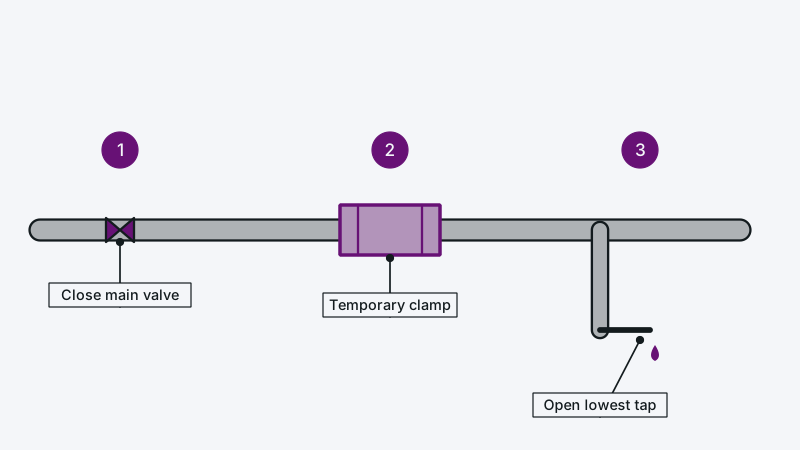
Learn the main shutoff location ahead of an emergency. Many Valley homes have it by the front hose bib, or inside the meter box under a concrete lid.
Temporary measures that work for a short time:
- A pipe repair clamp with a rubber pad, tightened over the leak.
- Epoxy putty rated for water pipes, applied to a dry, clean surface.
- Self-fusing silicone tape wrapped tightly.
These are holding actions. They do not fix a worn pipe, and putty on a wet pinhole usually fails. If you are using a sealant, our page on water pipe leak sealant explains which products hold up and which fail, and our guide to fixing a leaking pipe joint without replacing it covers the joint case in more detail.
Where water is close to an outlet, panel or appliance, switch that area off at the breaker, provided the panel is reachable while you stand on dry ground. If not, leave the house and get help.
Can you repair a leaking copper pipe yourself?
You can, for a short accessible section, if you are comfortable with the tools. The no-flame way is a push-fit or press-style coupling on cut, clean copper. Soldering needs a torch, flux and protection for nearby wood, and is a fire risk in attics and wall cavities. Many homeowners are better served by calling a plumber.
If you try a push-fit repair, the steps are:
- Close the supply and empty the line.
- Cut out the leaking section with a tubing cutter, square and clean.
- Deburr the ends and wipe them dry.
- Mark the insertion depth on the pipe.
- Push the coupling on fully and check the mark.
- Turn the water on slowly, watch for a drip, and check again a day later.
Hand the job over when the pipe runs inside a wall or beneath a slab, when the main line is leaking, when corrosion extends several feet from the break, when more than one leak exists, or when a permit applies. For permits, call LADBS at 3-1-1 (the city's building department), or the building division at Burbank city hall. California also expects a contractor license on larger jobs, and the state's license lookup lets you verify one.
How much does it cost to repair a leaking copper pipe?
An easy repair on an exposed pipe usually runs a few hundred dollars. Fixr's published guide puts typical burst pipe repair at $200 to $1,000, with an average near $500, and hard-to-reach jobs reaching about $2,000. A pipe hidden in a wall or floor costs more, thanks to the access work.
What moves the price: where the pipe sits, how long the damaged section is, whether pipe must be replaced and not patched, whether the visit is after hours, and whether drywall or flooring must be repaired. Those are national figures rather than Burbank quotes, so read them as a rough guide. The real number comes from your written quote.
For longer-term costs, compare patching against replacing. A house with repeated pinholes may be cheaper to repipe than to chase leaks one at a time. Our pages on copper versus PEX plumbing and the cost of repiping a house set out that choice, and plumber leak repair cost shows how rates are built.
When is it time to replace the pipe, not repair it?
Replace when leaks return, when two or more pinholes show up within a few feet, when the pipe has thinned or flakes inside, or when the plumber cuts in and finds soft, corroded copper at both ends. Any patch depends on the soundness of the pipe it joins.
Warning signs that a run is near the end: blue-green stains at several spots, pin-sized drips in different rooms over a year or two, low pressure from narrowing, and water that comes out discolored when first turned on. Homes with many leaks on the hot side sometimes have a water heater temperature or recirculation issue that speeds wear, which a plumber can check.
When a house needs the whole system redone, read about how to repipe a house and whole house repipe. Whatever you choose, ask for the plan in writing.
What do you do about water damage after the leak?
Speed matters. The EPA says wet areas and items need drying inside 24 to 48 hours to head off mold. Remove wet baseboards, lift soaked carpet pad, set up fans and a dehumidifier, and open the wall if the leak was behind it.
If a large area is wet, or the leak sat for days, bring in a drying contractor. The EPA's mold cleanup guidance suggests professional help when mold covers more than about 10 square feet, or when damage is significant. Photograph everything for your insurer before you remove it.
Questions people ask
How long does leaking copper water pipe repair take?
A simple accessible repair is often done within a couple of hours, including shutting off and draining the line and testing the fix. Cutting and patching drywall adds time if the leak is behind a wall, and a leak that reveals corroded pipe may turn into a larger job. Ask for the expected duration and for who handles the wall repair.
What should I ask a plumber about leaking copper pipe repair?
Ask whether the price covers finding the cause or just patching the spot, what fittings they will use, and how they will check the rest of the line. Ask about a permit if the work is more than a small repair, and whether wall or floor patching is included. Get their contractor license number and run it through the state lookup.
Does someone have to be home for a leaking copper pipe repair?
Yes. Someone must open the door, show the main valve and sign off on whatever the plumber finds. A repair often needs a decision on the spot, such as replacing a longer section. When you cannot attend, pick someone who can approve changes and keep your phone on.
Is a leaking copper pipe an emergency?
Yes when water sprays, floods a floor or reaches electrical equipment. Close the valve and phone a plumber. A slow pinhole on an accessible pipe can wait a day while you shut the valve and book a visit, but do not leave it, since leaks get larger and damage the structure behind them. See our emergency plumber page for water leaks for urgent cases.
The rest of our guides start from plumber burbank.
References
Updated