To fix low water pressure, first read it with a gauge, then open the main valve fully, clean aerators and showerheads, check the pressure regulator and look for leaks. Only if the street pressure itself is low does a booster pump make sense. Our low water pressure plumber page explains how a plumber diagnoses it. Below is the do it yourself order, and where to stop.
What is the first thing to do about low water pressure?
Measure it. Screw a pressure gauge onto a hose bib to read static pressure in psi with every tap closed. About 40 to 60 psi is normal for a house. Under 40 is low, and over 80 is high and hard on fixtures. The number tells you which way to go, and a guess does not.
Next, test more than one fixture. If every tap is weak, the cause is at the main or the street. If it is one tap, the cause is at that fixture. If it is the shower only, the showerhead or cartridge is the likely culprit. If only hot water is weak, inspect the water heater, and read no hot water from the shower if the heat is the problem as well.
Do these checks in the morning and the evening. If pressure drops at peak hours in your neighborhood, the cause is the street supply, and a call to your water utility is worth making.
How do I fix low water pressure in a bathroom?
Start at the faucet, with its aerator, and at the showerhead. Unscrew them, leave the parts soaking in vinegar for about sixty minutes, scrub away the scale and refit them. Hard water leaves mineral deposits that block the small holes. If one bathroom is weak and the rest are fine, this fixes most cases.
Then inspect the angle stops beneath the sink or behind the toilet and turn each one fully counterclockwise. A half open stop looks like low pressure. If the shower alone is weak, the cartridge may be worn or clogged, and replacing it is a small repair.
Hard water is common in the San Fernando Valley, so scale is the usual villain. Cleaning the fixtures is covered under removing hard water scale. If scale returns quickly, a softener may be worth a look, see water softener installation.
How do I fix low water pressure for the whole house?
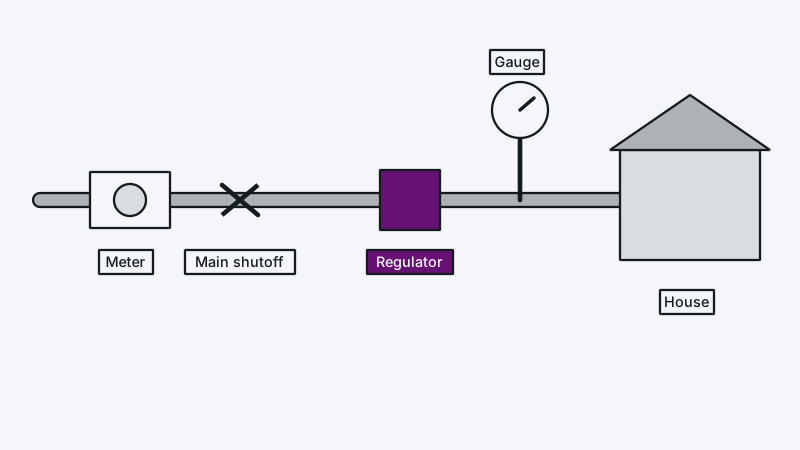
Check the main shutoff and the meter valve first. A main valve that is only partly open cuts pressure to the whole house. An old gate valve or a ball valve left untouched for years can jam partway. Open it all the way. A utility valve in a shared meter box is not yours to touch; phone the utility instead.
Then check the regulator, a bell-shaped brass valve on the main line. If the pressure is low and the regulator has an adjusting screw, a gauge on the hose bib lets you bring it up slightly. Loosen the locknut, turn the screw a small amount clockwise, watch the gauge and retighten the nut. Keep the result under 80 psi.
Last, look for leaks. Shut off all fixtures and watch the meter. A moving dial means water is getting out somewhere. Hidden leaks cost you pressure and add to the bill. See reading the water meter for leaks.
Can I replace a water pressure regulator myself?
Some owners do, but think before you try. The swap involves shutting the main, cutting or unscrewing pipe, matching the valve and setting the pressure with a gauge. A mistake can flood the house. In California, jobs that need a permit or involve the main belong with a plumber under a state contractor license, so confirm requirements with your building department.
A new valve costs about $60 to $250, and a plumber's replacement runs a few hundred dollars as a guide, so the saving from do it yourself is modest. Our page on regulator replacement cost breaks down the price.
Adjusting is different. Turning the screw a small amount with a gauge in place is a minor task that many owners handle. The rule is simple: adjust if it works, call a plumber if it leaks, will not hold or is over fifteen years old.
Will a booster pump increase water pressure in my house?
When the street supply really is low, a booster pump can lift pressure, though it cannot cure a clog, leak or closed valve. It pushes more water through the same pipes, so a restriction stays a restriction. Test first. In most Burbank homes pressure is already adequate, and a pump is rarely the answer.
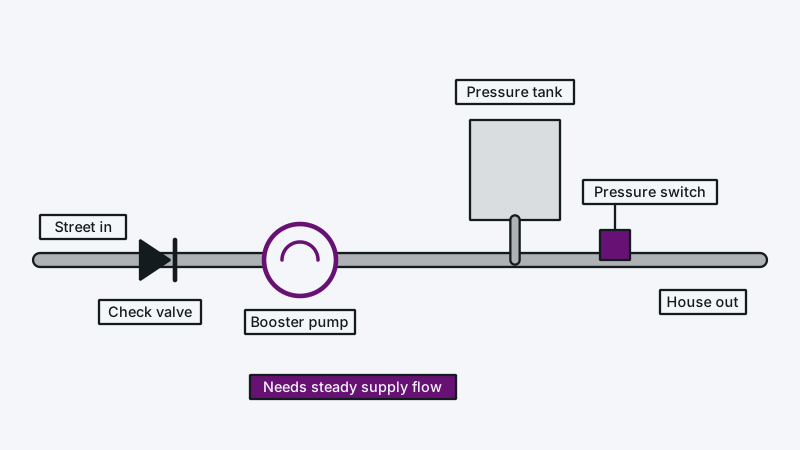
A pump adds noise, electricity use and a maintenance item. The usual set up is a pump with a pressure tank that sits on the line after the meter. As a rough guide, costs start at several hundred dollars and can reach about two thousand, depending on size and electrical work.
Check with your water utility before you add a pump to the service line. Some utilities restrict pumping directly from the supply because it can lower pressure for neighbors or draw contaminated water back into the system. A backflow device may be required. Wiring and a permit may also be needed, so ask your building department.
When should I call a plumber for low water pressure?
Hire a plumber if the gauge shows low pressure at the main, if you find or suspect a leak, when the regulator is leaking or ancient, when pipes are old galvanized steel or when the cause is not clear after the basic checks. A plumber can test, find the fault and write a price.
Old galvanized lines in some Valley houses rust shut from the inside, and the real fix is replacement. See whole house repipe. If a pipe is leaking or a line has burst, read a plumber for a water leak. If you hear banging when a tap closes, that is covered on water hammer.
To start, submit a quote request and a local tradesperson visits, giving you a price on paper first. Other jobs we set up in Burbank and the Valley are listed on the Lankershim Plumbing home page. Typical regulator and valve costs appear in the water pressure regulator replacement cost guide.
Questions people ask
How much time does a pressure fix need?
Cleaning an aerator or opening a valve takes minutes. A regulator swap usually takes one to three hours, and a booster pump install a half day or more. Finding a hidden leak or replacing old pipe takes longer. A plumber should give a time estimate once the cause is known.
What do I put to a hired plumber about pressure work?
Learn what gets tested first, whether a gauge reading is taken, what the price includes, and any permit that applies. Verify the contractor's license with the state board. Get the quote written down, along with the plan should the cause prove to be a leak or old pipe.
Must someone be in the house?
An adult should be on hand to open the main valve, meter and fixtures, and to watch the before and after readings. Expect the supply to be shut off during part of the visit. A shared meter box access should be mentioned to the plumber ahead of time.
Is high water pressure a problem too?
Yes. Over about 80 psi can wear out faucets, washers, water heaters and toilet fill valves and can cause hammering. A reducing valve is required by California's plumbing code above that limit. If your gauge reads high, a regulator adjustment or replacement protects the plumbing.
Why is my water pressure low only in the shower?
Usually the culprit is a clogged showerhead, worn cartridge or flow restrictor. Soak the showerhead in vinegar and inspect the cartridge. Weakness on the hot side alone may come from the water heater or a mixing valve. A plumber can test it.
References
Updated