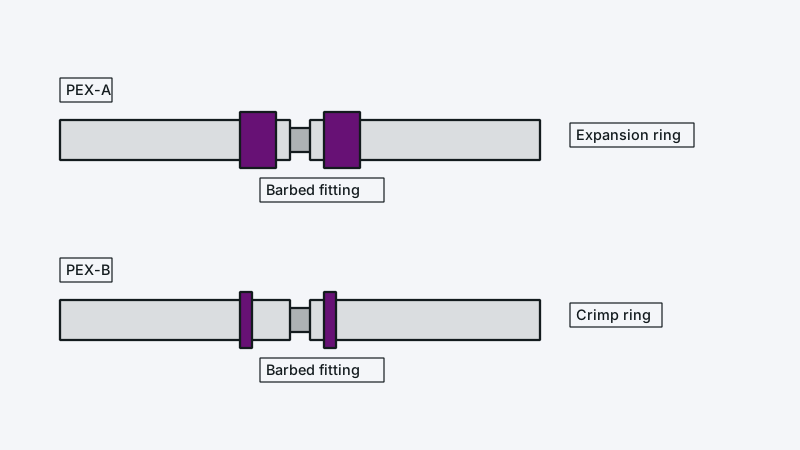
Neither one wins outright. PEX-A and PEX-B are both cross-linked polyethylene, made to the same ASTM F876 standard, and both are used for water lines in California homes. A is made with a slower process, tends to be more flexible and is usually joined with expansion fittings. B costs less and is usually joined with crimp or clamp rings. For most repiping jobs, the installer's skill matters more than the letter. You can request pricing through the quote page.
What is the difference between PEX-A and PEX-B?
The letter reflects how the cross-linking was done. PEX-A is made by cross-linking the polyethylene while it is still hot, above its crystal melting point, using peroxide. PEX-B is cross-linked after extrusion, in a second step that uses silane and is helped along by heat and moisture. PEX-C uses electron-beam radiation, a cold process. The European labels are not a quality ranking.
Reference sources note that ASTM F876 requires a cross-linking degree between 65 and 89 percent, whichever type is used. The German standard sets minimums of 75 percent for A, 65 for B and 60 for C. In plain terms, all are products of the same family, and a plumber would pick based on the job, the fittings and the price.
Which type is more flexible and easier to work with?
PEX-A is generally described as the more flexible and forgiving of the types, and many plumbers say it can recover from a kink when warmed. PEX-B is somewhat stiffer, which some installers prefer for neat, supported runs. We could not verify the kink-recovery point from a standards body, so ask your installer which they use and their reasons.
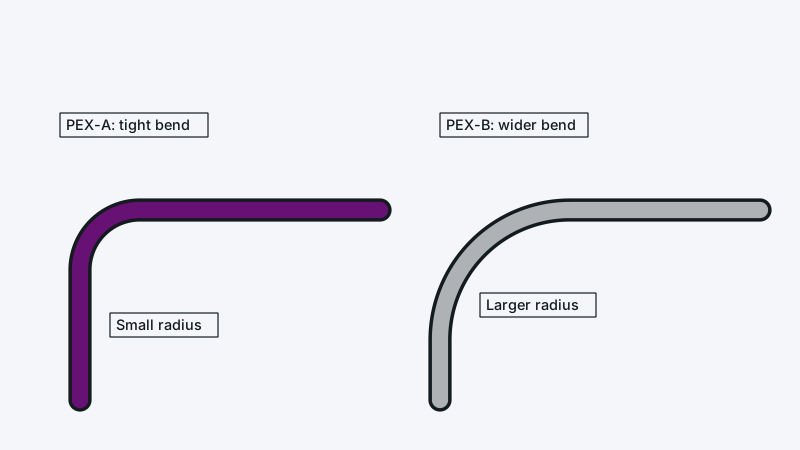
Flexibility matters most in walls. Tubing that bends in long sweeps needs fewer fittings, and fewer fittings means fewer places a leak can start. In an old Valley ranch house, with a low attic and framed walls, bends make routing easier. The material still must be supported, kept out of sunlight and protected where it passes through framing.
Which fittings does each type use?
PEX-A is commonly joined with cold-expansion fittings, where the tube is expanded, the fitting is inserted and the tubing shrinks back around it. PEX-B is commonly joined with crimp or clamp rings. Reference sources note that crimped fittings are cheaper but need a specialized crimping tool, while compression fittings use ordinary wrenches and are easier to take apart.
Ask which system the plumber will use, and whether the fittings and tubing are made to work together. A good installer matters more than the fitting brand.
Is PEX-A or PEX-B cheaper?
PEX-B is usually the cheaper tubing, and crimp fittings are cheaper than expansion systems. That can show up as a lower material cost, but the difference on a whole-house repipe is usually small next to labor, permits and drywall. We have not found a published Burbank price gap, so ask each plumber to state the type and price it.
Either type is the lower-cost material next to copper, which a national guide lists at several times the price per foot. Our page on PEX repipe cost lays out the ranges. Treat a quote with suspicion if it leaves out the type, brand or fitting system, since you cannot compare what is hidden.
Does either type handle chlorine, sunlight and cold better?
All PEX includes antioxidants to stabilize it against chlorine, and sources say it resists chlorine and scaling. Neither type should sit in sunlight, because direct exposure for as little as 30 days may cause embrittlement. Cold is less of an issue, because both letters share the flexibility that helps PEX in a freeze.
Southern California homes rarely face hard freezes, but attic runs get hot and sunlit if exposed. Ask where the tubing will run and how it will be protected. If you want to know how PEX acts in cold, our page on PEX freezing and bursting covers it. UV exposure on stored rolls or outdoor stubs is a common installation mistake worth checking.
Is PEX allowed in California homes?
Yes. California approved PEX for the California Plumbing Code with adoption effective August 1, 2009, after earlier case-by-case allowances. Plumbing references estimate PEX is now used in about 60 percent of single-family homes in the United States. Permit and inspection are both still required for a repipe, and the work should go to a contractor who holds a California C-36 plumbing license.
Cities enforce the code through their building departments: the Burbank Building Division, Glendale Building and Safety and LADBS in the LA city neighborhoods. A plumber normally pulls the permit. If something about the pipe type matters to you, ask the inspector or the building department what they will check on site.
How should you choose between PEX-A and PEX-B for your house?
Choose by the installer and the system, not the letter. Ask the plumber to name the type, the fitting method and the manufacturer, and to put them in the quote. If you want maximum flexibility and the plumber is set up for expansion fittings, A is reasonable. If budget leads and the crew crimps every day, B is reasonable. Both are accepted.
Compare it against the alternative of copper on our PEX versus copper page, and read why people repipe at all if you are still deciding. From the Lankershim Plumbing home page you can reach the rest of our plumbing guides.
Questions people ask
Does PEX-A or PEX-B change how long the repipe takes?
Not by much. Installation time depends more on the house, the access and the permit inspection than on the tubing letter. Expansion fittings and crimp rings each have their own steps, and a crew that works with one system every day goes quickest. Ask the plumber for a schedule and use that to compare.
What should the quote say about the PEX type?
It should name the tubing type, the maker, the fitting system and the pipe sizes. A line that only says PEX leaves room to swap in something else. With the maker's name you can look up the published specifications, and compare two quotes on materials before you compare them on price.
Can I see the tubing before it goes in the walls?
Yes, ask. PEX is printed along its length with its size and rating marks, and a plumber can show you a coil when it arrives. Checking the markings against the quote is a quick way to confirm what you are paying for. Also ask that the tubing be kept out of sunlight until it is installed.
Is it fine to combine PEX-A and PEX-B in a single house?
Tubing of both types can appear in a house, but fittings must match the type they were made for, and mixing fitting systems is a common source of leaks. A plumber should stick with one system through the whole job, and should not combine parts from different makers unless the manufacturer allows it. Ask before the work begins.
References
Updated