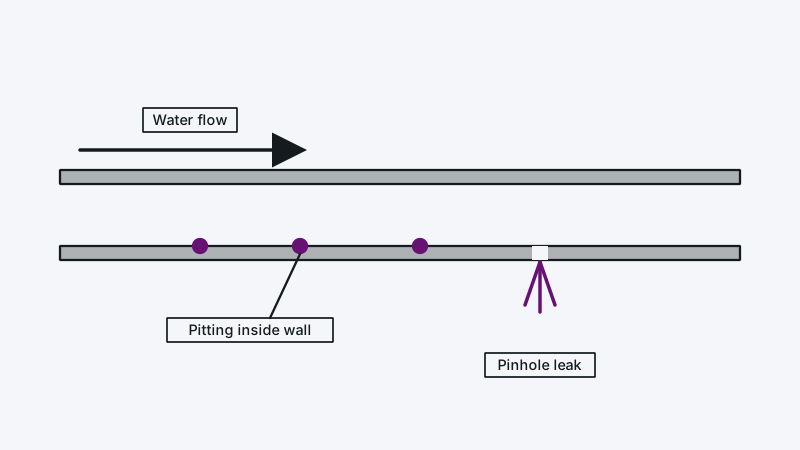
A house gets repiped once the supply pipes are failing throughout and spot repairs cannot keep pace. Typical triggers are galvanized steel clogged with rust, copper with repeat pinhole leaks, water that comes out brown or tastes of metal, and pressure that has faded at several fixtures. It is a decision about the whole system, so see repiping and pipe replacement. To price it, use the quote page.
What are the main reasons to repipe a house?
There are four. The pipe material has reached the close of its service life, as with galvanized steel from the 1950s. Leaks keep appearing in different places. Water quality has changed, with rust color or metallic taste. Or flow has dropped from internal scale. Remodels and sales also prompt it, because a buyer's inspector may flag old pipe, and open walls make replacement cheaper.
Notice what is not on the list: age alone. A house with sound copper can be 60 years old and fine. What matters is the material, its condition and how the leaks are distributed. One leak is a repair. A string of them, especially at different places in different rooms, is the pattern that points to replacement.
What do failing galvanized pipes look like?
Galvanized steel corrodes from within. You see brown or reddish water when a tap has been off, a metallic taste, falling pressure and weeping at threaded joints. The zinc coating protects the steel for a while, but it wears, and mineral buildup and rust can reduce flow and eventually cause the pipe to fail.
Service life for galvanized pipe in potable water is roughly 30 to 50 years, and it was common in American homes until about 1960. LADWP's estimate is shorter: about 20 years before rust shows, and up to 40 for pipe made well. That makes a Valley ranch house from the 1940s or 1950s a likely candidate. The signs are detailed on galvanized pipe replacement.
Why do copper pipes start leaking?
Copper pinhole leaks usually come from three things. Pitting can start from contamination such as soldering flux. Erosion can happen where water moves fast or turbulently. Stray electrical current from poor grounding or bonding can eat through the wall of the tube, sometimes visibly within about six months. Each has a different fix, so find the cause before choosing.
If the cause is local, a spot repair and a grounding check by an electrician may solve it. If it is the water chemistry or pipe throughout the house, repiping becomes reasonable. LADWP notes that a drop in pH can cause copper to leach from piping. Read our page on leaking copper water pipes before you decide, and compare materials on the PEX versus copper page.
Is lead a reason to repipe?
It can be, depending on what you have. The EPA says lead pipes, lead solder and brass faucets and fixtures are common sources of lead in drinking water, and that only a lab test can tell you for certain. LADWP states its delivered water contains no lead, and that solder concerns should be minor in homes built after 1990.
So for a 1950s house with copper repaired with old solder, a test is worth doing. A test typically costs $20 to $100, according to the EPA. Until you know, drink and cook with cold water and run the tap before use. If a test shows a problem, replacing old piping and old faucets are the two places to look. Ask the plumber about both.
When is a repair enough instead of a repipe?
A single leak in an otherwise healthy system calls for a repair. When the leak is at a fitting or short section, and the remaining pipe looks clean and flows well, repair is cheaper and quicker. A plumber can cut out the bad piece and join in new pipe, and for copper, may check bonding and grounding.
A repipe makes sense when repairs repeat, when many fixtures show low pressure, when the water is discolored throughout, or when you plan to open walls for a remodel anyway. Ask the plumber for a quote on both a repair and a full repipe so you can see the gap. Our repipe cost page gives national ranges to compare against.
Does a repipe save money, mold and water damage?
It can prevent them. A hidden leak inside a wall can soak insulation and drywall for weeks before you notice, and wet cavities can grow mold. Replacing failing supply pipes cuts that risk, which is the real saving. It also removes the repeated cost of patching and fixing walls after each leak. It does not usually lower your water bill much.
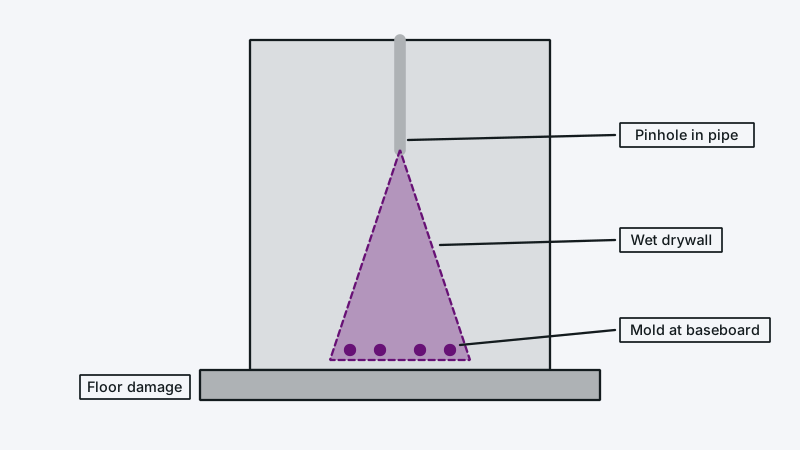
The caveat is that repiping itself is expensive, and it only pays off if the old pipes are really failing. National figures run about $1,500 to $15,000 with an average near $7,500. If you have not had leaks, rust or pressure problems, there is no reason to repipe early. Keep a record of any leak repairs so a plumber can see the pattern.
What should you do first if you suspect the pipes are failing?
Check the visible signs. Run hot and cold at the far bathroom and see if the water is clear and the pressure holds. Check beneath sinks and around the water heater for corrosion, green crust or drips. Photograph pipe types. Know where the main shutoff is. Then ask a plumber to inspect and, if needed, pressure test.
With an active leak, close the main and phone for help. For planning, our guide on how to repipe a house walks through the process. California requires a permit and a contractor license for this work, so ask who pulls the permit. More repair guides sit on the Lankershim Plumbing home page.
Questions people ask
Is it worth repiping before selling a house?
If the pipes are galvanized or leaking, a buyer's inspector may flag them, and a repipe with a final permit sign-off removes the issue. If the plumbing is sound, there is no need. Ask a local agent how buyers in your neighborhood treat older supply lines, and get a written scope from the plumber to give buyers.
How can I find out how much damage the old pipes have done?
Ask a plumber for a pressure test and to inspect any pipe cut out during a leak repair. Check flow at the farthest fixture and look for stains on ceilings and cabinet floors. Soft drywall, mold or musty smells suggest hidden leaks and deserve a closer look before you decide.
Can I repipe only the worst part of the house?
Yes. A plumber can replace the failing runs and leave sound ones, but a mixed system leaves old steel to keep rusting and can leave pressure uneven. Where steel meets copper, a dielectric coupling is used. Partial work suits houses with one trouble spot. Ask for the cost of both options.
How can I tell whether my house has galvanized pipes?
Check near the water heater and under sinks for gray metal pipe with threaded joints. A magnet holds to steel, which separates it from copper and plastic. Homes from the 1940s through about 1960 are the likeliest to have it. A plumber can confirm it in a quick visit.
References
Updated