Until roughly 1960, galvanized pipe, which is steel with a zinc coating, was the usual choice for water lines in houses. Inside, it rusts and collects mineral scale, which is why old Valley houses lose pressure and get brown water. Replacement means running new PEX or copper through the house, and it counts as repiping. Most houses take a few days, and a permit is expected. Get the price in writing from the quote page.
How do you know your pipes are galvanized steel?
Check the spot where the water line comes into the house, plus the plumbing beneath sinks and beside the water heater. Galvanized pipe is gray, threaded at the joints, and a magnet sticks to it. Copper is orange-brown and a magnet does not stick. Plastic is white, cream or colored. If you scratch the surface and find silver-gray metal that a magnet grabs, it is steel.
Plenty of 1940s and 1950s tract homes in Burbank, North Hollywood and Van Nuys were piped like this, and some have had partial repairs in copper since. Mixed systems are common, so check several spots. The service life of galvanized pipe in potable water is about 30 to 50 years, and LADWP says galvanized averages about 20 years before rust shows, with well-made pipe reaching 40.
What are the signs galvanized pipe is failing?
The usual signs are brown or reddish water after the house sits unused, a metallic taste, pressure that has dropped across several fixtures, and pinhole leaks or weeping at threaded joints. Corrosion works from the inside out, so pipe can look fine outside and be nearly blocked inside. Flakes can break off and clog faucet screens.
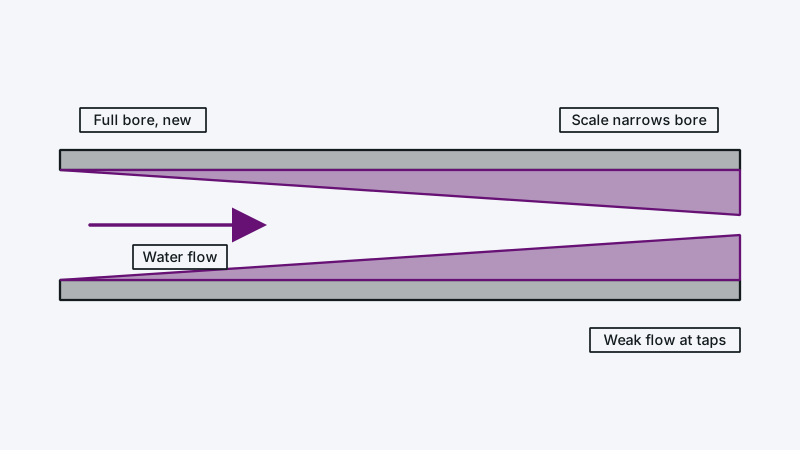
Pressure loss is the tell that surprises owners. A section of pipe that was an inch wide when it was new may now flow like a pencil. Test hot and cold at the farthest bathroom. If the water slows when a second fixture opens, scale is likely. A plumber can confirm with a pressure test and by cutting a short section to look at it.
How long does it take to repipe a house?
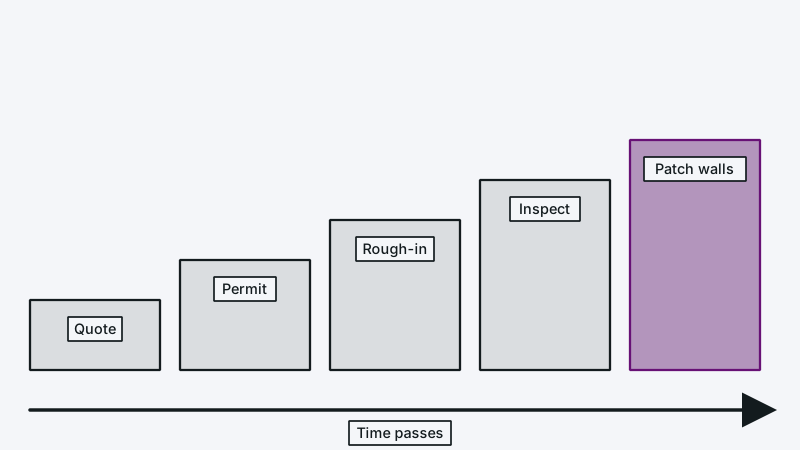
For an average home, expect a few days of work. The plumber stages the work: shut off and protect the home, cut access, run new lines, connect fixtures, pressure test, and then call the inspector. The inspector must sign off while the walls are still open. Larger houses, two stories, slabs and homes with many bathrooms take longer. The written quote should give a schedule.
Water will be off during part of each day. Ask in advance whether service comes back each evening. The national guide counts about 15 labor hours on an average job, which is a rough sense of the work and not a promise for your house. Delays usually come from hidden conditions, an inspection slot or drywall patching and paint.
Do I need a permit to repipe my house?
You will probably need one. CSLB says that under the California Building Standards Code, altering or repairing a structure needs a permit from the local building official, and rules vary by city. Burbank has its Building Division, Glendale has Building and Safety, and LA city neighborhoods like Sherman Oaks and Van Nuys go through LADBS. Call them to confirm your scope.
The permit brings an inspection. LADBS describes inspection in stages, and plumbing is one of them: concealed work must pass before it is covered. Pulling the permit and scheduling the inspector is normally the plumber's task. California also demands a contractor license on any permitted job, so an unpermitted repipe by someone without a contractor license puts your house, your insurance and your resale at risk.
Can you replace only part of galvanized plumbing?
Yes, but it has limits. A plumber can replace the worst runs, such as the line to a kitchen or the section under a leak, and leave the rest. That costs less at first, but the remaining steel keeps rusting and pressure stays uneven. LADWP also warns that connecting copper directly to steel makes the steel rust faster, and a dielectric coupling prevents it.
Partial work makes sense when most of the system is in good shape, or when you plan a full repipe during a remodel. If you are opening bathroom walls anyway, ask the plumber to price the full replacement for comparison. Then you can see how much more the whole house costs against the repair, which our repipe cost page helps frame.
Is there lead in galvanized pipe?
Galvanized pipe itself is steel and zinc. The reported sources of lead in household water are lead service lines, old lead solder and brass fixtures. LADWP reports no lead in the water it delivers, and points to faucets made with lead alloys and old lead solder as the in-home sources.
If you want to know, test with an accredited lab. The EPA puts test costs at about $20 to $100, and LADWP cites roughly $50. While you wait for results, use cold water for drinking and cooking. Replacing old plumbing, faucets included, is one way to reduce risk.
What should the plumber put in the quote?
The quote should list the pipe material and size, where the new lines will run, the number of fixtures replaced, the permit and inspection, the schedule, and who repairs and paints the walls. It should also state how the old pipe is disposed of. Ask whether shutoff valves and outdoor hose bibbs are replaced. Compare the same scope in every quote.
Before signing, you can verify a contractor's license number with CSLB. Confirm that the license is in the C-36 plumbing classification or that of a general contractor, and that it is active. Our page on PEX versus copper helps you decide the material before quotes come in.
What to do next
Start by confirming what you have. Check the pipe at the water heater and under two sinks, note where the pressure is lowest, and photograph the pipe. Then have a plumber look. If water is actively leaking, close the main valve and phone a plumber. For a planned repipe, ask about the permit and the schedule.
If you are comparing materials, our PEX repipe cost page gives the numbers on one option, and the signs of why homes get repiped shows what else to watch. From the Lankershim Plumbing home page you can reach every repair guide.
Questions people ask
How many days will the water be off during galvanized pipe replacement?
Not the whole time. Water is shut off while lines are cut over and connected, and some plumbers stage the work so part of the house stays usable between steps. Get the shutoff plan before work begins. A few days is typical for an average house, but your quote sets the real schedule, and the inspection date can stretch it.
How do I check that a plumber is allowed to do the work?
Search the contractor's name on the CSLB site, the state's licensing board. The license should be active and in the plumbing classification, C-36, or a general building class. Then request the permit number before any work starts. Anyone who proposes skipping the permit is showing you how the rest of the job will go.
Do I need to move anything out of the way first?
Yes. Clear the areas around sinks, the water heater, the attic hatch and any closet that holds a pipe, because the plumber needs open access to the lines. Take pictures off walls that will be opened and put away anything fragile. Expect dust, and keep someone reachable on site for questions during the day.
Do you need a permit to repipe your house?
In most cases, yes. CSLB points to the California Building Standards Code, which requires a permit to alter or repair a structure, and your city enforces it. In Burbank that means the Building Division, in Glendale Building and Safety and in the LA city neighborhoods LADBS. A plumber holding a California license usually takes care of it and books the inspection.
References
- Galvanization, zinc coating and corrosion (Wikipedia)
- Plumbing, galvanized iron in potable water (Wikipedia)
- LADWP water quality FAQs, plumbing and lead
- California Contractors State License Board, building permit requirements
- California Contractors State License Board, what kind of contractor do I need
- City of Los Angeles Department of Building and Safety
- Cost to repipe a house, national figures
Updated