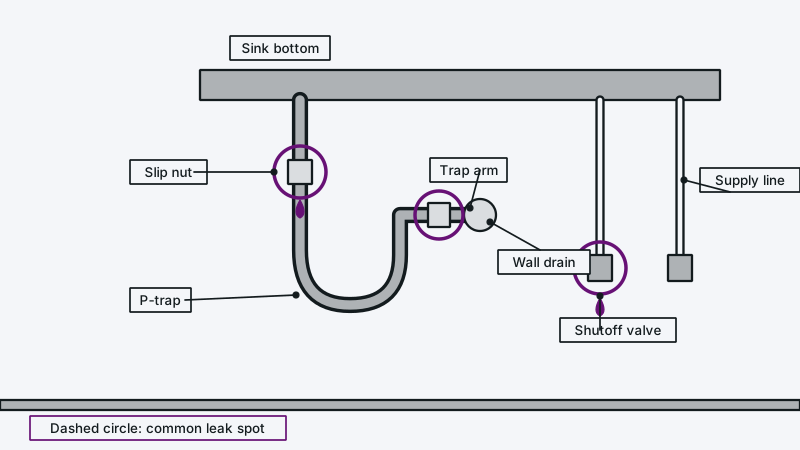
Close the little valve beneath the sink, where the line comes out of the wall or floor. Dry every surface, then drag a dry tissue along each joint until it darkens at the wet spot. The usual causes are a slackened slip nut at the trap or a tired washer, and snugging the nut by hand and then a quarter turn cures many of these. A tape or putty patch is only temporary. For anything that sprays, sits behind the wall or involves old metal pipe, a plumber should handle it. This page sits inside our guide covering showers, faucets, disposals and sinks.
What kind of tape can I use to cover a leaking pipe?
For a quick, temporary hold on a pipe leak, use self-fusing silicone repair tape wrapped tightly over a dry pipe, or an epoxy putty stick pressed over a small leak. Ordinary plumber's thread tape (PTFE) seals screw threads but does not patch a hole or a split. Duct tape is not a repair at all.
Each product has a stated limit, so read the package before you rely on it. Silicone tape stretches and fuses to itself and can hold low-pressure drain leaks for a while. Epoxy putty cures hard on a dry, clean surface and suits pinholes. Neither belongs on a pressurized supply line as a permanent fix. Use the patch to stop the drip until a plumber or a replacement part arrives. A pipe leak sealant has its own limits, covered on its page.
Before you start: how do I find where the leak is?
Turn off the supply valves under the sink, put a bucket and a towel under the cabinet and empty it. Dry every pipe and joint with a rag. Then run the faucet and watch. Wipe each joint with a dry tissue: the paper shows moisture first. Leaks often travel along a pipe, so the drip you see is rarely the source.
Check three groups in order. First the supply lines and shutoff valves, which are under pressure all the time. Second the faucet base and the underside of the sink for a leak from above that runs down. Third the drain: the trap, the tailpiece and the connection to the wall. Fill the sink and release it, since some drain leaks only show when water flows through. If water appears only when the disposal or dishwasher runs, the leak is in their connections.
How do I fix a leaking drain trap or slip nut?
To stop a trap from dripping, set a bucket below it and back off the slip nuts with your fingers. Inspect the rubber washer and the pipe ends for cracks, seat the parts again, tighten the nuts finger-tight, and add a quarter turn with pliers. Over-tightening cracks plastic. If the washer is flat, cracked or missing, replace it. A new trap kit is inexpensive and fixes a warped or corroded trap.
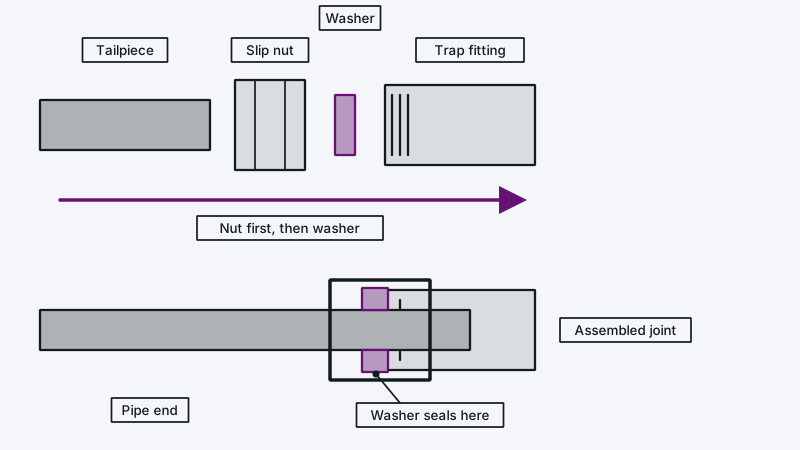
Make sure the washer's bevel faces the right way, usually the tapered side toward the threads. After reassembly, run water for a few minutes and dry-check the joints. A trap that leaks again suggests the pipe is misaligned and pulling at the joint, which a plumber can correct. If the leak is where the drain meets the wall, or a metal trap has rusted through, replace the section. Our guide on fixing a leaking pipe joint without replacing it explains the situations where a repair will do.
How do I fix a leaking supply line or shutoff valve?
To fix a weeping supply line, close its valve, unscrew the old braided hose and fit a new one of the same length and thread size. For a leaking shutoff valve, tighten the packing nut a small amount, and if it still weeps, replace the valve. Never force a valve that refuses to turn.
Supply lines under pressure are the ones that flood a cabinet, so replace them with the faucet rather than reusing old ones. Old valves in postwar San Fernando Valley homes, many dating to the 1940s through the 1960s, are often original and can crumble when turned. If the shutoff will not close or leaks from its stem, close the main and phone a plumber. Our page on shutoff valve repair shows a similar valve repair, and what to do with a burst pipe covers the emergency case.
When can I use a clamp, and when is a pipe too far gone?
As a stopgap, a rubber-padded clamp can cover a small hole or a split along a straight run of pipe. It does not suit corroded or galvanized pipe, where the metal around the hole is thin and the clamp crushes it. It also does not suit a leak at a joint or an elbow.
Pipe material matters. Copper pinholes can be repaired by cutting out a section and fitting a coupling, which is plumber's work for most owners. Galvanized steel, common in older homes, usually leaks in several places at once, and a patch moves the leak. Plastic drain pipe can be repaired with a coupling and the right solvent cement. One published example puts a half-inch copper pinhole repair at about $150. See repairing a leaking copper pipe for the metal side.
When should I call a plumber for a leak under the sink?
Get a plumber when the leak sprays under pressure, when water seeps from the wall, when the cabinet floor is soft or stained, or when a patch fails twice. Do the same when the pipes are galvanized or heavily corroded, or the shutoff valve will not close. Each of these points to a larger fault.
Published national figures put a leaking pipe repair at roughly $228 to $752, and a plumber's hourly rate at $45 to $200, so a simple trap or washer swap is often near the low end. The real price comes from a visit. Ask for it in writing through our quote page. For price detail across leak types, see leak repair cost, and Lankershim Plumbing shows the other jobs we set up.
How do I remove hard water scale from a faucet?
Soak the faucet tip in white vinegar for thirty minutes to an hour, then scrub with a soft brush and rinse. For a stained spout, wrap a vinegar-soaked cloth around it. Do not use vinegar on natural stone counters or on some brass or special finishes, as it can mark them, so check the faucet maker's care advice.
The same soak works on a clogged aerator and a showerhead. Scale returns faster where the water is hard, so check the hardness figure in your water utility's yearly report. Burbank Water and Power and Glendale Water and Power are city utilities, and LADWP serves LA city parts of the Valley. Our walkthrough on removing hard water scale goes through faucets, glass and showerheads.
Questions people ask
How much time does an under-sink leak repair need?
A loose slip nut, a washer or a supply line swap takes about thirty minutes to an hour. A corroded trap replacement or a valve swap takes a little longer. A leak behind a wall or in old pipe can take half a day. Pass along what you found and how long it has been dripping.
Which questions belong in a call to a plumber about a leak?
Check if the quote is a flat fee or hourly, if parts are in it, and how extra corrosion discovered elsewhere gets handled. Request the contractor's California license number then verify it through the state's License Check page. Have the price put on paper before work begins, and ask that any water damage repair appear as its own item.
Does someone need to be around during the repair?
Ideally, at the beginning and again at the end. You point out the shutoffs, then confirm the leak has stopped once the plumber has tested it. Empty the sink cabinet so there is room to work. If water damage has spread, point it out at the start.
Will plumber's tape stop a leaking pipe?
Not on a pipe wall. Plumber's tape, the thin white PTFE tape, seals threaded joints when you assemble them. It does not patch a pinhole or a crack. For a temporary fix on a small leak, use self-fusing silicone tape or epoxy putty, and arrange a proper repair afterwards.
Can a small leak under the sink cause mold?
Yes. A slow drip keeps the cabinet floor damp, and damp wood and drywall can grow mold. Dry the cabinet, fix the leak and replace swollen or soft board. If the area has been wet for a long time or smells musty, have the wall behind it checked before closing up.
References
- Thumbtack, pipe repair cost guide (leaking pipe and pinhole leak examples)
- Bob Vila, how much a plumber costs (hourly rates, service fees)
- Manufacturer instructions for the repair product you buy (tape, epoxy putty or clamp): follow its stated limits
- California Contractors State License Board, License Check
Updated