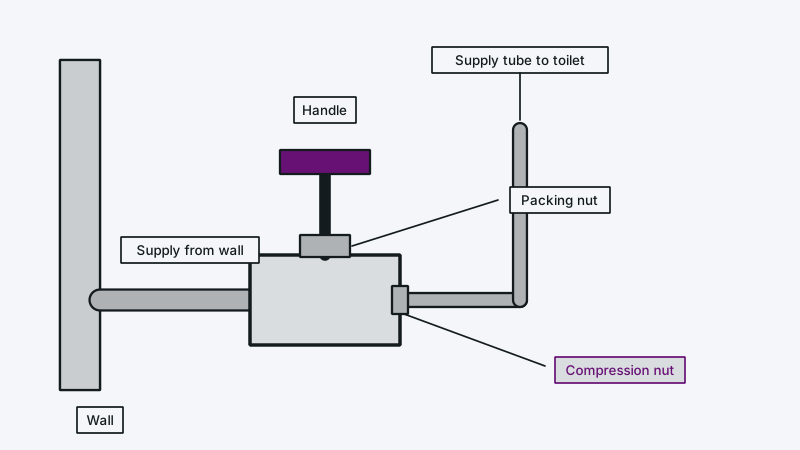
Behind the toilet, on the wall or floor, sits a valve that cuts water to the tank so the rest of the house keeps running. When it weeps at the handle, drips from the supply line or refuses to turn, the fix is generally a snugged packing nut, a replacement valve or a new supply line. For problems with the toilet itself, begin with our toilet repair guide. To have someone come out, use the quote page.
What does a toilet shut off valve do, and why does it fail?
Often called an angle stop, the valve connects the supply pipe to the flexible line feeding the tank, and lets you cut the water during repairs, a leak or an overflow. Because it gets so little use it tends to fail: seals stiffen, scale locks the stem, and the packing around the handle dries out and weeps.
Inside the tank, a fill valve opens as the level drops and shuts when the float rises. The shut off valve is upstream of that. There are two broad types. Older valves take many turns and seal with a rubber washer. Newer quarter-turn ball valves are durable and, reference sources note, still seal well after long disuse, though freezing can crack them.
Why is my toilet shut off valve leaking?
Three places leak. A drip at the handle or stem means the packing nut has loosened or the packing has worn. A drip at the connection to the tank means the supply line nut is loose or the washer has failed. A drip at the wall or floor where the valve meets the pipe is a bigger sign: the joint or the pipe may be corroding.
Wipe the valve and line dry, then wrap dry tissue around each joint; whichever one gets wet is the source. A handle leak is the most fixable. A leak where the valve meets the pipe, or a corroded valve body, means replacement, so close the house water first.
Can you fix a leaking shut off valve without replacing it?
Sometimes. For a drip at the stem, a wrench and a one-eighth clockwise turn of the packing nut may be all it takes. Overdoing it can lock the stem. A supply line drip usually needs the nut snugged by hand plus a further quarter rotation using the wrench. If drips persist, replace the washer or the line.
Know when to stop. If the valve is crusty with mineral buildup, green with corrosion, or the handle is loose or cracked, repair is rarely worth it. A new valve is cheap next to the damage a failed one can cause. Valve repair kits exist, but a seized multi-turn valve usually leaks again.
How do you replace a toilet shut off valve?
Start by closing the main to stop water to the entire house, flush to empty the tank, and open a nearby faucet to release pressure. Disconnect the supply line, loosen the nut on the old valve, and slide it off the pipe. Fit a new valve with a new compression ring, tighten it, reconnect, and test for leaks.
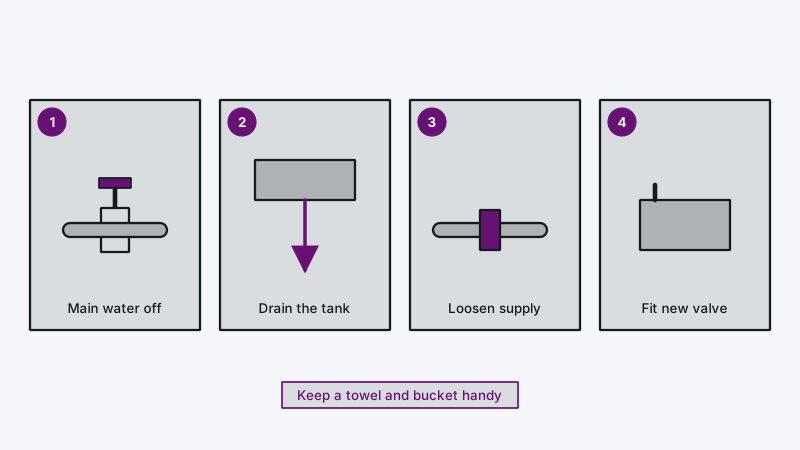
Pipe type changes the job. A copper stub-out takes a compression valve if the pipe is clean and round. Where the compression ring is stuck, the plumber cuts it off or trims the pipe back. Threaded steel pipe needs a different valve, and galvanized pipe in older Valley houses can be corroded and break when you turn it. If the pipe is galvanized and rusty, stop and call a plumber.
What should you do if the valve won't turn or won't shut off?
Don't force it. A stuck valve can snap its stem or crack the pipe behind the wall. Turn it gently both ways, and spray nothing in it. Use the house main instead. A valve that will not seal completely, or water that keeps trickling, calls for a plumber, and the work may include opening a wall or replacing a section of pipe.
Hard water makes this more common. LADWP's 2022 figures put Valley water at roughly 8.6 grains of hardness per gallon on average, with a spread from 5.4 up to 16.1, and that mineral content regularly leaves scale on stems. Burbank Water and Power and Glendale Water and Power publish their own reports. Exercising the valve with a gentle turn every year or so keeps the stem free.
When should you call a plumber?
Ring someone when the valve will not close, weeps at the pipe, sits on rusty or loose pipe, the main will not shut, or the leak is behind a wall. Also phone if cutting pipe is beyond your comfort. Water damage runs well above the price of a service call, so if you cannot stop a leak, close the main and ring.
A plumber can replace the valve and supply line, check the fill valve and flapper while there, and make sure the toilet seats and flushes properly. Related problems have their own pages: a toilet fill valve repair, a flapper repair and a leaking toilet. We arrange visits across Glendale, North Hollywood and the other neighborhoods we cover.
Do you need a permit or a plumber to replace a shut off valve?
In California a contractor license becomes mandatory above $1,000 of combined labor and parts, and wherever a permit applies. One valve costs far below that, so homeowners can usually do the swap themselves, and a short plumber visit stays under the line too. Permit rules vary by city, so ask your building department if you are unsure.
If the valve work grows into a pipe replacement behind a wall, the rules change, so ask before you commit. Water supply work in old houses can lead to larger plumbing issues. For a view of the whole house, see repiping and pipe replacement, and begin at the Lankershim Plumbing home page for other guides.
Questions people ask
What is the time needed to fix a toilet shutoff valve?
A packing nut tightens in minutes. Swapping a valve and supply line is normally a quick visit as long as the pipe is sound and the main closes. A corroded or seized valve, or an old galvanized stub-out, can take longer. The plumber can tell you after looking at the pipe behind the toilet.
What questions go to the person I hire for this valve repair?
Find out if the price includes both valve and new supply line, which type of valve goes in, whether it is quarter-turn, and the plan if the pipe behind it is corroded. Ask about a minimum charge for the visit. If other toilet parts are worn, ask them to look at the fill valve and flapper too.
Must I be home while the valve gets repaired?
Yes. An adult should answer the door, show where the main shutoff is and confirm the repair works. The job is brief and you can leave the bathroom. Move items away from the toilet and expect the water to go off for a stretch.
Should I replace the supply line when I replace the valve?
It is usually a good idea. The line is cheap compared with water damage, and a fresh one fits a fresh valve. If the old line is braided and in good shape, it may be reused, but a plumber normally replaces it. Check the length too: it should reach the tank without strain or sharp bends.
References
- Flush toilet, tank parts and supply (Wikipedia)
- Ball valve, quarter-turn operation and failure modes (Wikipedia)
- LADWP water quality FAQs, hardness figures
- California Contractors State License Board, what kind of contractor do I need
- California Contractors State License Board, building permit requirements
Updated