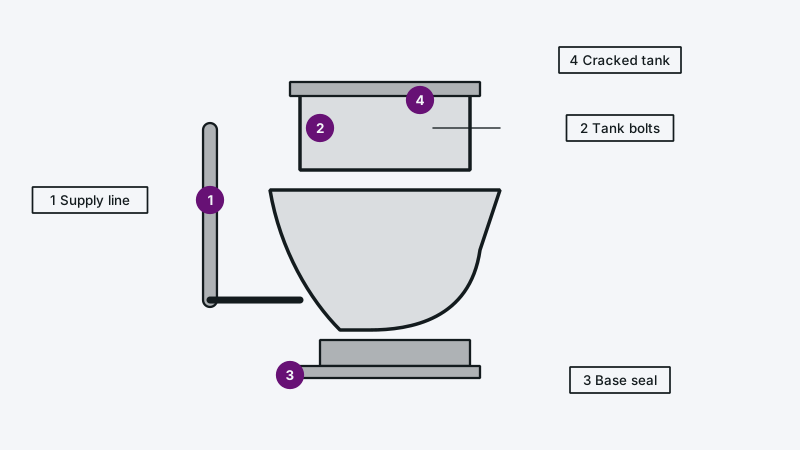
To repair a leaking toilet, first work out where the water comes from. Water at the base usually means a failed wax ring or loose closet bolts. Water on the tank or beneath it points to the tank bolts, the tank gasket or the supply line. Water that never reaches the floor, but runs into the bowl, is a flapper leak. Start with the table in the first section, then work through the matching fix from our toilet repair guide.
Where is my toilet leaking from?
Dry the toilet and floor completely, wrap dry toilet paper around each joint, and flush. The paper that gets wet tells you the source. Leaks at the base come from the wax ring, at the tank bolts from the washers, at the wall from the supply line or shutoff valve, and silent leaks inside the tank come from the flapper.
Use this as a quick map:
| Where you see water | Most likely cause | Who usually fixes it |
|---|---|---|
| Puddle around the base | Wax ring or closet flange | Plumber, or experienced DIY |
| Drips under the tank where it meets the bowl | Tank to bowl gasket or bolt washers | DIY with care |
| Drips from the supply line | Loose nut, worn washer or cracked line | DIY |
| Drips from the shutoff valve stem | Worn packing or old valve | Plumber when it keeps dripping |
| Water running into the bowl, no puddle | Flapper or fill valve | DIY |
| Hairline crack with seepage | Cracked tank or bowl | Replace the toilet |
| Wet outside of the tank, no leak inside | Condensation | Insulated tank liner or mixing valve |
Do not guess from the puddle alone. Water travels along the base and along pipes before it drops.
Why is there water around the base of the toilet?
A wet base tells you the seal between toilet and drain flange has failed. Most often the wax ring is to blame, or the toilet rocks and breaks it. Less often it is a sweating tank or a leaking supply line dripping down. Fixing it means pulling the toilet off the floor and fitting a new seal.
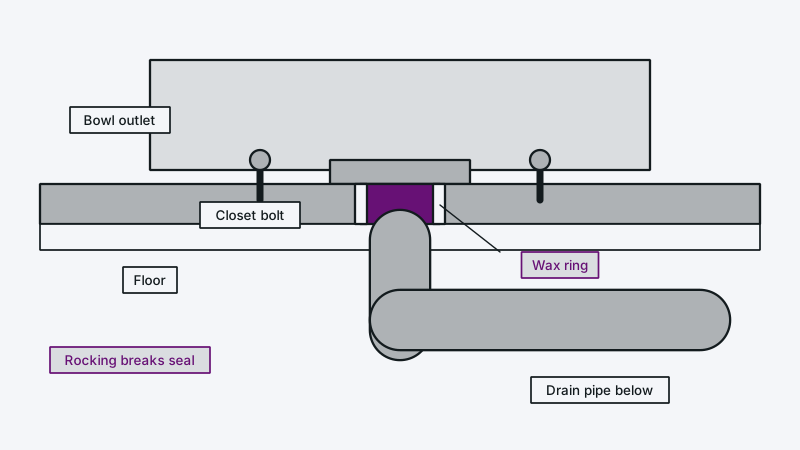
Do not simply caulk around the base and carry on. A seal that leaks every flush pushes water into the subfloor, and that rot can spread before you see damage. Ceiling stains in the room below, a soft spot beside the toilet or a musty odor are warning signs.
Steps for a wax ring replacement, for someone comfortable with tools:
- Close the supply, flush, then sponge the remaining water from tank and bowl.
- Disconnect the supply line and pop the caps off the closet bolts.
- Remove the nuts and lift the toilet straight up. It is heavy, so bend your knees and use a helper.
- Scrape off the old wax with a putty knife. Inspect the flange. If it is cracked, corroded or sits below the finished floor, stop. That repair is for a plumber.
- Set a new wax ring or a wax free seal, set the toilet straight down onto it without sliding, and snug the nuts down gradually, switching sides as you go.
- Hook the supply line back up, turn the water on and look for drips.
Overtightening cracks the porcelain, and a toilet pulled crooked will leak again. If the toilet rocks, the floor may be uneven and need shims. Plumbers also check that the flange is anchored to the subfloor.
In older Burbank and Valley homes, the drain under the toilet is sometimes cast iron or clay with a worn flange. If the flange crumbles when you touch it, that job should be handled by a plumber.
How do you stop a leak at the tank bolts or tank gasket?
Drain the tank, remove the nuts under the tank, lift it off the bowl, and fit a new tank to bowl gasket and bolt washers. Water that drips from under the tank, or from the bolt heads inside the tank, is almost always one of those small rubber seals that has hardened.
Tighten the bolts evenly, a little on each side, until snug. Finger tight plus a quarter turn of the wrench is plenty, because the tank is a thin porcelain casting. The same rubber that fails here is the one that fails under the flush valve. If you open the tank anyway, look at the flapper and the fill valve while you are there.
How do you fix a leaking toilet supply line or shutoff valve?
Close the shutoff valve, unscrew the old line from the valve and the tank, fit a new braided stainless line, tighten both nuts by hand plus a small turn, and open the valve slowly. If the valve itself weeps at the stem or will not shut, it needs replacing, which is a plumber's job on most older homes.
Plenty of Valley homes built between the 1940s and 1960s still have original or early replacement shutoff valves. Turning an old valve can make a small drip worse. If you cannot get a firm shutoff, close the main water valve for the house and arrange a visit. Our page on a toilet shutoff valve repair goes into that job.
Why is my toilet leaking from the tank or cracked?
Sealant will not hold a cracked tank or bowl for long. Condensation, which beads on the outside of a cold tank in humid weather, is often mistaken for a leak. If water appears along a hairline crack and you can trace it, the safe repair is a replacement toilet.
Check for condensation by drying the tank and watching. If it beads evenly all over, the tank is sweating, not leaking. In Burbank's dry summers this is less common than elsewhere but it happens after hot showers in a closed bathroom. A tank liner or a quick fix by running a fan is a low cost cure.
Cracked porcelain is a sign to replace. Our page on the cost of replacing a toilet shows what to expect. One cost guide puts typical toilet installation at roughly $224 to $532, with labor often running 2 to 4 hours, though results vary by toilet type and house.
Does a leaking toilet raise your water bill?
Yes, but only some leaks do. A leak onto the floor is usually small. Water slipping past a worn flapper into the bowl can run day and night in silence. The EPA reports that 9 percent of homes leak at least 50 gallons a day.
If your bill has jumped and you cannot find a visible leak, run the dye test and watch the meter. The meter check is explained in detail in our piece on high water bills. Burbank, Glendale and LADWP customers can also ask their utility about leak alerts and rebates, which change from time to time.
When should you call a plumber for a leaking toilet?
Bring in a plumber when the base leaks and lifting the toilet is beyond you, the flange is damaged, the shutoff valve will not seal, the porcelain is cracked, or water damage shows below. Water behind walls and under floors costs more the longer it stays.
Leaks are worth a quick quote, since water damage grows quietly. A local plumber can come out anywhere between Burbank, Glendale, North Hollywood and the surrounding Valley, with a written price agreed beforehand. Request a quote and describe where the water appears, so the right parts come along. Other work we line up is listed on the Lankershim Plumbing home page.
Questions people ask
Can I use sealant or caulk to stop a toilet leak?
Sealant is not a lasting fix for a failed wax ring, cracked tank or leaking gasket. It hides the leak and lets water soak the subfloor. Use caulk only as a finishing bead around the base after the seal is sound. Some plumbers leave a small gap at the back so a future leak can show.
How do I know if my wax ring has failed?
Look for water at the base after flushing, a rocking toilet, a sewer smell in the bathroom, and a stained or soft patch of floor. A wax ring that has dried out or been broken by movement lets water and gas past it. The only real test is lifting the toilet and looking.
Is a leaking toilet an emergency?
A fast leak is, so shut the shutoff valve. A slow drip is not, but fix it soon, since water can damage floors and ceilings below. If water is coming from a cracked bowl or the supply line is spraying, close the valve and the main water shutoff and arrange help the same day.
How long does it take to fix a leaking toilet?
A supply line or gasket swap takes under an hour. Replacing a wax ring generally needs one to two hours, counting removal and refitting. If the flange or floor needs repair, add more. A cracked toilet means a full replacement, which cost guides put at roughly two to four hours of labor.
Why does my toilet leak only when I flush?
That points to the base seal or the tank bolts, because a flush adds weight and water under pressure to those joints. A leak that happens only on refilling points to the fill valve or supply line instead. Watch which moment the water appears, and it will tell you where to look.
References
Updated