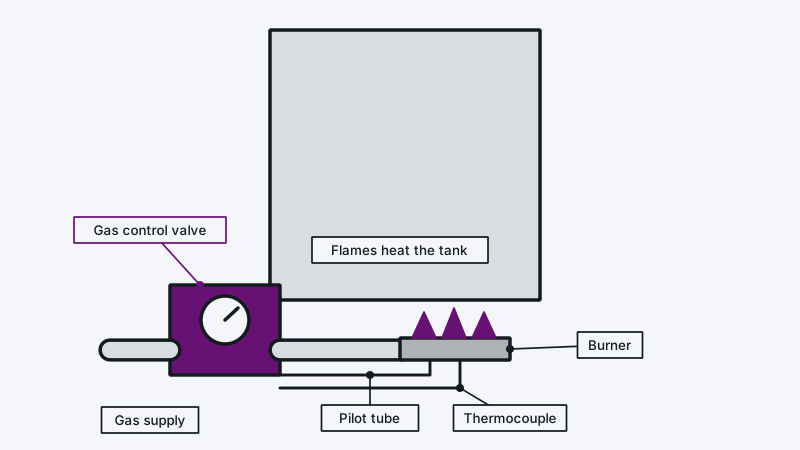
The gas valve needs replacing when a gas water heater refuses to light, cannot keep a flame or will not shut off while the thermocouple and pilot test fine. One published guide prices the gas control valve at about $300 to $500 and says replacing it usually beats repairing it. This is gas work for a plumber, never a weekend project. If you doubt the valve is the culprit, begin with our water heater repair guide.
What is the gas valve on a water heater and what does it do?
Often sold as a combined thermostat and gas valve, the gas control valve sits low on a gas tank heater. It senses the water temperature, opens to send gas to the burner when the tank cools, and closes once it is hot. It also feeds the pilot and cuts everything off when the safety device reports the flame is out.
Wikipedia explains the safety principle: a thermocouple tip placed in the pilot flame generates a small voltage that keeps the pilot gas valve open. When the pilot dies, the thermocouple cools, the voltage falls and the valve shuts, so unburned gas cannot escape. Many heaters rely on a thermocouple, while newer ones use electronic ignition.
So the valve is a safety part as well as a controller. A wrong repair can leave gas flowing or a heater that fires when it should not. That is the main reason the work belongs to qualified tradespeople, and the regulation exists for good reason.
How do I know the gas valve has failed?
Warning signs: a pilot that dies even with a new thermocouple, no gas reaching the burner with the dial on, a burner that will not turn off, or a control that is cracked, sooty or smells of gas. A plumber rules out the pilot assembly and thermocouple before blaming the valve.
Bob Vila lists these checks, in this order, for a gas heater:
- Pilot out. Relight it following the unit's label, and phone a plumber if it sits inside a sealed burner chamber.
- Thermocouple. If the flame dies the moment you let the knob go, the tip may be out of the flame, or the part may be worn. A thermocouple costs less than a valve.
- Flame color. A yellow flame suggests a problem with the air and gas mix, since the flame should be blue.
- Gas reaching the unit. The shutoff has to be open and the line clear. If the valve still passes no gas after these basic checks, it is the likely culprit.
Any time you smell gas, get out and phone 1-800-427-2200 for SoCalGas from somewhere safe. SoCalGas says to dial 911 when there is danger or nobody answers. Light nothing, flip no switches and keep your phone out of the house. Dizziness, nausea or faintness can also point to carbon monoxide, so step outdoors and get help.
Can I replace a water heater gas valve myself?
No. In California, gas piping and appliance connections are regulated work, and they bring real risk of leaks, fire and carbon monoxide. We offer no DIY advice here. The plumber shuts the gas, swaps the valve, leak-tests every joint and checks the flame and venting before leaving. Confirm the license through the CSLB website.
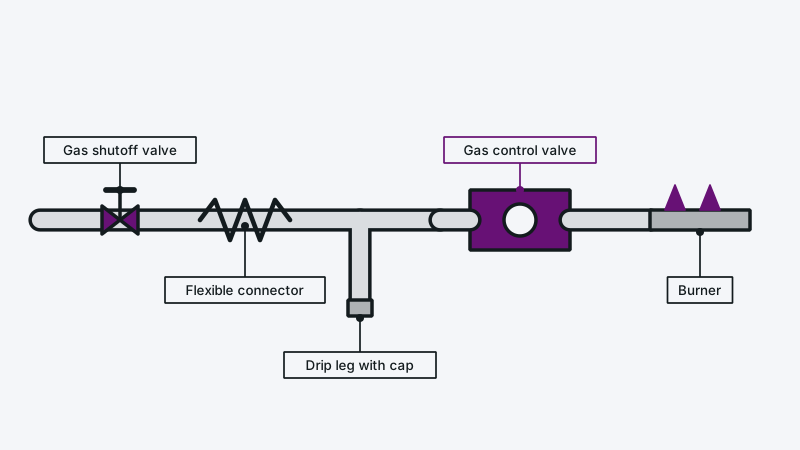
The plumber's sequence:
- Close the gas and water, and let the tank cool.
- Detach the gas supply line plus the pilot and thermocouple tubes.
- Take out the old valve, which threads into the tank and carries a built-in thermostat probe.
- Install the new valve, matched to the heater model, and reconnect all lines with approved sealant.
- Leak-test every joint, relight the pilot, then check the flame, the draft at the vent and the temperature setting.
Getting the right valve for the model matters. Natural gas and propane valves differ, as do valves across brands and models. The plumber reads the heater's data plate to pick the right one.
The vent counts too. A heater that backdrafts can push exhaust into the room. A rusted or loose vent should be flagged by the plumber before relighting.
Is replacing the gas valve worth it, and what does it cost?
A published guide lists a gas control valve replacement at about $300 to $500 and says replacing is usually favored over repairing. It pays off on a heater under about eight years old with a sound tank. With an older, rusty or leaking tank, put that money toward a new heater.
Take the range as a guide, because the quote depends on the model and the access. Valves for common brands are easy to find, while specialty or older models may have to be ordered.
Weigh the tank's age before agreeing. A tank typically serves 8 to 12 years. At nine, the valve is one of several parts that could fail, and our page on how often a water heater should be replaced can guide you. Compare with a full swap on gas water heater replacement cost before committing.
A related job is pilot light repair, often cheaper and sometimes the true fix. Should a new heater be the answer, California law has it braced, anchored or strapped against earthquakes, and the plumber covers that along with the permit.
Want a plumber to take a look? Use the quote page and we will line up a local plumber to visit, with a written price in hand before work starts. The Lankershim Plumbing home page names the other jobs we handle. Our gas water heater repair guide is also worth a read.
Questions people ask
How much time does the valve swap need?
Typically one to two hours with the right valve on hand, covering draining enough water, the swap, gas leak testing and relighting. If the valve is not in stock, ordering it may add a second visit. Replacing the whole heater instead takes about a half day.
What do I ask first about valve replacement?
Have them confirm that the valve is at fault, after ruling out the thermocouple and pilot. Request a written price covering part and labor, plus how they test for gas leaks and what the warranty covers. Look up their California contractor license through the state board before they begin.
Do I need to be home for gas valve replacement on a water heater?
Yes, have an adult home. The plumber needs a clear way to the heater, will close gas and water for a while, and will test and relight the unit. Keep kids and pets clear, and tell the plumber if the heater sits in a locked garage or closet.
Is a faulty gas valve on a water heater dangerous?
It can be. A valve that fails open may pass gas when it should not, and a leaking one can release gas into the room. If you smell gas, exit and phone 1-800-427-2200 for SoCalGas from outdoors, or 911 if danger exists. Leave the repair to a professional.
Does a tankless water heater have a gas valve too?
Yes, though it works differently. Gas-fired tankless heaters use electronic modulating valves and sensors run by a circuit board, not the thermostat-and-valve combination found on a tank. Faults show up as error codes. Our page on instant water heater repair covers common tankless problems.
References
Updated