Smell gas? Stop reading and get out. Once outdoors, dial SoCalGas (1-800-427-2200), and use 911 when anyone is in immediate danger. No matches, switches or phones indoors. With no gas odor, carry on. This page belongs to our hub on water heater repair in Burbank, which covers the other faults a gas tank can have.
Why does my water heater pilot light keep going out?
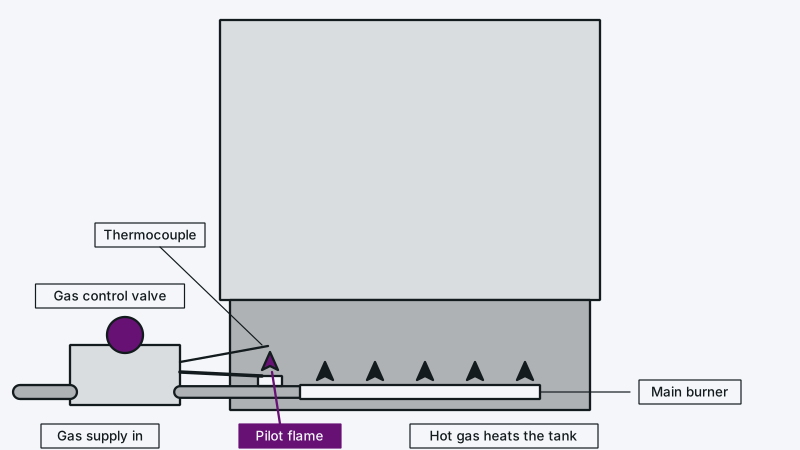
A worn thermocouple tops the list. It is the small probe that senses the pilot flame and keeps the gas valve open. Less often the culprit is a draft blowing the flame out, a gummed-up pilot orifice, a failing gas control valve, or too little combustion air. If the pilot catches and then dies after you release the knob, suspect the thermocouple.
Each cause shows itself differently:
- Worn thermocouple. The flame stays only while you press the knob, then dies seconds after you let go. The probe costs little and swaps out fast.
- Draft. The flame holds until a garage door opens or a fan starts. Check the venting and the air supply.
- Dirty pilot tube. The flame looks weak, yellow or flickery. Grit blocks the tiny opening, and a cleaning clears it.
- Gas control valve. The pilot stays on but the main burner will not fire, or the pilot drops out now and then. This is the larger repair.
- Low gas supply. Other gas appliances also struggle. This is a SoCalGas question, not a plumbing one.
Think of the thermocouple as a safety cutoff. Pilot heat makes a tiny voltage, and once the flame dies that voltage falls and the gas closes. So a pilot that keeps dying means the safety system is working against a tired part. Fix the part. Never bypass it.
How do I relight a water heater pilot safely?
Models differ, so the label on your heater comes first. The typical order: gas control to off, a five minute wait for stray gas to disperse, then pilot, knob pressed in, light it, hold for a minute, release, and set to on. Two failed tries means you stop.
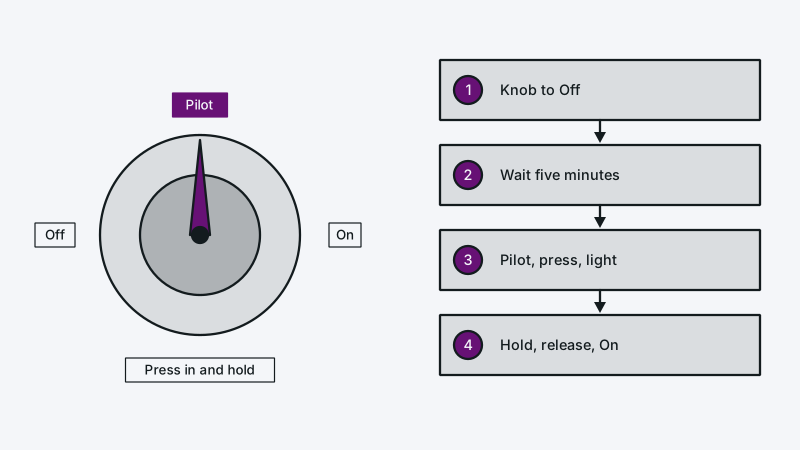
The label rules, but expect something like this:
- Set the thermostat dial to its lowest point and the gas knob to off.
- Give it the whole five minutes on the label so the burner chamber clears.
- Sniff low, around the base of the heater. Any gas odor means leave and call SoCalGas.
- Switch the knob to pilot, push it in, and ignite the flame through the access opening with a long lighter or the igniter button.
- Keep it pressed about a minute while the thermocouple heats up.
- Let go slowly. If the flame holds, turn the knob to on and set the dial.
Many newer tanks have a sealed combustion chamber built to resist flammable vapor ignition, plus a viewing window and a push-button igniter. Their label gives the sequence. Leave the covers on. Never run a heater when the flame rolls out of the chamber or leaves soot.
When should I stop relighting and call a plumber?
Quit after two or three failed tries. Quit too if the pilot dies more than weekly, if you smell gas, if the flame is yellow, lazy or lifting, or if soot shows up near the heater. Relighting again and again only masks a fault, and that fault may involve gas or exhaust.
Bring in a plumber when:
- The pilot is on but the main burner will not start.
- The tank is rusty, leaking or very old.
- There are scorch marks, soot or melted plastic by the heater.
- A carbon monoxide alarm goes off. Get everyone outside and call 911.
- The heater sits in a closet or tight space with blocked combustion air openings.
Gas connections, control valves and venting repairs are trade work for a plumber, and our DIY advice ends there. The page on gas valve replacement covers that part, and gas water heater repair covers the broader list of faults.
How does a plumber repair a pilot light problem?
First the plumber rules out a gas leak. Then comes a cleaning of the pilot assembly and tube, a test of the thermocouple or thermopile (replaced if weak), a draft and venting check, and a test that the burner lights cleanly. Common models have parts on the truck, so one visit usually does it.
Expect a visit along these lines:
- Sniff and test for gas around the control valve, connectors and pilot fittings.
- Clear dust, lint and rust flakes from the pilot assembly and burner.
- Test the thermocouple and swap it when the reading is weak. Older Valley tract homes often show lint and debris from the garage.
- Inspect the flue draft, including slope, joints and the draft hood.
- Check the tank base for leaks and rust, because a failing tank makes the repair a poor investment.
- Quote in writing any work past the first diagnosis.
When the gas control valve is the fault, expect a bigger job, and sometimes a hint that the whole tank is close to retirement.
When does a pilot problem mean replacing the water heater?
When the tank leaks, is corroded at the base or is old, and repairs have piled up. On a sound tank, a thermocouple is an inexpensive fix. A gas control valve on a worn-out tank can cost enough that the money is better spent on a new unit.
See how often a water heater needs replacing for age and wear signs. If replacing, hot water heater replacement explains the steps, and the permit page covers who issues the permit for your address. Some owners use the moment to consider tankless water heaters, which have electronic ignition and no standing pilot. Our tank versus tankless guide weighs that.
How do I arrange a pilot light repair?
Tell the plumber the make, how old the heater is and how the pilot behaves when you relight it. Send a request on our quote page and the local plumber who comes out will price the job in writing first. For the steps, see how it works. Everything else we handle around Burbank and the Valley is on the Lankershim Plumbing home page.
With no hot water and a need for same-day help, read our emergency hot water heater repair page for what to expect. Before agreeing to anything, look the contractor up with the state licensing board (CSLB) online.
Questions people ask
What makes a pilot light die once I let go of the knob?
The thermocouple is not making enough voltage to keep the gas valve open. It could be worn, sooty or sitting off to the side of the flame. A quick clean or swap handles it. A replacement that still fails points at the gas control valve.
How much time does a pilot light repair need?
Cleaning the pilot or swapping a thermocouple can finish within the hour. Replacing a gas control valve, fixing venting or dealing with a drafty spot takes longer. Expect gas leak checks at both ends of the visit, and a written price once the diagnosis is done, before further work.
Is relighting the pilot on a gas tank risky?
Done by the label with no gas odor, it is routine. If gas has pooled, though, the risk is real. Wait out the five minutes, sniff low, and never strike a flame in a room that smells of gas. If anything feels off, leave and ring SoCalGas.
What questions help me vet a pilot light repair contractor?
Find out what will be tested, whether the price covers the thermocouple and a gas leak check, and how repair gets separated from replacement. Confirm through the state licensing board's lookup that the contractor has a California license. Get the figure on paper.
Must someone be home during the pilot light visit?
Yes. The technician has to reach the heater, and it helps to see hot water return and the pilot stay lit before the visit ends. If the heater sits in a locked garage, arrange entry beforehand and ask about the expected duration.
References
Updated