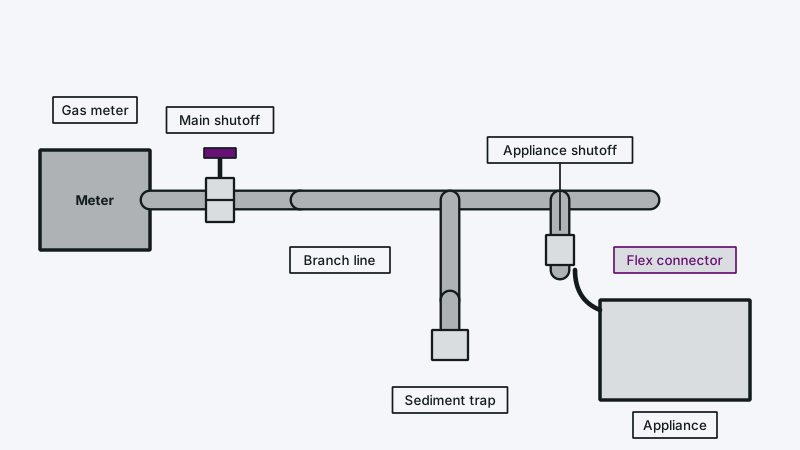
In Burbank, residential gas piping falls under the California Plumbing Code, which includes a fuel gas piping chapter, along with any amendments the city adds. Any new or altered gas line normally needs a permit and an inspection. Only a plumber with a contractor license from the state should do it. This page sits in our permits, codes and inspections section and shows how the rules fit together.
Which code governs residential gas piping in Burbank?
The California Plumbing Code governs, as adopted and amended locally. The California Building Standards Commission lists the 2025 edition as effective January 1, 2026, and Chapter 12 of the 2022 edition is titled Fuel Gas Piping. Cities may add amendments, and your address's building department enforces whichever version is current when the permit is issued.
How the layers stack:
- State code. The California Plumbing Code sets the baseline for materials, sizing, testing and installation.
- Local amendments. Burbank, and Los Angeles for LA city neighborhoods, can modify the state code. LADBS publishes plumbing code information bulletins that explain its interpretations.
- The inspector. The final say on a specific job belongs to your building department's inspector, so read the permit requirements for your address.
- The gas utility. SoCalGas handles the meter and the supply to it. The code covers piping on the house side.
Do not rely on a code book summary from another state, since edition and amendments differ.
What does the gas piping code usually cover?
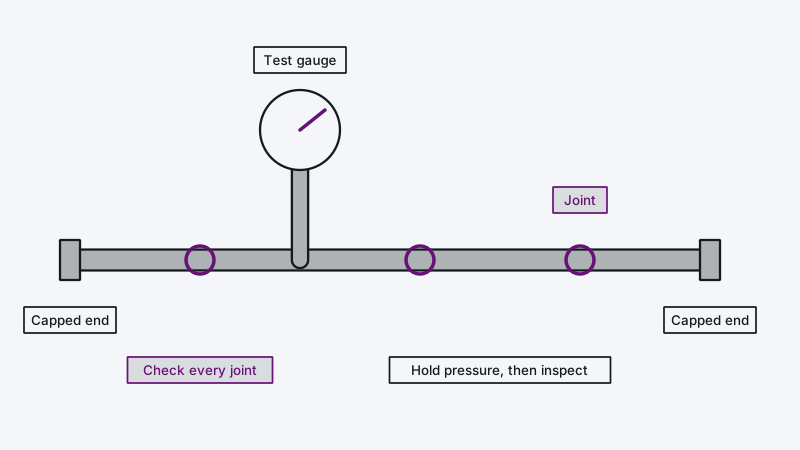
Residential gas piping rules typically address allowed materials, pipe size for the appliances served, support and protection of the pipe, shutoff valves at appliances, and leak testing of new piping before it is covered. The details sit in the code and your inspector's interpretation, so treat this list as a map, not a substitute.
Typical topics:
- Pipe materials and fittings. Black steel and some flexible or corrugated systems are common; the code says where each may go and how it must be bonded or protected.
- Sizing. Pipe diameter depends on the total appliance load and the length of run. Undersized pipe starves appliances.
- Appliance shutoffs and connectors. Each appliance generally needs an accessible shutoff, and flexible connectors have limits.
- Pressure testing. New piping is tested before the walls are closed and before gas is turned on, and the inspector witnesses it.
- Venting. Appliances that burn gas need proper venting, covered in the plumbing and mechanical codes.
None of this is a how-to. It explains why every gas job comes with a permit and an inspection.
Do you need a permit for gas piping work?
Generally, yes. Installing, extending or altering gas piping, adding a gas appliance and replacing a water heater are all permitted work in most California jurisdictions. Small like-for-like repairs may be treated differently. The building department decides, so ask first: in Burbank that means the Building Division, and in LA city neighborhoods it means LADBS.
LADBS says some simple projects skip plan review and can be permitted through PermitLA under its express permit list; it also points people to its plumbing code information bulletins or the 3-1-1 line. Gas work found during other jobs can trigger a permit too. One common case is covered under permits for a water heater swap, and gas line installation for new lines.
An inspected line also gives you a record to show a buyer or an insurer later.
Can a homeowner do their own gas piping?
The safe answer is no. Gas piping is controlled work with serious failure modes, so DIY guidance stops here. Some jurisdictions let owners pull permits for their own home, yet the work is still inspected, and most owners hire a plumber. If you are weighing it, ask the building department what it permits before buying a single fitting.
Before you book, compare any bonded and insured claim, and the license itself, with the contractor's record at the state licensing board, CSLB. It also sets a ceiling on deposits: $1,000 or a tenth of the price, whichever is smaller. Request the license number, a written scope and the permit and inspection plan.
What should you do if you smell gas?
Walk out of the house straight away. Once you are safely outside, dial the SoCalGas emergency number, 1-800-427-2200. Dial 911 if lives, health or property are threatened, or if you cannot get through to SoCalGas. SoCalGas advises leaving at once on smelling gas, suspecting a leak or noticing damage.
Once the utility has made things safe, a plumber can track down the cause. A comprehensive plumbing inspection can include a gas leak check, appliance connections and shutoffs alongside the water-side checks, although drain work such as a camera inspection is a separate item. If an earthquake could have damaged lines, see how to reset an earthquake gas shutoff valve and when to use an emergency gas shutoff.
What does gas piping cost, and what does the plumber do first?
No standard price exists, because run length, pipe material, wall and attic access, the permit and the number of appliances all change it. The plumber starts by measuring the run and totaling the appliance load, then quotes in writing. Gas line pipe price covers what drives the figure.
To line a plumber's quote up against the permit process, check that it says who pulls the permit, whether pressure testing and inspection are covered, and what patching or painting stays with you. Do not confuse gas rules with water-side devices such as backflow preventers, which have their own yearly testing; our hub page covers both.
When should you call a plumber about gas piping?
Bring in a plumber for a new appliance connection, an extension, a relocated appliance, a hiss or smell that is not an emergency, a rusted or kinked flex connector, or a remodel that touches a gas line. Hillside and older homes can have aging pipe, so request an inspection. In an emergency, get out first and ring SoCalGas.
Use the quote form and we will set up a visit by a local plumber, who gives you a written price. The plumber home page shows everything else we handle.
Questions people ask
How long does gas piping work take?
Extending a line a short way to one appliance can be a same-day job, plus the inspection. A larger remodel or a new line to several appliances takes longer, because piping is tested and inspected before walls close. Request a schedule that lists the permit and inspection dates.
What should I ask before I hire someone for gas piping?
Note the contractor's license number and confirm it on the CSLB lookup. Learn who pulls the permit, whether the price covers pressure testing and the inspection, what pipe material goes in and how the line is sized. Insist on a written scope and price. Any plumber who avoids the permit is a red flag.
Do I need to be home during gas work?
Yes, for access when work begins and when the inspector comes, and so gas can be shut off and restored safely. An adult must be present when pilots are relit or appliances tested. Expect a short stretch without gas appliances during the work.
Does the 2025 California Plumbing Code apply to my home?
According to the California Building Standards Commission, the 2025 code takes effect January 1, 2026. The edition that applies to your job depends on the permit date and any local amendments, and your building department can say which it is using. An older guide may no longer match.
Is a gas leak a plumber job or a utility job?
Both, in sequence. The utility makes things safe first, since SoCalGas deals with an emergency and the meter. Afterward a plumber locates and repairs a leak on the house side of the meter. Call SoCalGas once outdoors, 1-800-427-2200, and leave the leak hunt to them.
References
- California Building Standards Commission: 2025 California Plumbing Code, effective January 1, 2026
- California Plumbing Code 2022, Chapter 12 Fuel Gas Piping (UpCodes)
- Los Angeles Department of Building and Safety: plumbing code information bulletins, express permits, PermitLA
- SoCalGas, emergency information: if you smell gas
- California Contractors State License Board
Updated