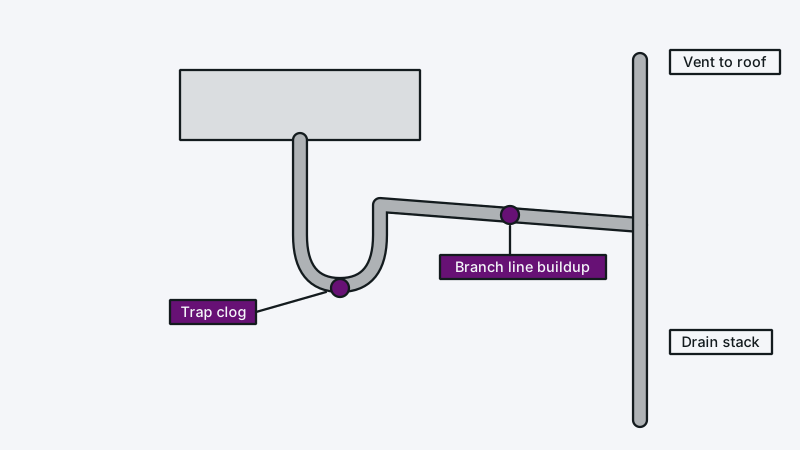
A sink drains slowly because something is narrowing the pipe: hair and soap in a bathroom sink, grease and food in a kitchen sink, or scale and debris further down the line. The water still gets through, which is why the sink does not look blocked. If one sink alone is slow, the fault is close by, in the trap or the branch pipe. Several fixtures slow means the shared line. Start by working out which. Our wider drain cleaning and clogs guide covers the methods, while this page helps you pick which one to use.
Why is my sink draining slow but not clogged?
Slow drainage without a full blockage happens when buildup has narrowed the pipe, not closed it. Grease, soap scum and hair coat the inside of the trap and the branch pipe and shrink the opening, so water still moves but at a crawl. A partly blocked vent, or scale in older metal pipe, can do the same thing.
It gets worse in steps. First the sink drains in thirty seconds, then in two minutes, then it stays full after a heavy use. A narrowed pipe is cheaper to clear than a closed one, so act at the slow stage. In many sinks the partial clog sits within the opening stretch of pipe, a foot or two, and cleaning the trap reaches it with nothing more than a bucket.
How do I tell a trap clog from a line clog?
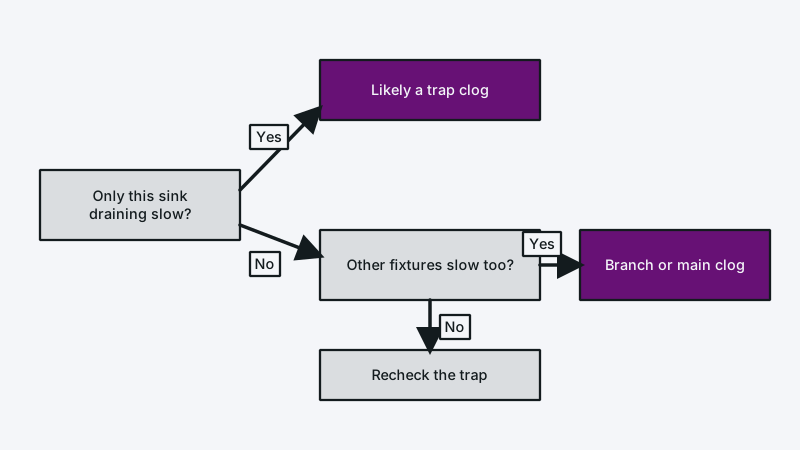
Fill the slow sink and watch the other fixtures. When just this sink is slow, the clog lives in its own trap or short branch. A tub that gurgles or a toilet that bubbles as the sink drains means the blockage sits in a line others share. Use the table to decide where to look first.
| What you notice | Most likely cause | What to try |
|---|---|---|
| Only one sink slow, no smell | Hair, soap or grease in the trap | Clean the trap, then plunge |
| Kitchen sink slow, disposal fitted | Food or grease past the disposal | Clear the disposal outlet, flush hot |
| Both bathroom fixtures slow | Shared branch line | Machine pass by a plumber |
| Whole house slow, gurgling | Main line, roots or vent | Plumber with a camera scope |
Landing in the lower half of the table means a plunger and a bottle of drain opener will not reach the real cause.
Why does my bathroom sink drain slower than the kitchen?
Bathroom sinks slow down from hair, toothpaste and soap, which stick together and cling to the stopper linkage and trap. Kitchen sinks slow down from grease and food. A bathroom sink also has a narrow drain and a pop-up stopper with a pivot arm under the basin where hair loves to collect.
Pull the stopper, by lifting it or by loosening the pivot nut beneath the basin, and wipe the hair from the stopper shaft. Reassemble and test. For a stepwise cleaning routine, our bathroom sink guide gives the order, and the kitchen version is in unclogging a kitchen sink.
What can I try on a slow kitchen sink with a double basin or disposal?
On a double kitchen sink, plug the second drain with a wet rag before plunging, or the pressure goes out the other side. With a disposal, run it with cold water, check that nothing is jammed, then clean the outlet pipe where it meets the trap. Food packs there more than anywhere else.
Never put a chemical opener into a disposal that is not draining. It collects in the unit and the next person to reach in is at risk. Run hot tap water after cleaning to flush the grease. Water rising in the second basin as one side drains tells you the clog is beyond the shared tailpiece. Our guide to clearing a garbage disposal drain covers the details.
Why is my shower drain backing up even though there is no clog?
A shower drain backing up with no clog in the shower itself points to a blockage farther down the line, where the shower, sinks and toilets share a pipe. Water backing out at the lowest fixture is the sign. A blocked vent can also cause slow drainage and gurgling without any visible clog.
In the San Fernando Valley, older homes built in the 1940s through the 1960s often have older clay or cast iron lines, and tree roots tend to enter at joints. Roots narrow the line gradually, so fixtures slow in turn. A camera inspection reveals it. One cost guide lists camera inspections at about $275 to $1,175, and the visit can spare you from clearing the same clog three times.
Which home remedies work on a slow sink, and which do not?
Hot tap water, a plunger and a clean trap work. Baking soda and vinegar loosens soap and grease film but rarely hair. Boiling water on plastic pipe risks softening joints, and a chemical opener is a last step because mixing or repeating products is hazardous. Dish soap and hot water help grease only.
For a slow sink, the best order is the least aggressive first: hot water, plunger, trap clean. Natural drain remedies compares them, and unclogging a shower drain shows the hair tool method that also suits sinks.
When should I call a plumber for a slow sink?
Bring in a plumber if a clean trap changes nothing, several fixtures are slow, the problem comes back within weeks or you smell sewage. A local plumber we send visits your Burbank home and quotes a written price ahead of the work. Typical published prices for clearing a sink are $100 to $225 for kitchen sinks and $150 to $225 for bathroom ones.
Visit costs appear in what unclogging a sink costs. Get going on our quote page. Our other services are listed on the Lankershim Plumbing home page.
Questions people ask
What is the time needed to clear a slow sink?
About thirty minutes to an hour for a trap and branch pipe. A line needing a camera or machine pass can stretch to two hours. Mention at booking that several fixtures are slow, and the plumber can set aside time for the longer job.
What questions suit a plumber for a slow drain?
Learn if you pay a flat price or by the hour, if a camera look is part of it, and what changes should the clog turn up in the main line. Confirm the contractor's license on the state board's License Check page before work begins. Get the price in writing.
Should I stay home for the plumber?
Yes, at the beginning and the end at minimum. You show the plumber the sink and the shutoffs, then test the drain after the work. Clear out the cabinet under the sink first so the plumber has room to reach the trap and pipes without moving your belongings.
Is a plunger good for a slow-draining sink?
Yes, when used the right way. Plug the overflow hole and any second drain with a wet rag, add a few inches of water over the drain, and push firmly ten to fifteen times. A plunger moves a soft clog in the trap. It does not move a dense clog farther down the line.
Will a slow sink fix itself?
No. A partly clogged pipe collects more debris with each use and slows further. Hot water may move a little grease for a while, but the buildup comes back. Clearing it early is cheaper than clearing a full blockage, and early action avoids an overflow if the sink fills during use.
References
- Thumbtack, drain cleaning cost guide (national averages by fixture)
- Bob Vila, hydro-jetting cost (camera inspection, root removal)
- Product label of any drain cleaner (follow it, never mix products)
Updated