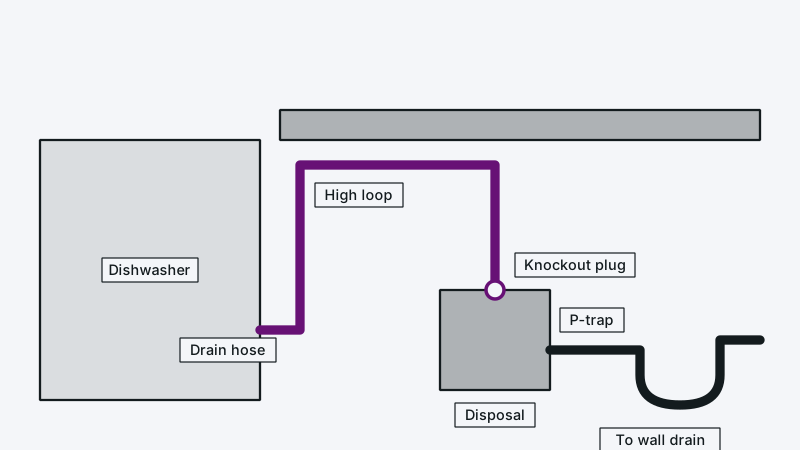
Murky water left in the tub after a cycle tells you something is blocking the path from the dishwasher to the kitchen drain line. Common causes are debris in the filter, a kinked or clogged drain hose, a stuck air gap, or a disposal inlet that was never opened. Each takes only minutes to inspect. When the sink backs up too, the obstruction lies deeper in the line, and drain cleaning and hydro jetting from a plumber is the better route.
Why is my dishwasher full of standing water?
Water lingers in the tub when the pump cannot expel it or when something downstream holds it back. Scraps in the filter, a grease-clogged hose, an air gap full of debris, or a disposal that blocks the flow are the typical reasons. A dying drain pump is rarer than a clog.
A few quick tests help. Run the sink with the disposal on. A sink that drains normally puts the blockage on the dishwasher side. A slow sink, or one that gurgles while the dishwasher runs, means the shared drain is at fault and nothing done inside the dishwasher will cure it. Burbank kitchens typically tie the dishwasher into the sink trap along with the disposal, so one clog hits both.
Odor is a clue as well. A sour, greasy smell suggests old food and grease in the hose or filter, while a sewer smell suggests a dry or blocked trap, a topic handled in sewer smell in the house.
How do I clear a clogged dishwasher drain yourself?
Cut power to the dishwasher at its breaker and bail the standing water into a bucket. Then take out the lower rack, lift off the filter and the sump cover, and clear debris by hand or with an old toothbrush. Put it back together and run a short cycle. Water that still stays means checking the hose and disposal inlet.
Go through these steps in order:
- Filter and sump. The owner's manual shows how the filter twist-lock works. Pull out glass shards, seeds, labels and fruit stickers.
- Drain hose under the sink. Set a shallow pan beneath the connection, loosen the clamp and slide the hose off. Rinse it in the sink under hot tap water, watching for a kink or a bend squashed by a storage box.
- Air gap, if you have one. It is the little chrome cap next to the faucet. Lift it off and scrub the slimy build-up inside with a bottle brush.
- Disposal inlet. A hose that joins a garbage disposal needs its inlet fitting checked for packed ground food. Run the disposal on cold water for 30 seconds ahead of the next cycle.
Leave chemical drain cleaner on the shelf. Poured into a dishwasher, the harsh liquid pools in the tub and hose and can react badly with other products. After an exposure, ring Poison Help: 1-800-222-1222.
Is it the disposal knockout plug?
Brand-new or swapped disposals ship with a thin plastic knockout plug in the dishwasher inlet. Left in place, it stops the dishwasher from draining into the disposal at all. To fix it, detach the hose, take out the plug and any stray piece inside the disposal, and reconnect. After a disposal swap, look here first.
A plug that was knocked out yet dropped inside can block the inlet too. Shine a flashlight in, with the disposal off at both the wall and the breaker. Keep your hand out of a disposal and fish a loose piece out with tongs.
While you are at that fitting, see how to free a jammed unit safely in the guide to unclogging a garbage disposal drain.
Do I need an air gap or a high loop in California?
Many California codes and inspectors look for an approved air gap fitting between a dishwasher and the drain, while a high hose loop is accepted in some places and refused in others. What your kitchen needs turns on the code year and the city. Before changing the setup, ask the Burbank building division.
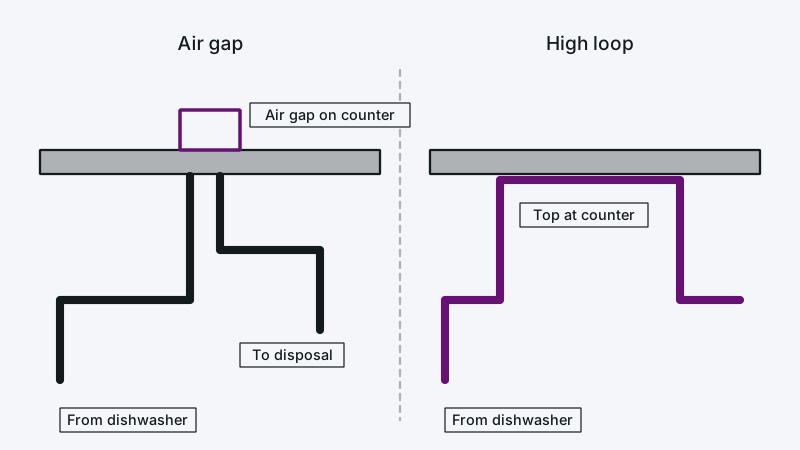
As summarized, the California Plumbing Code bars connecting a dishwasher straight to the drain system or a food waste disposer unless an approved air gap fitting is used, with its marking at or above the sink flood level. A high loop lifts the hose up under the countertop and back down, so wastewater cannot siphon into the machine. Use both as guidance and verify locally.
In both cases, a slow dishwasher justifies checking that the hose still follows the loop or air gap path, since a sagging hose traps a pool of dirty water.
When should I call a plumber for a dishwasher drain?
Make the call if the sink is slow as well, if water spurts back out of the air gap, if you have cleared the filter, hose and disposal inlet and water still sits in the tub, or if other fixtures gurgle. Each suggests a clog in the kitchen branch or main line, which a plumber can open with a cable or jetter.
Older Valley homes, many dating to the 1950s and 1960s, often have cast iron or galvanized kitchen drains that have closed in from decades of rust and grease buildup. A camera run shows the plumber how bad it is. If the line itself is failing, ask about jetting or a repair, and get the price in writing first.
Also call if the drain pump hums without moving water. That implicates the pump, an appliance repair and not a drain clog.
Describe what you found on our quote page and we will line up a local tradesperson to come to the house.
Questions people ask
How quickly can a dishwasher drain be unclogged?
Checking the filter and hose at home takes 20 to 40 minutes. A plumber cabling a kitchen branch generally needs under an hour, though old pipe, a stuck fitting or a camera look can add time. Replacing a pump is separate work for an appliance technician.
What do I need to ask a plumber about a dishwasher drain?
Confirm the price covers a camera inspection of the line, what follows if the blockage sits deeper than the kitchen, whether a permit or a code fix such as an air gap is needed, and how the price is set. Have the answers on paper before work starts, so a short visit does not become a vague bill.
Is it necessary to be home during the visit?
Yes, or have a trusted person stand in. The cabinet under the sink must be reachable so the plumber can run water, test the dishwasher and explain the findings. Empty the cabinet first to speed things up. Keep pets and children away from open drain pipes.
Can I pour vinegar and baking soda down a dishwasher?
Small amounts will not harm a dishwasher, but they seldom shift a real clog. Food and grease lodged in a hose must be pulled out or flushed with hot water. To try something gentler first, our page on a natural remedy for a clogged drain explains which methods help and which do not.
Why does the dishwasher smell after a cycle?
Usual sources are standing water, food in the filter and grease in the hose. Clean the filter, flush the hose and run an empty hot cycle. A sewage-like odor suggests a dry trap under the sink or a blocked vent, which falls to a plumber.
The rest of our guides start from the plumber guide for Burbank.
References
Updated