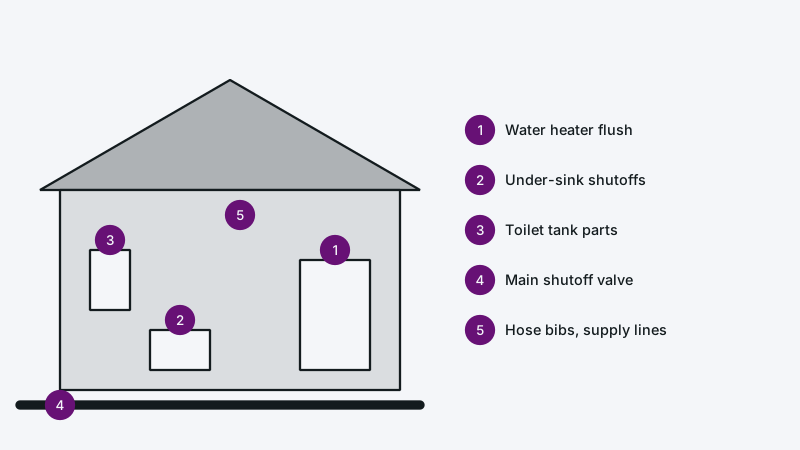
A maintenance plumber inspects, tests and services a building's plumbing on a schedule or as small jobs come up, rather than waiting for a failure. The work covers checking shutoff valves and supply lines, flushing and inspecting the water heater, testing water pressure, clearing slow drains, tightening loose fittings and looking at gas connections to appliances. In an apartment or commercial building a maintenance plumber is often on staff. For a house in Burbank or the Valley, you book one as needed, and Lankershim Plumbing sends a local plumber out to your address.
What tasks does a maintenance plumber handle?
Routine tasks include inspecting visible pipe for corrosion and leaks, exercising shutoff valves so they do not seize, measuring pressure at an outdoor spigot, checking the water heater and its relief valve, running drain lines, fixing running toilets and dripping faucets, and checking appliance connections. A good visit ends with a short written list of what is fine and what is wearing out.
Much of the value is in what the plumber notices. Green crust at a copper joint, a damp cabinet floor, a water heater with rust at the base or a toilet supply line that is bulging are all warnings. The US Bureau of Labor Statistics lists inspecting and testing installed pipe systems as part of the trade, and it is the main task of maintenance work.
Common tasks, by area of the house:
- Under sinks and behind toilets: supply lines, shutoff valves, traps and drip marks
- Water heater: relief valve, drain valve, venting, gas connection and strapping
- Laundry: washing machine hoses and the standpipe
- Outdoors: hose bibs, irrigation connections, the main shutoff valve and cleanout cover
- Drains: slow fixtures, roots and grease buildup
How often does a house need maintenance plumbing?
For most homes, an annual check is a sensible rhythm, with homeowners doing a light version themselves every few months. Older houses, homes with galvanized pipe, houses with hard use and homes whose water heater is nearly worn out justify a yearly visit. Newer homes with PEX or copper may need less, but valves and hoses still wear.
Between visits, do these:
- Every month, look under each sink for moisture and check the water meter for movement when nothing is running. EPA's two-hour meter test finds leaks you cannot see.
- Every few months, run water in rarely used fixtures so traps do not dry out and valves stay free.
- Twice a year, test the main shutoff valve by closing and reopening it gently. A stuck valve becomes your problem on the day you need it most.
- Check the water heater for rust, drips and scorch marks, and keep the area clear.
- Look at washing machine hoses. Replace rubber ones that are cracked or bulging.
How often do house water pipes need to be replaced?
It depends on the material and the water, so there is no single number. Copper, galvanized steel, PEX and older polybutylene age differently, and corrosive or hard water shortens life. Replace pipe when leaks start to repeat, when water turns rusty, when pressure drops from internal buildup or when an inspection shows serious corrosion, not on a calendar date.
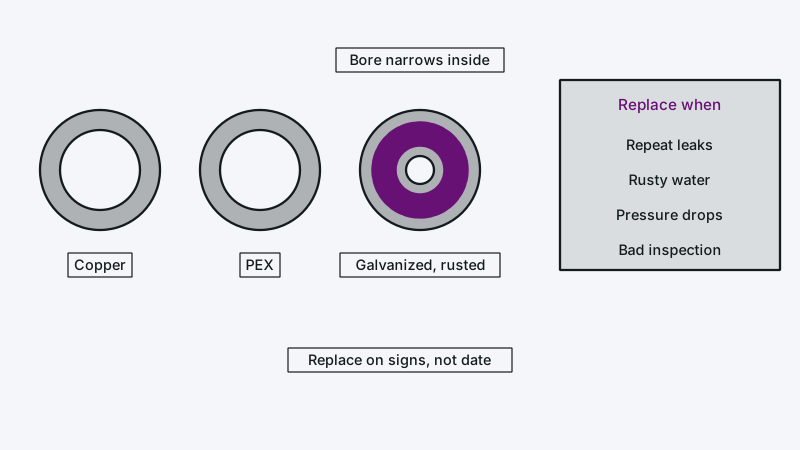
Plenty of Burbank and Valley houses put up between the 1940s and 1960s were plumbed with galvanized steel or early copper. Galvanized pipe rusts inward and slowly narrows. When the second or third pinhole leak shows up, replacing the run usually costs less than patching one leak at a time. More in whole-house repiping and how to repipe a house.
What does a maintenance visit look like?
You describe what you have noticed. The plumber finds the main shutoff, reads the pressure at an outdoor spigot, looks at the water heater, opens and closes shutoff valves, runs each fixture and inspects what is visible in the crawl space or garage. You get a written list of findings and prices for anything that needs work, before it is done.
Hillside homes, homes with a crawl space and homes with the water heater in a closet or attic need more access time. Tell the plumber about any past leaks, noises or smells. If someone smells gas during the visit, everyone walks out, and someone phones the SoCalGas emergency line, 1-800-427-2200, from the yard, or 911 when there is danger. Gas piping work calls for the right license and often a permit.
For problems you spot yourself, see water hammer in pipes and burst pipe prevention. Visits are requested through the quote page.
Is a maintenance plumber worth paying for?
Often yes, for older homes, rentals and houses with expensive finishes under pipes. Finding one leaking supply line before it floods a floor can save a large repair. For a newer, small home with no history of problems, a light yearly check may be enough. Ask for the visit's price in writing before you book, and decide based on the house's age, materials and risk.
We are serving Burbank, Sherman Oaks and the Valley, and a visit can include the appliances that connect to your plumbing.
Questions people ask
How does a maintenance plumber differ from a regular plumber?
A maintenance plumber focuses on checking and servicing existing systems to prevent failures, often in buildings with many fixtures, while a regular plumber is usually called after something breaks or for new installations. In practice the same contractor may do both. What matters is the license, the written scope and the price.
How long does a maintenance visit take?
Most home visits take one to two hours, which varies with how big the house is, access to the crawl space or attic and the number of fixtures. Any repair found can add time. Expect an estimate when you book and a written price before any extra work starts.
What should I ask when hiring for maintenance plumbing?
Get the California contractor license number and verify it with the CSLB. Find out what the visit covers, whether there is a trip fee, whether it is credited toward repairs and how findings are reported. Ask whether the plumber pulls permits for water heater or gas work. Have all of it put in writing.
Must I be at home during the appointment?
Yes, at minimum for the opening stretch. Access is needed to the shutoff valve, the water heater, the sink cabinets and the outdoor valves, and you should hear the findings firsthand. If that is not possible, send a trusted adult in your place and settle the approved work beforehand.
Does maintenance plumbing include gas appliances?
A maintenance plumber can check the connection to a gas appliance, such as a water heater, and look for obvious problems, but gas piping work is regulated and needs the right license and often a permit. A gas odor is an emergency: get out first, then call the SoCalGas emergency line, 1-800-427-2200.
References
Updated