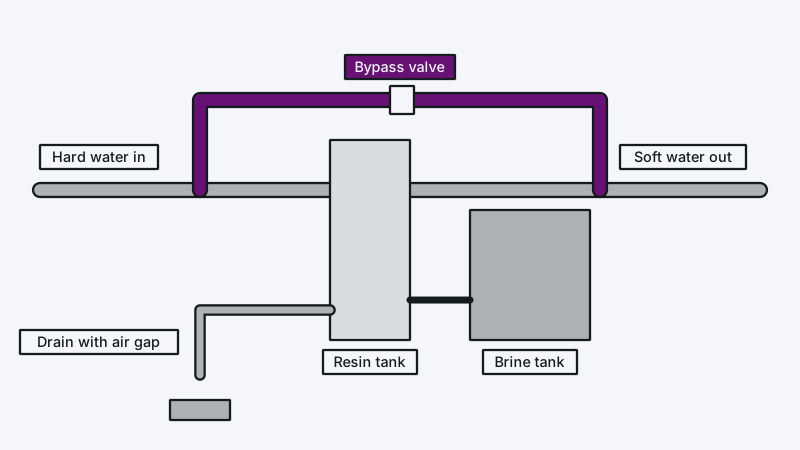
A salt-based softener is the standard way to take hardness out of a whole-house water supply. It is a resin tank plus a brine tank, tied into the cold main, with a drain line and a power outlet. For the wider picture of softener work, see our water softener installation page. This one is about the salt-based type only: what goes where, what the drain has to do, and what needs deciding ahead of the first cut.
What does a salt-based water softener installation involve?
A plumber sets the softener on a level pad near where the water main enters the house, adds a bypass so water can skip the unit, cuts it into the cold line, runs a drain for the rinse water, and plugs in the control head. Then the unit is programmed to your water hardness and left to run a first regeneration.
Most of the visit is plumbing. The main is shut off and drained, the pipe is cut and fitted with connections that suit the material, whether copper, PEX or galvanized steel. A bypass valve goes in so the unit can be isolated for service without cutting your water off. The softener's control valve is connected on the inlet and outlet sides and the brine tank is filled with salt.
The drain line is the step people forget. During regeneration the unit sends a few gallons of salty rinse water out, and that water has to go somewhere acceptable, usually an indirect connection to a laundry standpipe or floor drain with an air gap so sewer water cannot be drawn back. The electrician-level part is small: a standard outlet near the unit.
How does a salt-based softener actually work?
Inside the resin tank, small beads hold sodium ions. As hard water passes through, the beads capture calcium and magnesium and release sodium in exchange. When the beads fill up, the unit regenerates by flushing them with brine from the salt tank, then rinsing, and the waste water goes to the drain.
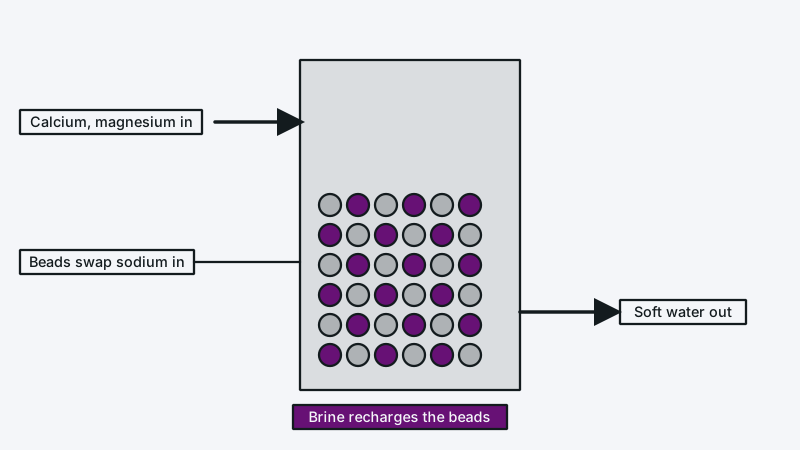
That three-step cycle is a backwash, a brine draw and a rinse. The control head decides when to run it, either on a timer or by metering how much water has passed through. Metered units regenerate only when needed and waste less salt.
The result is water without the minerals that form scale. Hard water leaves limescale mostly made of calcium carbonate, especially when it is heated, which is why water heaters, kettles and shower glass show it first. Softening removes the cause. A softener does not filter chlorine, chloramine or taste, so it solves one problem.
Where should the softener go in a Burbank house?
The usual spot is on the main line just after it enters the house and before it branches off toward the heater, in a garage, side yard enclosure or utility closet with space around it. It needs a floor drain or standpipe within reach, an outlet, and room to carry bags of salt.
Many Valley ranch homes were built with a garage housing both the main and the water heater. That is often the easiest place, with a floor drain nearby. Houses on slabs with piping in the attic or crawlspace can be harder, and some hillside homes have the main at an awkward angle on a slope, which affects where the unit can stand level.
Outdoor spigots and often the irrigation line are normally left on untreated water, since softened water gains nothing for a lawn. The plumber can split the line to do that. Some owners also leave a kitchen cold tap on hard water for drinking, because softening adds sodium.
If the only space is outdoors, the unit needs shelter from sun and freezing and an enclosure that is ventilated. Cramped sites cost more labor, which shows up in the written quote.
Does the salt change my drinking water?
Yes. Ion exchange swaps hardness for sodium, so softened water carries more sodium than the hard water did. One study cited in the reference literature found softened water averaging 278 mg/L sodium, which would supply roughly a fifth of the recommended daily sodium limit in two liters. For most people that is not a concern, and the EPA considers sodium in drinking water unlikely to cause adverse effects.
If you are on a sodium-restricted diet, talk to your doctor and consider a separate unsoftened drinking tap. Potassium chloride can be used in place of salt, costs more, and is a question for your doctor too if you have kidney problems.
This is information, not medical advice. The point for installation is that a softener can be configured with a bypass for the kitchen cold line, and that is easiest to plan before the pipes are cut.
Are there local rules on salt-based softeners in California?
Some California communities restrict salt-based softeners because the brine from regeneration ends up in the sewer and, after treatment, in water supplies. Rules differ by city and sewer agency. We have not found a Burbank rule we can cite, so confirm with the city's Building Division and your sewer agency before you buy.
Ask two questions. First, does the city require a permit for connecting a softener to the water line and drain? Second, are there limits on discharging regeneration brine? A local plumber knows the habit of the city and can ask the right office, but the answer should be in writing in your quote.
The Wikipedia entry on water softening notes that brine discharge can precipitate scale and interfere with sewage systems, which is the reason agencies pay attention. Where a salt-based unit is restricted, salt-free conditioners are an option. Template assisted crystallization does not remove minerals. It converts them into tiny crystals that stay suspended, so they do not stick to pipes. In a University of Arizona comparison cited there, it reduced scale well, though deposits can still appear where water evaporates.
What does hard water do that makes people install one?
Hard water leaves scale in water heaters, on fixtures and inside hot lines, and it stops soap from lathering properly. Hardness is measured as calcium carbonate: the USGS calls water above 180 mg/L very hard. Scale slowly narrows pipes and insulates heating elements, which wastes energy and shortens appliance life.
The common Valley signs are white crust on faucets, cloudy glassware from the dishwasher, scum rings in tubs, and a water heater that rumbles from sediment. Read your utility's water quality report for the hardness number. Burbank Water and Power publishes one, and the number tells you what size of unit you need. The hard water scale removal guide lists what you can try before buying anything.
The EPA does not set an enforceable limit on hardness. It lists total dissolved solids as a secondary standard, a guideline for taste and scale, not a health rule. That matters when a salesperson uses scare language: hardness is a nuisance and a cost, not a health emergency.
Should I install a salt-based softener myself?
A handy person can do it, and manufacturers publish instructions. The risks are leaks from cutting into the main, a poor drain connection, and bypass mistakes that send untreated water to the house. If your home has galvanized steel or old copper, cutting into it can start new leaks. Our do-it-yourself softener page covers the steps and the limits.
Also read our whole-house softener page if you are comparing sizes, and the price guide for what a quote should itemize. For the home page, start at Lankershim Plumbing.
When should I call a plumber?
Make the call when the main is galvanized steel, when there is no drain within reach, when you need the line split for outside spigots, or when you do not want to find out about a leak at midnight. A tradesperson visits, measures the layout and puts a quote on paper ahead of any work.
Request a quote on the quote page. Tell us the house age, pipe material, where the main enters, where the water heater sits, and the hardness number from your utility's report. That is enough to scope the job. We'll arrange a visit, and the plumber will check for the drain, the outlet and clearance before quoting.
Questions people ask
How many hours does a softener install run?
For a standard setup with easy access, a plumber typically needs a few hours, including draining the line, fitting the bypass, running the drain and programming the unit. Cramped spaces, galvanized pipe or a long drain run add time. The plumber confirms the likely duration when they see the layout and give the written quote.
How much salt does a softener use?
Usage depends on the hardness, how much water you use and how the unit is set. Metered units regenerate by demand and use less salt than timer units. Salt comes in bags, and the brine tank is refilled every month or two for most households. The manual for your model gives the exact figure.
Can I use potassium chloride instead of salt?
Many units can, since it works as a regenerant. It costs more per bag, and some manufacturers publish different settings for it. If you have kidney disease or take certain medications, ask your doctor first. Check your softener's manual to confirm it allows potassium chloride.
Which questions go to an installer?
Ask what size the unit will be and why, where the drain will run, whether the quote includes a bypass and a hard-water line for outdoors, if a permit is required, and what happens to the price should the pipe prove worse than it looked. Have each answer written into the quote.
Should I stay home for the install?
Someone over 18 usually needs to let the crew in, since the supply is shut for a stretch of the visit. Mention to the plumber any pets, the location of the main shut-off, and which rooms to protect. You decide whether to stay for the whole visit or return for the walkthrough at the end.
References
Updated