The plumber cost for a new house, as Lankershim Plumbing sees it, comes down to the number of fixtures, the length of the pipe runs, the materials, the gas and water heater setup, and the permits and inspections the job needs. There is no honest single number for Burbank, and we did not find an official source that gives one, so you will not see an invented table here. What you will find is how a plumbing quote for a new house is built, so you can read the bids. To start one, ask Lankershim Plumbing for a quote and a local plumber will visit.
What does a plumber charge for a new construction house?
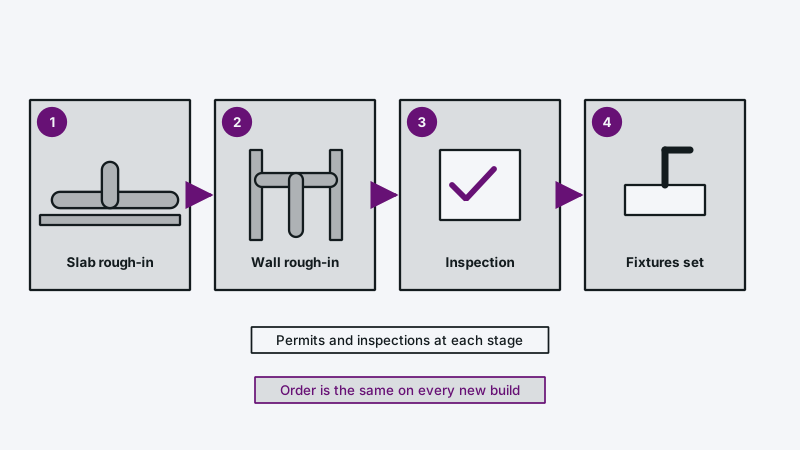
A builder's plumbing bid is divided into stages and priced by fixture count and pipe length: underground work, rough-in inside the framed walls, and the finish stage when fixtures go in. Gas piping and the water heater usually get their own lines. More bathrooms, kitchens and outdoor hookups mean a higher price, whatever the square footage.
Per-square-foot shortcuts exist, but they conceal the real drivers. An 1,800 square foot house with three bathrooms and a laundry room needs far more plumbing than a 2,400 square foot house with one bath. Ask for the quote with a fixture list, so each item's price is visible.
The usual stages in a bid:
- Underground and slab. Drain and waste lines, the sewer connection, and sleeves for water and gas beneath the slab.
- Rough-in. Supply lines, drains and vents within the walls, tub and shower valves, and gas stubs for appliances.
- Top-out and inspection. Pressure testing, then a building inspector reviews the work before the walls close.
- Finish. Toilets, faucets, sinks, the water heater and the appliance hookups.
What makes plumbing cost more in a new home?
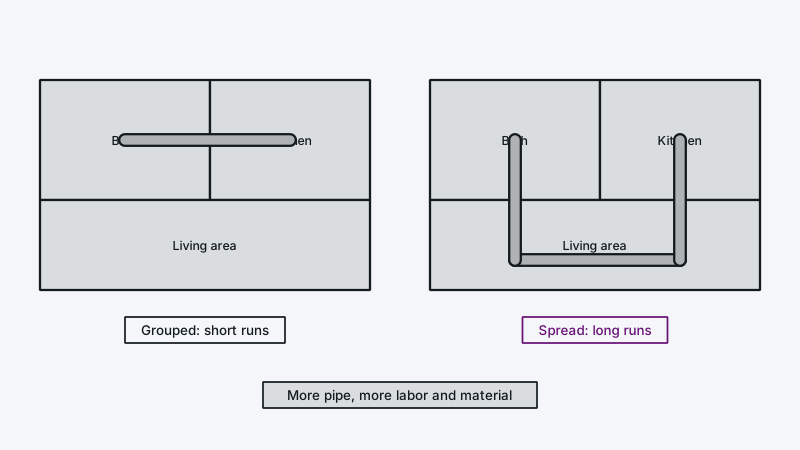
Four things raise the price: extra fixtures, longer pipe runs, upgraded materials and a more elaborate water heater or gas setup. A kitchen at one end of the house and a bathroom at the other mean long runs. A tankless heater, a recirculation line, a second laundry or a gas line to a patio kitchen each add parts and labor.
Site conditions count in the Valley. A sloped hillside lot in the Burbank foothills may need deeper or longer drain lines to reach the sewer connection. Cramped access and poor soil can add hours too, and a house over a crawl space is usually simpler to plumb than one on a slab.
Get the materials in writing: PEX or copper for supply, ABS for drains, and the brands of fixtures and valves. Cheap fixtures can cost more later if a faucet cartridge or toilet fill valve is hard to track down in ten years.
What permits and inspections does new plumbing need?
New plumbing in California typically requires a building permit and inspections at set stages, usually before the walls close and again at completion. Burbank permits come through the city's building division. In Valley neighborhoods of Los Angeles, such as Sherman Oaks or Encino, LADBS handles them. Check with the permit office on what your project needs, and find out who pulls the permit.
On a new build the builder or general contractor often pulls the permit, and the plumbing subcontractor's price may or may not cover the fee. Ask. CSLB also says a written home improvement contract should name who obtains building permits. Do not let work proceed on a plumber's say-so that it "doesn't need a permit" without verifying, because unpermitted work can bring problems at sale time or with an insurance claim.
What if I mean a house I just bought?
Many people searching this are buying, or have just bought, a house rather than building one. The cost question then changes: what will it take to make the plumbing dependable? Begin by inspecting the pipes, not only the fixtures. A sewer camera inspection of the main drain, a pressure test and a look at the water heater, shutoff valves and gas lines show what you own.
Houses across Burbank and the Valley dating to the 1940s through the 1960s are the usual surprise. Galvanized steel supply lines can be nearly clogged shut inside. Cast iron drains rot, clay drains admit roots, and a water heater that is original, or close to worn out, is a coin toss. Read what old-house plumbing can cost to replace and how to judge whether a repipe is worth it.
Budget for what you cannot see. Have an older gas line or appliance hookup checked. Should a gas odor ever appear, walk out and ring SoCalGas at 1-800-427-2200 once you are outside. Use 911 when there is danger.
How do I get a plumbing quote I can compare?
Have every plumber quote the same scope in writing, with a fixture list or a described scope of work, plus materials, permits, inspections and cleanup. Compare what each includes, not just the total. CSLB says home improvement work above $500 requires a written contract, and the down payment should stay at or under 10 percent of the price or $1,000, whichever is lower.
Look up each plumber's license with CSLB prior to signing. Request a payment schedule tied to finished stages, such as after the rough-in inspection, in place of large sums up front. When one bid comes in far below the rest, work out what it leaves out. Our guide to hourly plumbing costs explains what an hourly rate and a trip charge cover.
We work on new builds and fresh purchases across the Valley, and appliances like the water heater, range and dryer belong on the fixture list as well.
Questions people ask
What share of a new home's budget goes to plumbing?
The share varies by bathroom count, fixture count, the finishes and the gas and water heater choices, and we found no trustworthy official figure to quote. Ask your builder for the plumbing line in the bid and the fixture allowance, then set it beside a written plumbing quote for the same scope.
How long does plumbing take in a new build?
Plumbing is spread over the build in stages, not done in one block. Underground work comes first, rough-in follows framing, and finish plumbing arrives late. Each stage may take days on a typical house, and inspections add waiting time. Your builder or plumber can supply the schedule for your plans.
Do I need a separate plumber if my builder hires one?
Usually not. The builder normally hires and pays the plumbing subcontractor. You may still want to learn who it is, verify the license with CSLB and ask which fixtures and brands are included. If you are plumbing an addition yourself, hire a plumber whose license fits the work, and sign a written contract.
What should I put to a plumber before hiring one for my house?
Request the license number, the fixture list, the materials, who pulls permits, how inspections are scheduled, how payment is staged and what happens when plans change. Also ask about warranty on labor and parts, and get each answer in writing. A clear plumber welcomes the questions.
Must I be at home while the plumbing is done?
On a new build you rarely need to be present every day. You do need to be reachable for decisions about fixture locations, upgrades and change orders. For work in a house you live in, someone should be around at the start, so the plumber can locate the shutoff valves and settle the scope.
References
Updated